
Model Overview
What does the Jev AI model do?
A decision model fits tasks where the possible answers can be defined in advance.
Jev is TypeSafe’s System One model. It evaluates the current state against typed questions, then returns structured answers and probabilities. That makes it useful for classifying messages, scoring results, and choosing a route through software. Drafting an article or producing a finished image or video requires a different kind of model.
This VideoAny guide develops the 22 application themes in Senzia’s roundup into practical trial ideas. TypeSafe’s official documentation supplies the model details. Community demonstrations are reported examples; the evaluation advice below explains how to test similar workflows for yourself.
Write down the decision before designing the prompt: which department should handle the request, which action is available, or how does a result score against a rubric? When the answer needs to be invented rather than chosen, keep a generative model in that part of the workflow.
Key References
Review the Model Definition
Input and Output Types
Choose a question type before writing instructions
Choice, Score, and Noul answer different kinds of questions and return different fields.
| Question type | Example decision | What your application receives | Design check |
|---|---|---|---|
| Choice | Which processing queue should receive this item? | The chosen option, a probability distribution across all options, and a confidence score. | Ensure each category has distinct boundaries and include a practical fallback choice. |
| Score | What is the priority level of this support inquiry? | A numerical score based on an ordered scale, associated probabilities, and a confidence value. | Define rubric levels using measurable criteria instead of ambiguous descriptions. |
| Noul | Does this communication refer to a duplicate billing event? | A numerical value between 0 and 1 indicating the statement's truth; no distinct confidence score is provided. | Formulate a single, precise binary (yes/no) question. |
The 'Choice' primitive currently supports up to 255 distinct options. For more extensive taxonomies or link collections, a staged selection approach is necessary, as thousands of candidates cannot be directly accommodated within a single 'Choice' query.
Further References
Check the current question format
Application Scenarios 1–7
Games and simulations: observe, choose, update
This initial category highlights repeated action selection. These scenarios serve as controlled environments for analyzing decision-making loops.
1. Doom control. TypeSafe's introductory demonstration used structured game state data to select actions. When conducting your own tests, record the observed state, available actions, the chosen action, and the subsequent game state. This log helps differentiate between poor decisions, outdated observations, or execution latency.
2. Wikipedia link navigation. The official Wikiracing demonstration involves selecting hyperlinks to navigate towards a specific target article. Begin by defining a clear stopping condition and a maximum number of steps to prevent infinite loops where the system revisits pages without advancing. Use staged selection if the number of candidate links exceeds the model's option capacity.
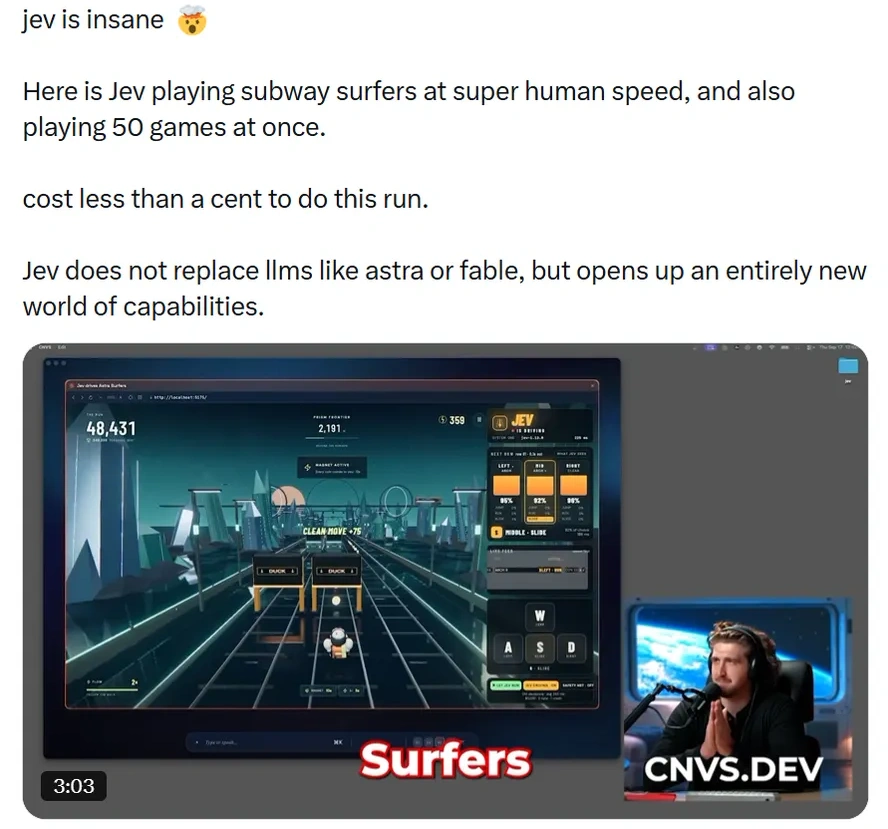
3. Parallel Subway Surfers sessions. The reference describes the simultaneous control of numerous game instances. For evaluation, ensure each instance maintains its unique state and action history. Factors like overall throughput, missed updates, and queuing delays are as critical as the speed of a single, isolated decision.
4. Super Mario movement. The reported controller makes choices based on game-state information. Standardize action durations—for example, ensuring 'jump' consistently implies a comparable time. Document failures occurring during transitions, such as departing a platform, where outdated position data can significantly impact model performance.
5. Slay the Spire 2 card choices. Turn-based gameplay often presents a clear, limited set of legal actions. Before classification, filter out cards that cannot be afforded and assess performance across multiple full game runs. A rapid individual turn decision offers limited value if the choices consistently diminish the likelihood of completing the game.
6. Autonomous Driving in a 3D City Simulation. Simulated vehicle steering can be represented as a finite menu of actions. Ensure that collision detection and termination conditions are managed by the simulator itself. Before concluding that a visually impressive demonstration signifies a robust controller, compare its decisions against predefined baseline behaviors in reproducible scenarios.
7. Rocket Landing with MuJoCo Physics Simulation. A simulation environment can enable a decision model to select from a set of predefined thrust settings. In a repeatable test, vary starting position, velocity, and external disturbances. While a single successful landing offers a valuable debugging case, consistent success across diverse initial conditions represents the true evaluation goal.
TypeSafe documents the Doom and Wikiracing demonstrations. Senzia reports the other game and simulation projects; their headline costs and speeds are not independently verified here.
Official Demonstrations
See the official demonstrations
Application Scenarios 8–10
Visual Experiments and Browser Automation
These instances transform an apparently open-ended task into a series of discrete choices.
8. Pixel-color selection. The original source details an experiment where an image is constructed through sequential color choices. This should be viewed as an illustration of task decomposition, not as a replacement for a dedicated image generation model. An experiment focused on palette selection can be assessed based on its internal consistency and reproducibility, without implying photographic fidelity.
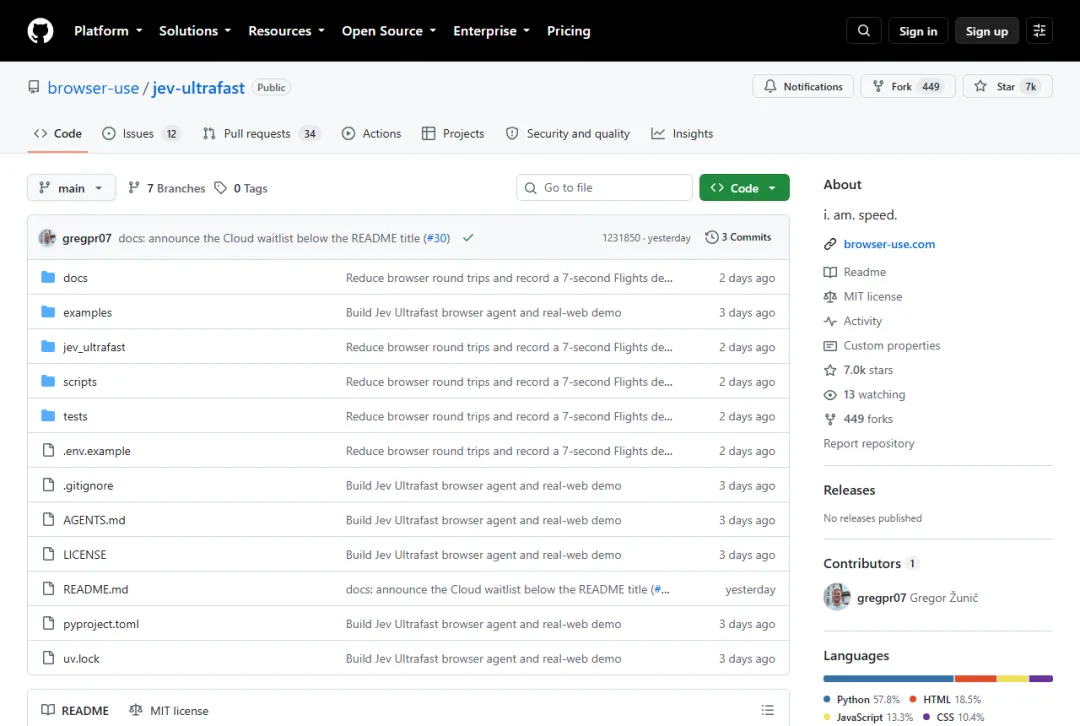
9. Browser action and target selection. The overview mentions Browser Use's jev-ultrafast initiative. When prototyping, clearly distinguish between selecting an action and identifying a currently available web element. If an element vanishes post-navigation, the system should initiate a new observation cycle, rather than attempting to interact with an outdated target.
10. Flight-search form completion. The flight search scenario is valuable due to its distinct intermediate goal: a valid results page. Assess form fields and their constraints separately, document any failures, and terminate the test prior to the checkout stage. Completing a booking is a separate workflow from merely identifying suitable flights.
Application Scenarios 11–15
Categorizing Operational Tasks and Customer Inquiries
Begin with a queuing system where human reviewers can compare the model's suggested decision against the correct resolution.
11. Shell-command risk triage. Senzia references a Vercel-associated classifier example. An effective initial deployment would involve labeling commands for human review, with existing execution controls retaining responsibility for permissions. Monitor harmful commands that are missed distinctly from benign commands that are erroneously flagged.
12. Business email classification. Differentiate between the sender's underlying intent, their tone, and the message's urgency. A polite email might still convey a critical system failure. Maintain a diverse, labeled dataset, encompassing brief messages and those containing multiple requests, to ensure accuracy isn't solely based on straightforward examples.
13. Support-ticket routing. Write category descriptions based on the specific teams capable of resolving the issue. Incorporate a pathway for ambiguous or mixed cases. Evaluate the rate of incorrect assignments and the time taken for tickets to reach the appropriate team, rather than simply counting all automated assignments as successful.
14. Pull-request pre-screening. A constrained classifier can assist in prioritizing code changes based on file impact, test outcomes, and review requirements. However, it cannot, by itself, confirm the correctness of a change based solely on these indicators. Maintain merge criteria within the repository workflow and use classification to organize reviewer attention.
15. Duplicate charges and urgent complaints. Clearly distinguish between phrases like 'mentions an extra payment,' 'requests a refund,' and 'needs urgent attention.' This prevents emotional language from automatically triggering financial actions. Always verify payment records within the established support process before determining a resolution.
Application Scenarios 16–20
Agent Context Management, Model Routing, and Reusable Decisions
This consistent pattern of finite choices can be integrated between various stages of a broader agent workflow.
16. Retrieval checks and injection screening. The jev-mcp example from the source integrates multiple judgment types. Assess relevance, factual backing, and potentially malicious instructions as distinct criteria. A source might be relevant yet contain unsubstantiated claims; success in one check should not automatically imply success in others.
17. Context compaction. The concept of fast-jev-compaction focuses on determining which historical information remains relevant. Preserve the current goal, agreed-upon limitations, outstanding errors, and necessary identifiers for task continuation. Validate the effectiveness of the compressed history by resuming the task and observing if critical information needs to be reconstructed.
18. Coding-task difficulty routing. A model selection mechanism can differentiate between minor, isolated code edits and changes that affect multiple components. Assess both the initial routing decision and any subsequent rework it necessitates. An inexpensive initial attempt can quickly escalate in cost if it leads to frequent retries or a complete rewrite later on.
19. Upstream Model Routing. Select among specialized handlers based on the task's objective, necessary capabilities, and desired output. Each route should clearly articulate why a particular handler is suitable; merely choosing the lowest-cost option for all requests does not make use of the task classification.
20. A decision layer in an agent framework. LangChain outlines Jev's utility for model routing and assessing tool risk. A functional implementation should ensure that the chosen route and any fallback mechanisms are transparent in execution traces. Assign a single responsibility to each node to facilitate investigation of unexpected outcomes without needing to re-execute an entire, obscure agent process.
Agent Integration Reference
Read the agent integration guide
Application Scenarios 21–22
Trading Experiments and Confidence-Based Evaluation
These concluding themes explore the implications when an incorrect decision carries significant consequences.
21. Order-book action experiments. The source mentions a classification concept involving buy, sell, or hold actions. This should be approached as a simulation exercise, not as proof of a lucrative strategy. A thorough technical evaluation must consider data latency and execution assumptions; a seemingly reasonable action label does not guarantee financial gain.
22. Selective classification benchmarks. The concluding example in the overview contrasts models where uncertain instances can be bypassed. The key takeaway is to report both the accuracy of cases that are processed and the proportion of cases that are accepted. A system that rejects the majority of tasks might appear accurate but offers minimal automation.
Confidence levels should dictate the subsequent action. Use your labeled validation data to determine when a result is automatically applied, requires human review, or needs escalation. Preserve the complete probability distribution to investigate errors, and re-evaluate the policy if the characteristics of the input data evolve. A confidence score does not universally guarantee the correctness of a decision.
Track the share of requests automated alongside the error rate. Repeat the evaluation after changing your labels, input data, or fallback policy.
Confidence Metrics
Understand the confidence score
Practical Workflow Design
Design a practical Jev trial
Convert a general request into a specific, measurable decision point.
Choose one recurring decision and define success before the trial begins. For example, route a support request to billing, technical support, or general help. Test reply drafting, refunds, and ticket closure separately so you can identify which step causes an error.
Include the evidence a reviewer would need: the message, relevant status fields, and enough context to resolve the question. Keep instructions separate from the incoming content. Describe the available options so it is clear when each one applies.
For a creative-workflow router, try asking: “What asset does this request need?” Possible answers are a still image, motion from an existing image, or more information from the requester. This is a proposed architecture. VideoAny’s image and video tools are separate from the Jev developer service.
Key Steps for a Reviewable Trial
- Assemble a labeled dataset comprising typical, ambiguous, and out-of-scope inputs.
- Pose a single, unambiguous question for each dimension and delineate categories with clearly defined, non-overlapping boundaries.
- Group independent questions pertaining to the same state into a single request, provided the interface supports this functionality.
- Document the chosen answer, its probability distribution, confidence score (if applicable), latency, and input token consumption.
- Benchmark against your current rules or model using the identical sample and comprehensive success metrics.
- Maintain a clear fallback mechanism for uncertain outcomes, then analyze errors before extending the scope of automation.
These trial procedures represent VideoAny's editorial guidance. Adapt them to the specific consequences of the task at hand, rather than adopting thresholds directly from demonstrations.
Getting started
Find official access and check provider billing
The official API, aggregation gateways, and independent services can have different request formats and credit rules.
Start with the Playground linked from TypeSafe’s quickstart. Save a small example, inspect its structured answer, and reproduce it through the documented SDK or HTTP API. The request contains state, model, and questions; keep that distinction when comparing a third-party interface.
The source material also references aggregation gateways and a distinct 'Jev AI' service. These should be considered separate service options. Always verify the actual provider, the supported request format, the model's identifier, and the current billing structure at the endpoint you plan to utilize; the model's name alone does not guarantee API compatibility.
The official TypeSafe skill repository offers guidelines for integrating with coding agents. Review its current capabilities when planning an integration. A beneficial workflow principle involves grouping related questions and clearly defining choices, rather than making a sequence of imprecise, single-question calls.
Measure cost for a completed workflow, including repeated calls and escalations. Check the provider’s current pricing before estimating a budget: a promotional credit, a gateway charge, and an official API token rate describe different billing arrangements.
Access Resources
Begin with Official Developer Resources
Frequently Asked Questions
Common Questions on Jev AI Model Applications
What exactly is the Jev AI model?
Jev is a decision model developed by TypeSafe. It evaluates supplied context using typed questions and returns answers that software can process directly. Some websites branded “Jev AI” are independent services, so check who operates the endpoint you plan to use.
Is Jev capable of generating images or videos?
The model's primary function is to return decisions, not to produce finished media. The pixel-color experiment mentioned in the source is an application constructed from a series of choices. For visual asset creation, a dedicated image or video generation model should be employed.
Which initial use cases are most practical for Jev?
Begin with tasks involving a constrained set of options, such as email categorization, support ticket assignment, assessing retrieval relevance, or selecting an appropriate model. These scenarios allow for thorough inspection of inputs and correct outputs before broader automation is implemented.
What are the typical costs associated with Jev?
Consult the current pricing page of your chosen provider. Official API token rates, aggregator fees, and third-party credit bundles represent distinct offerings. Accurately measure total usage during a representative trial, accounting for retries and fallback invocations.
How does the official Jev API function?
TypeSafe's quickstart guide explains that the API accepts current state, a specified model, and a collection of structured questions. The 'Choice' primitive selects a predefined option, 'Score' evaluates against an ordered rubric, and 'Noul' assesses a binary (yes/no) statement. Refer to the official documentation for the most up-to-date request and response field specifications.
Does a high confidence score guarantee a correct answer?
No. Confidence describes the model’s distribution of probabilities, not a guarantee of correctness. Compare confidence with observed mistakes in your validation data, then decide when your application should act, request review, or use a fallback.
Is Jev accessible via VideoAny?
This guide does not announce a Jev integration with VideoAny. For the model and API, start with TypeSafe’s official resources. The VideoAny links open separate tools for image and video creation.
Does Jev serve as a substitute for a general-purpose Large Language Model (LLM)?
Jev is best suited for decisions with clearly defined outcomes. For tasks requiring open-ended content generation, detailed explanations, or complex problem-solving, continue to use an appropriate generative model. Assess whether a decision model can effectively manage the more constrained, branching logic surrounding these generative tasks.
Related Creative Workflows
Transform Creative Briefs into Visual Assets
Explore VideoAny’s image and video tools for the media-creation stage of your workflow.
- Generate a static image from a descriptive visual brief.
- Produce animated content from an existing still image.
- Explore our guides for specialized production tasks.