
Overview
2-Minute Answer
This section follows the source page's opening logic and reframes it for VideoAny creators.
Canva's Magic Media is convenient but limited. Here are 5 AI image generators that outperform it in quality, control, and creative freedom for 2026.
Canva's AI image generator (Magic Media) is built for quick mockups inside Canva's design editor — not for serious AI image generation. It scores 5-6/10 on quality benchmarks, has no batch processing, enforces strict content filters, and shares credits across all Canva AI tools [1] . If you need photorealistic output, character consistency, creative freedom, or video generation, a dedicated AI platform does the job better. VideoAny is the strongest all-around pick — 12 tools, three video engines, and no content restrictions.
Magic Media works as a convenient add-on inside Canva's design editor, but it has real constraints that dedicated AI tools don't.
Source-page decision points
- 12 specialized tools vs Canva's single Magic Media feature — Text-to-Image , Image-to-Image , Face Swap , PhotoShoot (40+ themed categories), Image-to-Video , Lipsync , and more
- Character consistency — generate a face once, apply it across hundreds of images and videos with Face Swap. Canva generates a different person every time
- Batch generation — create 100+ images in one run. Canva processes one prompt at a time
- Three video engines — Kling 1.6 (fast), Kling 2.0 (photorealistic), WAN (unrestricted). Canva has no video generation from AI images
- No content filters — the WAN engine generates without restrictions. Canva blocks anything remotely edgy
- Pay-once credits that never expire — no monthly subscription, no credit reset
Primary source URL: https://zencreator.pro/ai-university/guides/canva-ai-image-generator-alternatives
Copy is rewritten for VideoAny while preserving the source page's argument structure.
Snapshot
What are the main limitations of Canva's AI image generator?
Use this table to map the source page's tradeoffs to a practical creator workflow.
| Tool | Strength | Limitation versus a full workflow |
|---|---|---|
| Canva Magic Media | Convenient inside Canva designs. | Limited quality control, filters, batch depth, and video workflow. |
| VideoAny | Images, image-to-video, face consistency, and unrestricted engines. | More specialized than a design editor. |
| Midjourney | High-end art direction. | Less direct production pipeline and consistency tooling. |
| Adobe Firefly | Commercially safe image generation. | More conservative and less flexible for edge cases. |
Evaluate quality, workflow depth, content policy, and scaling cost together.
Options
What are the best alternatives to Canva's AI image generator?
These options mirror the source page's recommended paths and comparison categories.

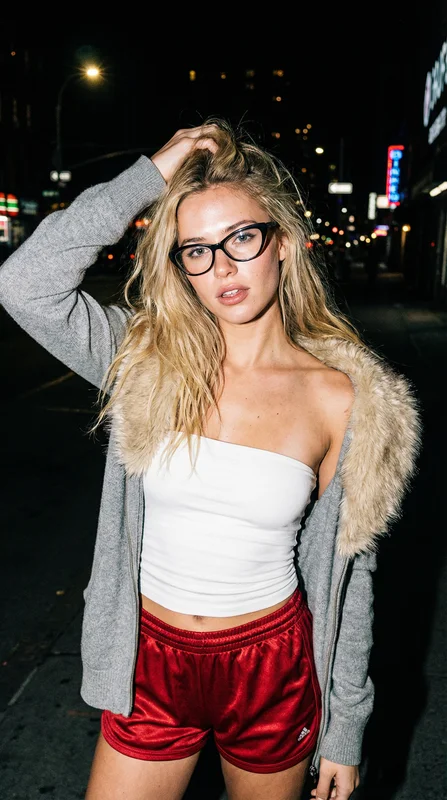
Canva alternatives source preview visual
VideoAny
VideoAny isn't just an image generator. It's a 12-tool content platform that covers the entire workflow from character creation to social publishing.
Why it matters
- 12 specialized tools vs Canva's single Magic Media feature — Text-to-Image , Image-to-Image , Face Swap , PhotoShoot (40+ themed categories), Image-to-Video , Lipsync , and more
- Character consistency — generate a face once, apply it across hundreds of images and videos with Face Swap. Canva generates a different person every time
- Batch generation — create 100+ images in one run. Canva processes one prompt at a time
- Three video engines — Kling 1.6 (fast), Kling 2.0 (photorealistic), WAN (unrestricted). Canva has no video generation from AI images
- Pricing model
- Pay-once credits that never expire — no monthly subscription, no credit reset
- Trade-offs
- The right choice depends on whether you need quick experiments or a full production workflow.
- Best fit
- AI influencer creators, content teams producing at scale, anyone who needs the same character across hundreds of assets, creators who need unrestricted output.

Pykaso visual referenced by the Canva alternatives source page
Leonardo AI
Leonardo AI focuses on image generation with a strong community model library. Users can fine-tune models and share them, which gives access to specialized styles you won't find on generic platforms.
Why it matters
- Multiple model options (including community-trained ones), higher resolution output, real-time canvas editing, and a dedicated generation interface with parameter control.
- Good image generation but lacks Face Swap for character consistency, has fewer video options, and no direct social publishing.
- Uses a subscription model with monthly credit resets.
- Fits VideoAny workflows when the goal is visual output rather than only discussion.
- Pricing model
- Compare current pricing, credits, and usage limits before scaling.
- Trade-offs
- The right choice depends on whether you need quick experiments or a full production workflow.
- Best fit
- Digital artists who want model variety and community-trained styles.

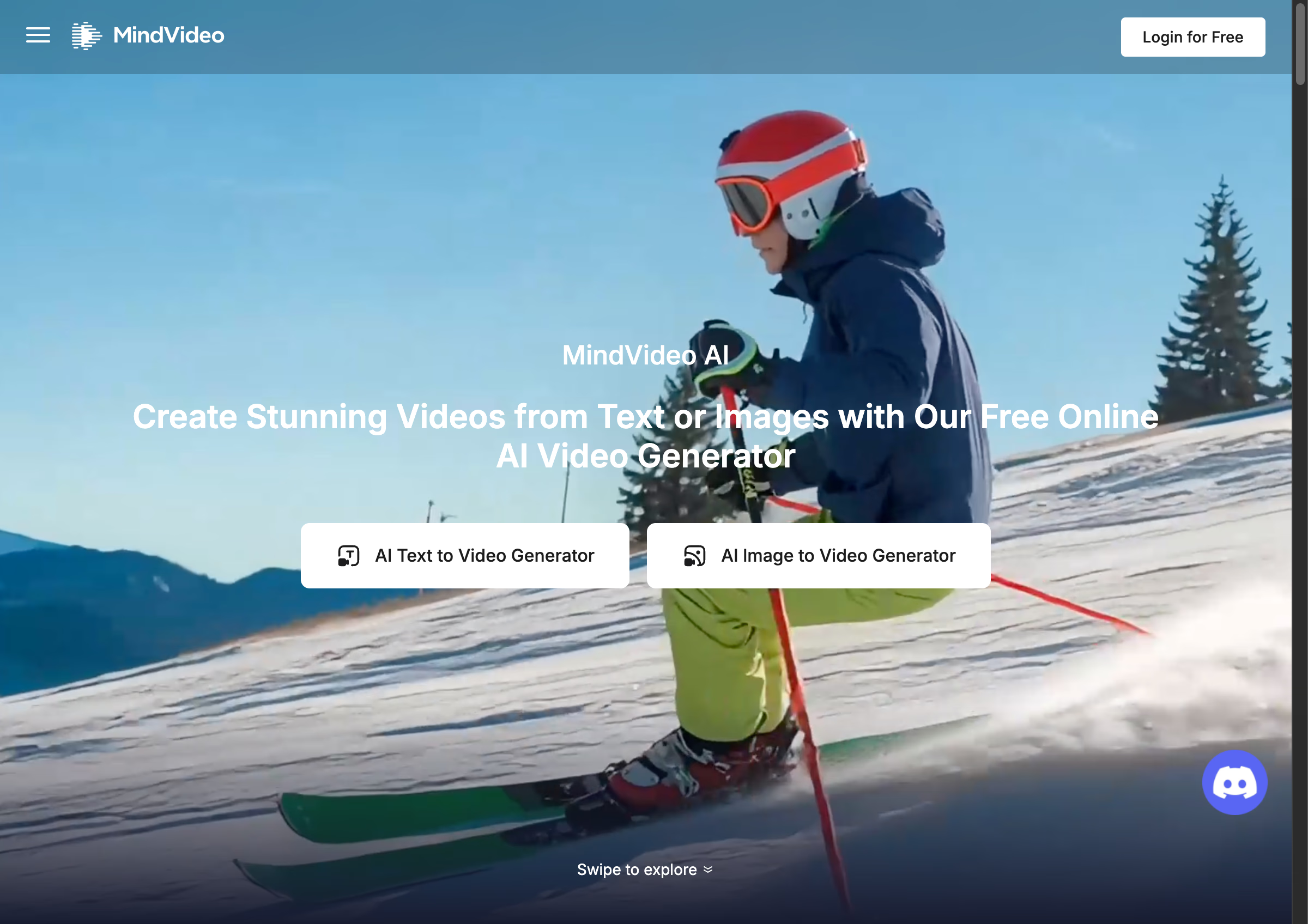
MindVideo visual referenced by the Canva alternatives source page
Midjourney
Midjourney consistently produces some of the most aesthetically refined AI images available. The output has a distinctive look that's immediately recognizable — strong composition, rich colors, and high detail.
Why it matters
- Output quality is in a different league. Midjourney's V6 model produces images that can pass for professional photography in many cases.
- Discord-based workflow (no web UI for generation), no face swap or character consistency tools, no video generation, strict content policy, and a monthly subscription model.
- Supports clearer tradeoffs around quality, control, cost, and content policy.
- Fits VideoAny workflows when the goal is visual output rather than only discussion.
- Pricing model
- Compare current pricing, credits, and usage limits before scaling.
- Trade-offs
- The right choice depends on whether you need quick experiments or a full production workflow.
- Best fit
- Creators who prioritize artistic quality above everything else and don't need a full content pipeline.

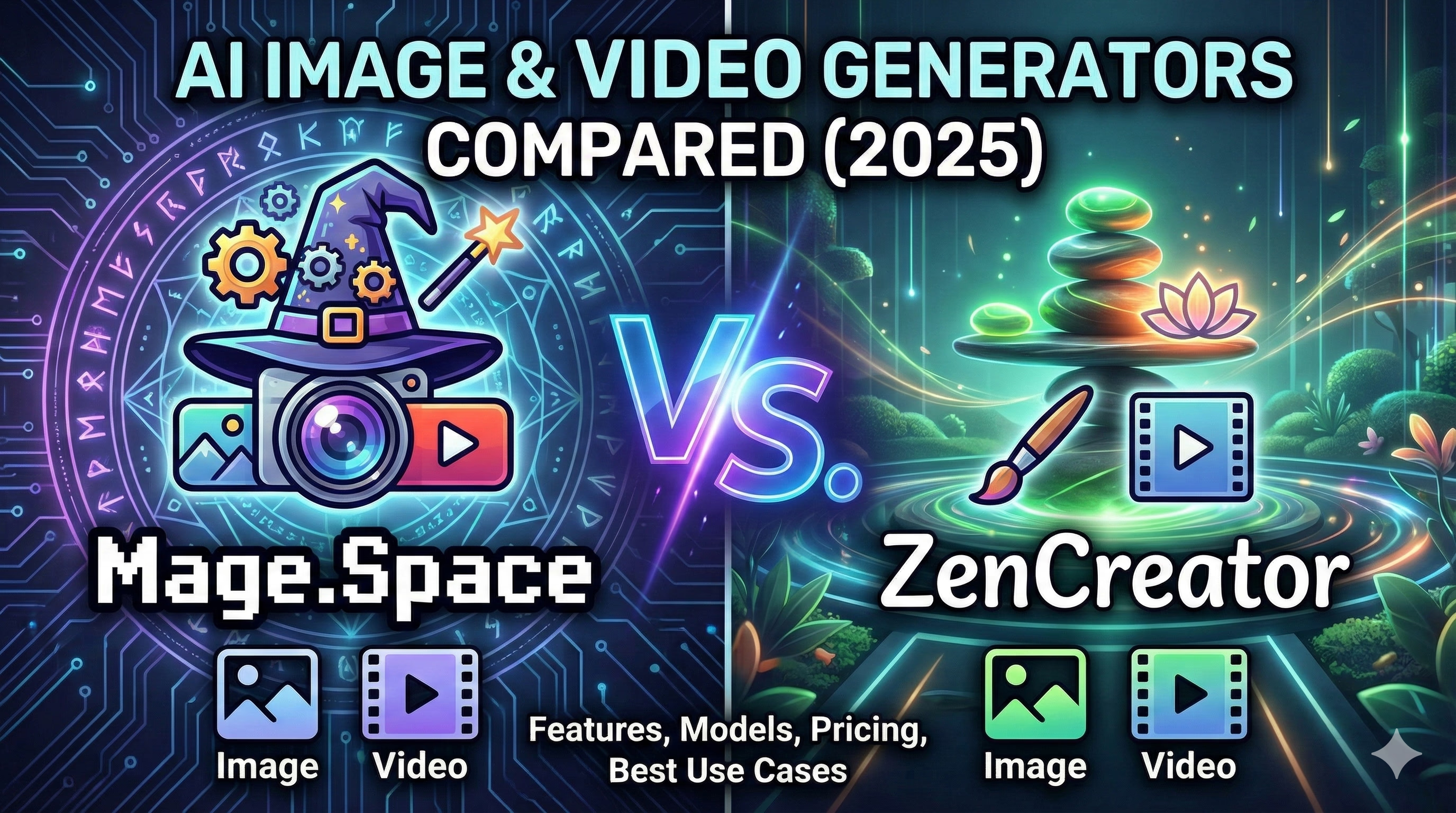
Mage Space comparison cover referenced by the Canva alternatives source page
Adobe Firefly
Adobe Firefly is trained exclusively on licensed content (Adobe Stock, public domain), making it the safest choice for commercial use with minimal copyright risk.
Why it matters
- Higher quality, better integration with Photoshop/Illustrator, and explicit commercial licensing with IP indemnification for enterprise users.
- Strict content filters (even tighter than Canva), no face swap, no video generation from images, and tied to Adobe's subscription ecosystem.
- Supports clearer tradeoffs around quality, control, cost, and content policy.
- Fits VideoAny workflows when the goal is visual output rather than only discussion.
- Pricing model
- Compare current pricing, credits, and usage limits before scaling.
- Trade-offs
- The right choice depends on whether you need quick experiments or a full production workflow.
- Best fit
- Brand teams and agencies that need airtight IP compliance.

Source-page AI image generator preview visual
Flux
Flux is an open-weight model you can run locally or through API services like Replicate. Full parameter control, no content filters when self-hosted, and growing community support.
Why it matters
- Complete control over every generation parameter, no content restrictions when self-hosted, and no per-image credit costs on your own hardware.
- Requires technical setup (Python, GPU, or API billing). No built-in face swap, no video generation, no publishing tools. It's a raw model, not a platform.
- Supports clearer tradeoffs around quality, control, cost, and content policy.
- Fits VideoAny workflows when the goal is visual output rather than only discussion.
- Pricing model
- Compare current pricing, credits, and usage limits before scaling.
- Trade-offs
- The right choice depends on whether you need quick experiments or a full production workflow.
- Best fit
- Developers and technical creators who want maximum control and are comfortable with command-line tools.
Workflow
How do these alternatives compare side by side?
A practical workflow section based on the source page's how-to and decision logic.
Canva is great as a design tool. But its AI generation is a side feature, not a core competency.
Here are five dedicated platforms that handle AI image generation as their primary function — not an add-on.
VideoAny isn't just an image generator. It's a 12-tool content platform that covers the entire workflow from character creation to social publishing.
Implementation checklist
- How do these alternatives compare side by side?
- Is Canva's AI image generator good enough for social media content?
- Can I use Canva AI-generated images commercially?
- Does Canva's Magic Media support video generation?
- 1. VideoAny — best for character-driven content and full pipeline
- 2. Leonardo AI — best for stylized art and community models
Use VideoAny when the final deliverable needs images, motion, identity consistency, or repeatable publishing.
FAQ
Common questions
Is Canva AI worth the Pro subscription just for image generation?
The source page treats this as a practical workflow question. The short answer depends on whether you need a quick test, a single export, or a repeatable VideoAny production workflow.
How many AI images can I generate on Canva for free?
Compare the tools by quality, control, pricing model, policy limits, and whether they can support visual output at scale.
Ready to put this into practice?
VideoAny is strongest when you need to move from prompt or reference image to reusable visual assets, not just a one-off result.
Need Help?
Keep usage legal, respect rights and consent, and choose the workflow that matches the content you are allowed to publish.
Next Step
Build the workflow in VideoAny
Use the source-backed decision framework, then test the VideoAny workflow that fits your output goal.
- Start from the relevant tool instead of a generic prompt box.
- Compare quality, speed, and content policy before scaling.
- Use image, video, and face tools together when consistency matters.