Problem
Why swimwear outputs fail without template discipline
Most quality failures come from inconsistent style direction, not lack of creativity.
Swimwear portrait generation often drifts when creators change too many variables at once, especially lighting, fabric texture, and camera mood.
Template-first prompting solves this by locking a clear aesthetic direction before you branch into multiple variations.
The goal is not one random good frame. The goal is a repeatable set with consistent body realism, styling, and scene coherence.
Common failure points
- Mixed style cues that produce unstable output tone
- Overly long prompts that reduce controllability
- Fabric reflections and skin tones that shift unpredictably
- Background drift between pool, beach, and studio scenarios
Template consistency beats prompt complexity in production workflows.
Approach
Example prompt framework with results
Use these source-inspired prompt patterns as reusable starting points.
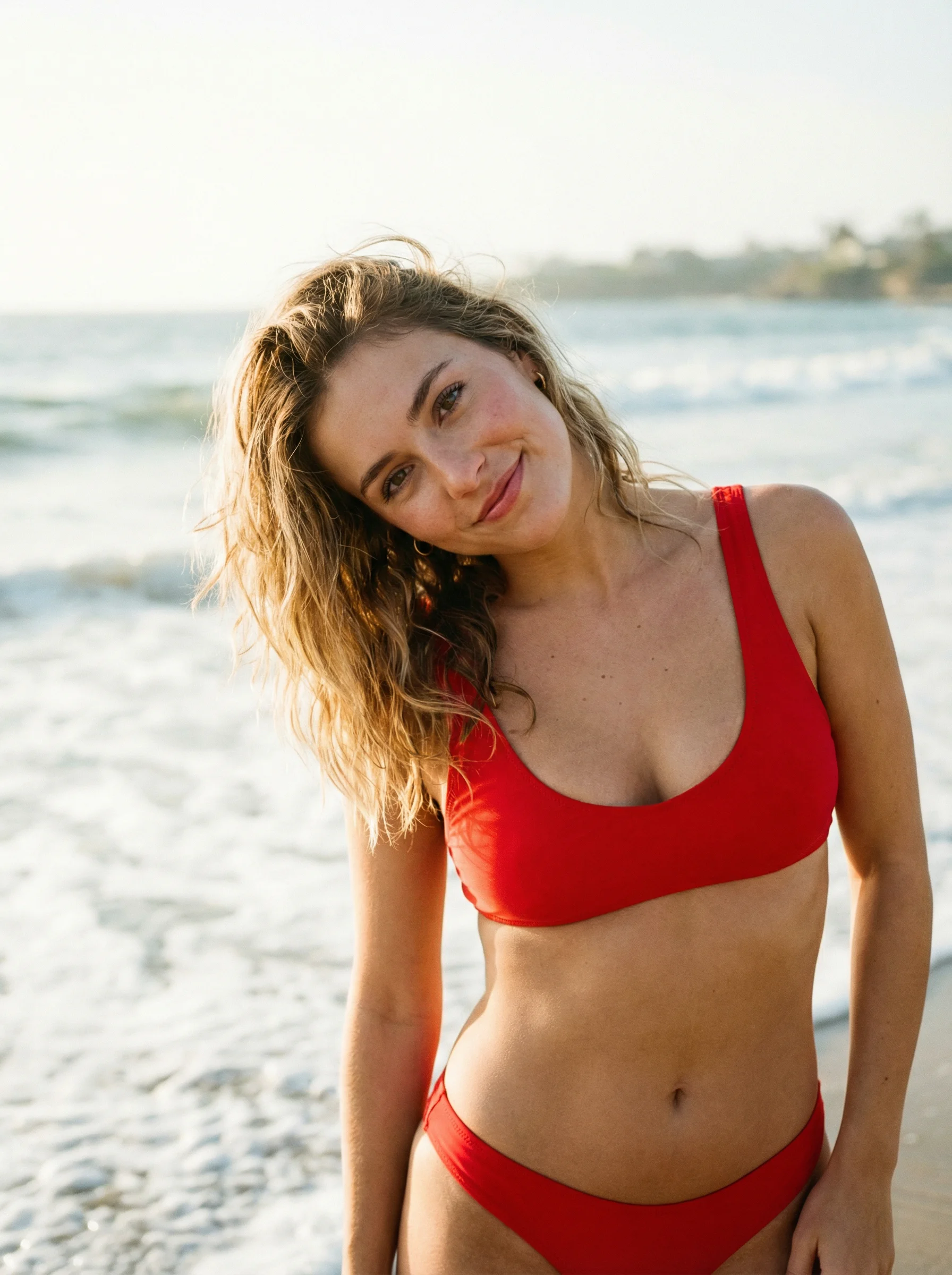
The source page demonstrates that swimwear prompts work best when each template targets one visual objective, such as golden-hour glow or reflective fabric realism.
Start from a clean base template, then adjust only one or two variables per round so you can keep quality stable while exploring variety.
This method yields faster iteration and more predictable outputs than writing long freeform prompts from scratch each time.
Template design principles
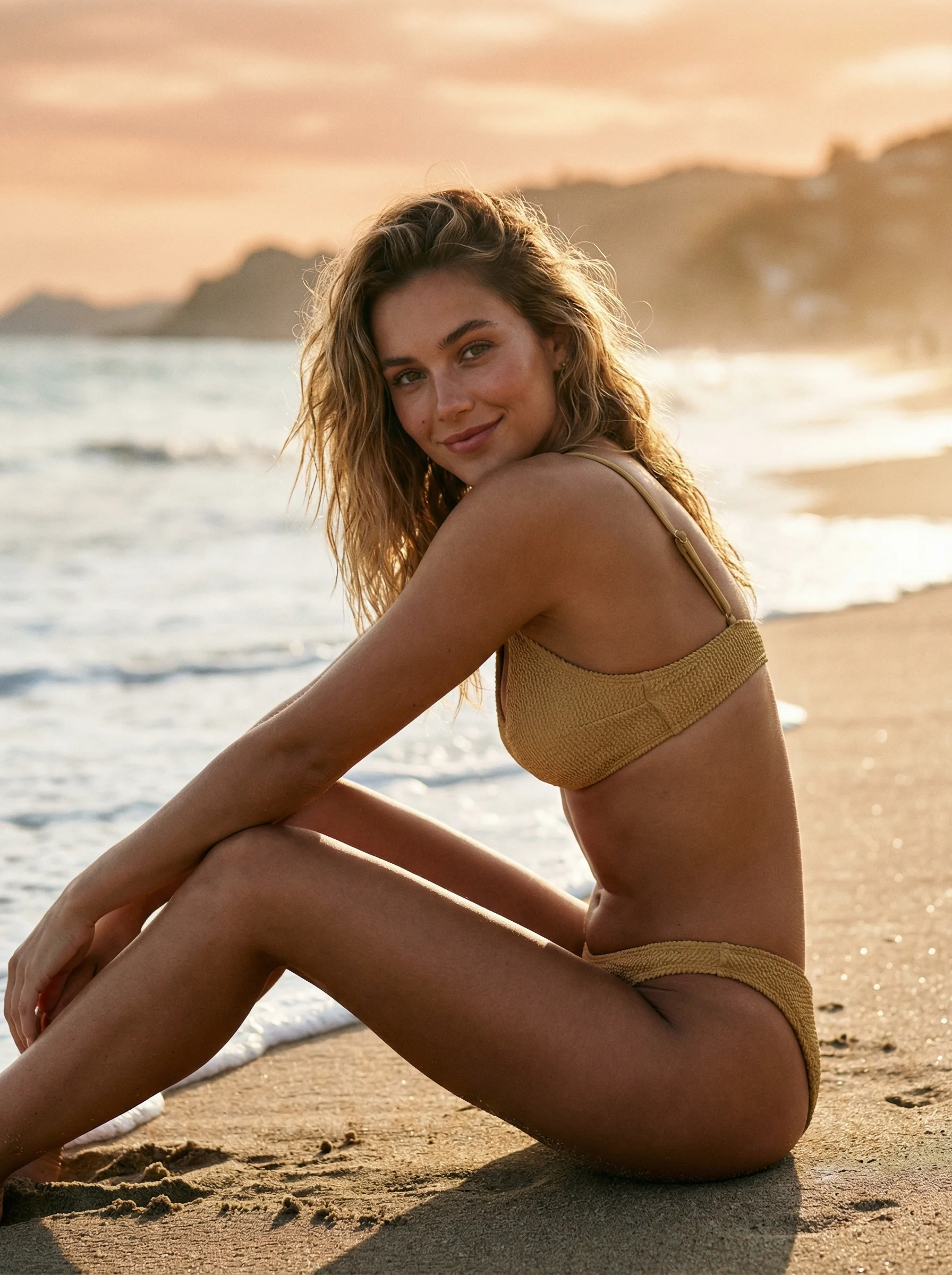
- Template 1: golden-hour elegance with soft cinematic light
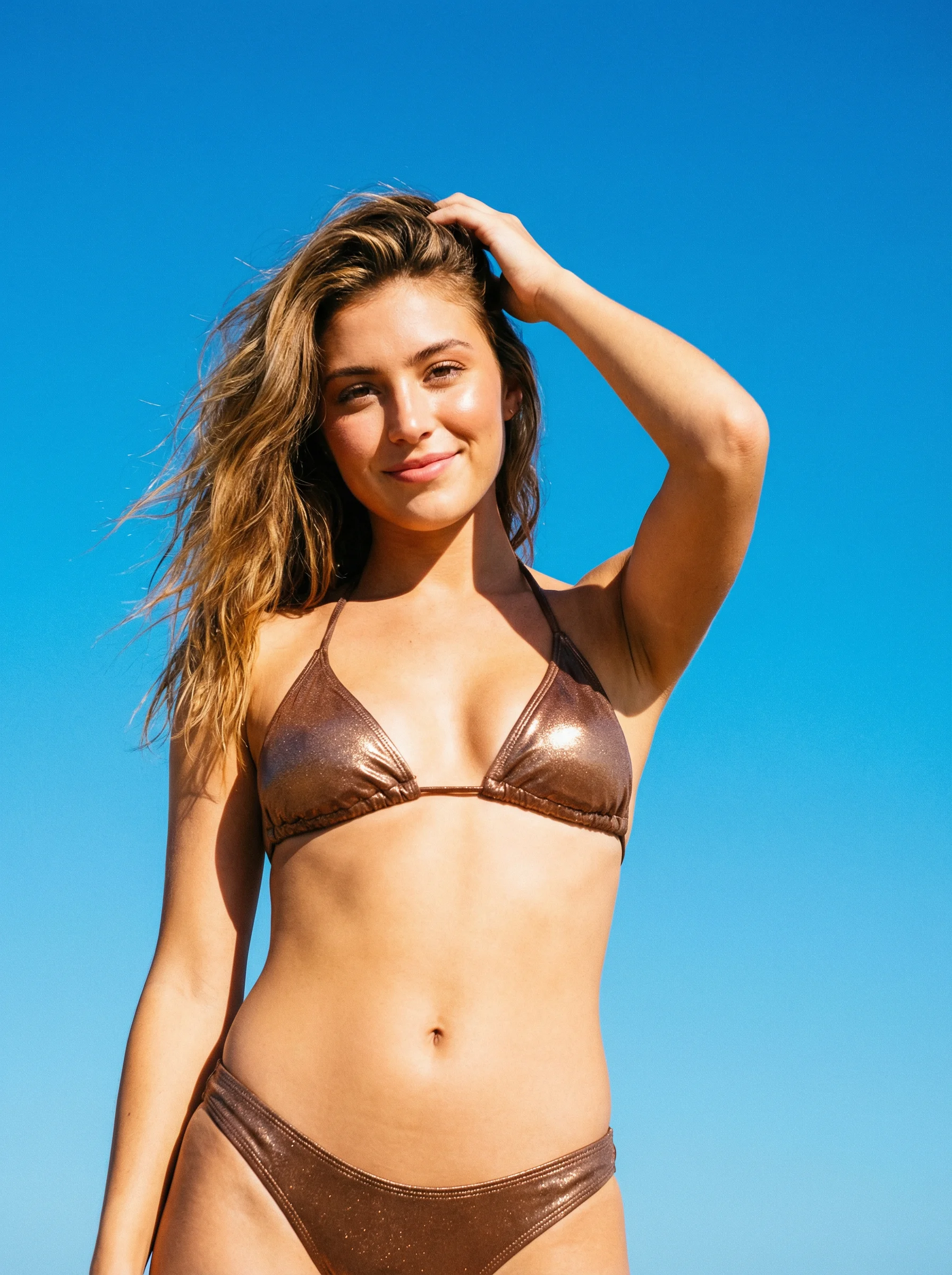
- Template 2: reflective fabric detail with controlled highlights
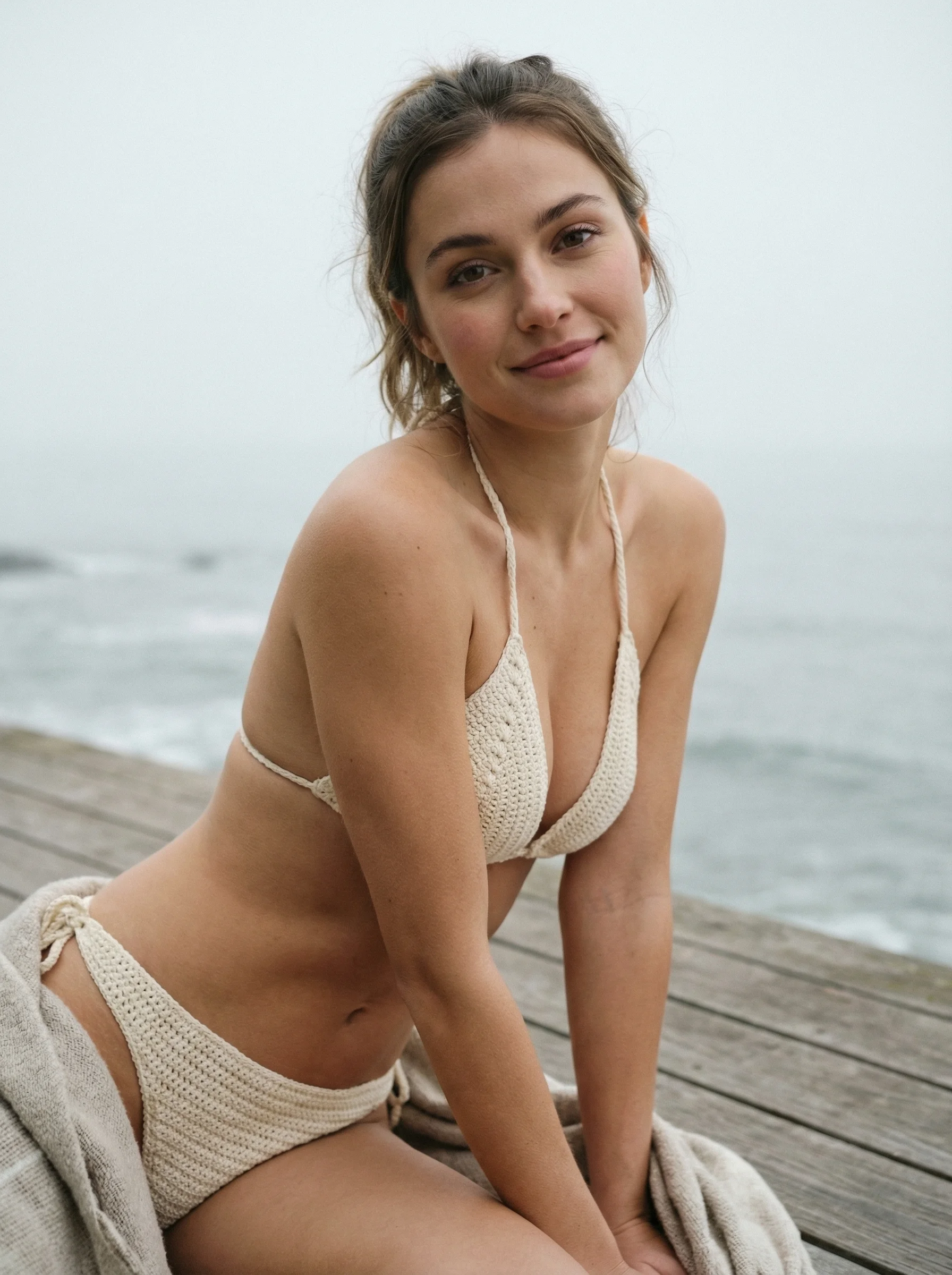
- Template 3: intimate close-up mood with natural skin texture
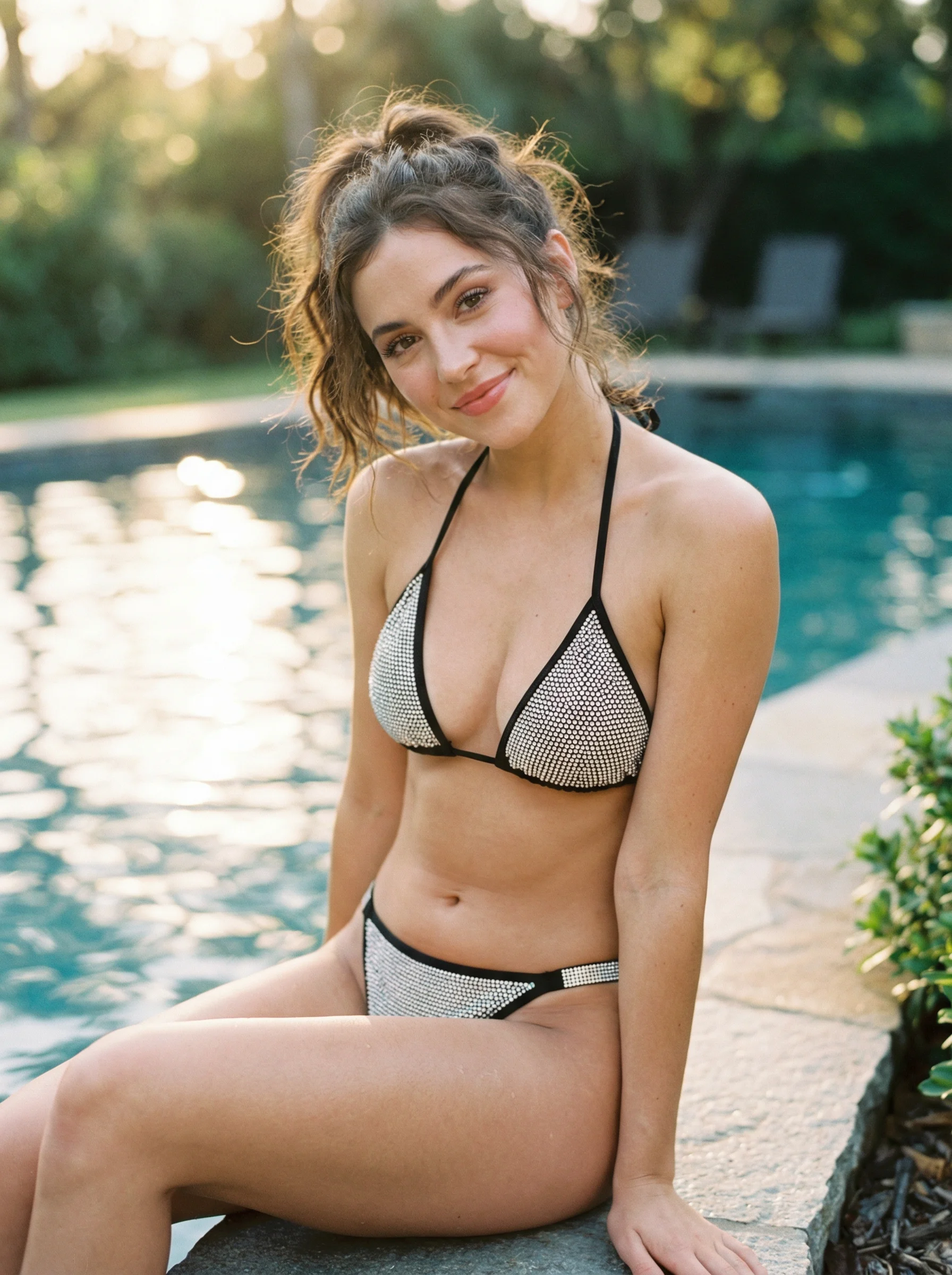
- Template 4 and 5: environment-specific variants for poolside and beach narratives
Treat each template as a production preset, not a one-time prompt.
Execution
Step-by-step template execution framework
Use this framework to run swimwear prompt templates from first draft to final set.
| Stage | Goal | What to do | Output |
|---|---|---|---|
| 1. Prompt 1 baseline | Establish tone and lighting | Run a golden-hour swimwear template and lock your target face, pose, and color mood. | Baseline hero frame |
| 2. Prompt 2 texture pass | Improve material realism | Use a reflective-fabric template to tune specular highlights, cloth detail, and skin-light interaction. | Higher-fidelity detail set |
| 3. Prompt 3 intimacy pass | Adjust portrait mood | Apply a close-up girlfriend-aesthetic template while preserving natural expression and body continuity. | Mood-focused portrait branch |
| 4. Prompt 4 and 5 scene variants | Expand narrative variety | Generate poolside and beach variants with controlled environment shifts and stable subject identity. | Scene-diverse shortlist |
| 5. Final packaging | Ship a coherent set | Select final outputs that share a unified style language for social or creator publishing. | Production-ready swimwear set |
Execute templates in sequence to reduce style drift across the full set.
Optimization
Tool requirements and free-trial strategy
A lightweight stack is enough if you combine the right model access and execution order.
You need a model that supports unrestricted image generation, image-to-image control, and enough variation depth to preserve identity across template passes.
Use free credits to validate all five template directions before spending paid credits on high-volume generation.
Once one template chain performs well, save it as a reusable preset and scale output with minor parameter changes.
Minimum setup checklist
- Unrestricted image model access with stable output controls
- Image-to-image mode for anchor preservation
- Template library for repeatable visual direction
- Free-trial plan to benchmark before scaling
Free-trial testing is most effective when each template has a clear objective.
FAQ
Frequently asked questions
Do I need an unrestricted model for swimwear template workflows?
Usually yes. Restriction-heavy models may block or distort intended outputs, while unrestricted models better preserve template intent.
Can I adapt these templates to different body types and scenes?
Yes. Keep the template structure fixed and change only body, styling, or environment attributes in controlled increments.
What is the best free-trial strategy for these templates?
Use free credits to test all five template directions first, then scale only the two or three that show the best consistency and quality.
Should I rely on templates or freeform prompting?
Templates are better for repeatability and production speed. Freeform prompts are useful for exploration after your baseline template is stable.
Next step
Run swimwear templates in a repeatable production workflow
Use VideoAny to execute template-first swimwear generation with better consistency and faster output scaling.
- Template-driven generation with stable visual direction
- Fast iteration across lighting and scene variants
- Scalable publishing workflow for creator teams
Related