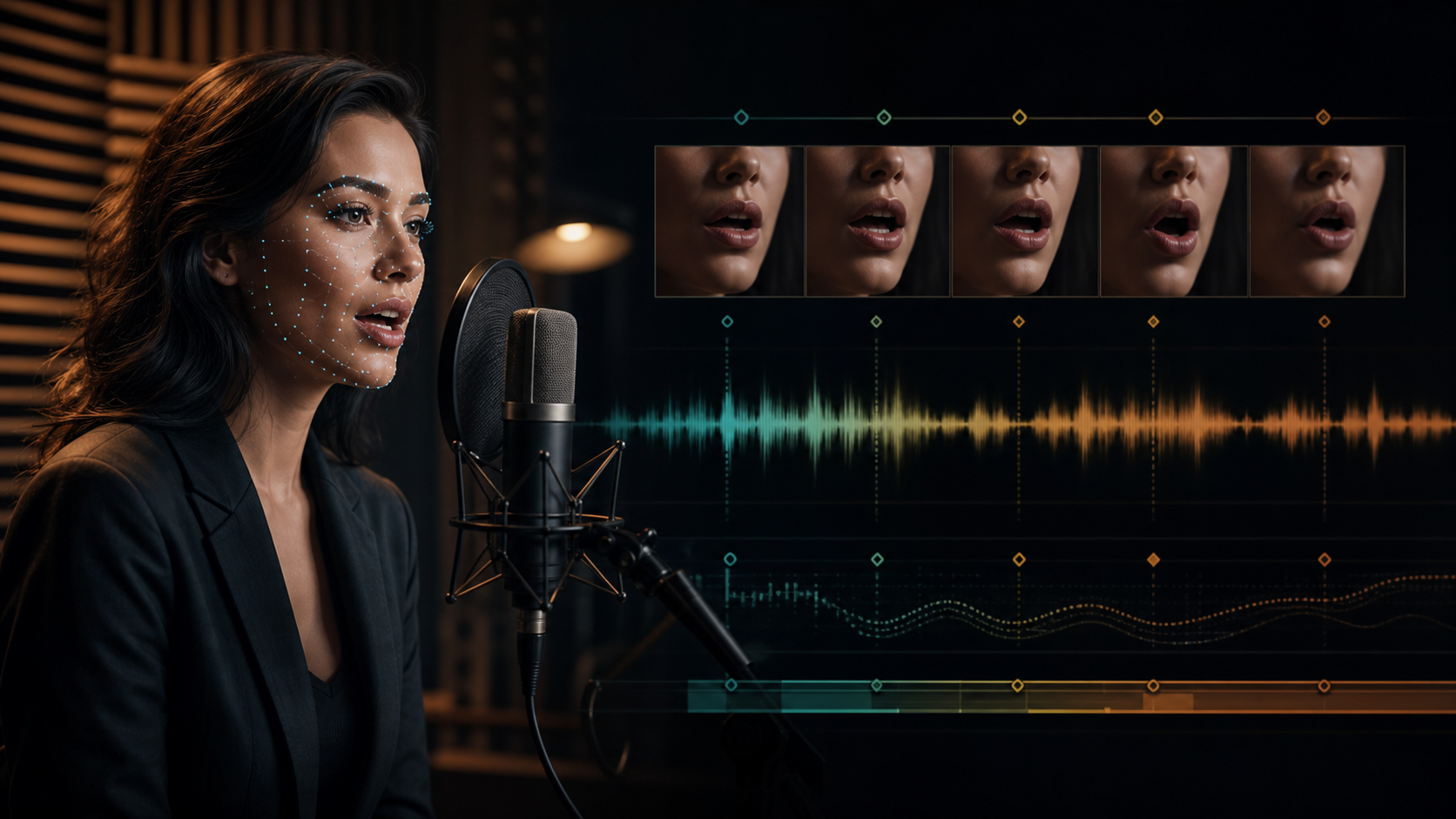
Lip Sync Is Timing Plus Performance
Lip sync is not simply opening a mouth on every syllable. Convincing speech combines phoneme timing, jaw movement, lip closure, cheeks, eyes, brows, breath, head motion, and the performer’s emotional intent. The face must remain the same consenting adult throughout.
The reference page promotes an adult-only, unrestricted generation platform with text, image, and video modes; optional references; 1080p output; multiple aspect ratios; quick results; private storage; ownership; anonymous use; and crypto payment. These are source-platform claims, not VideoAny guarantees. Verify current lip-sync capability, export files, pricing, privacy, acceptable-use rules, and commercial terms directly.
Use only clearly adult faces and voices you own or are licensed to animate. Obtain explicit consent for AI facial and vocal processing, mature context, distribution, and commercial use. Never lip-sync minors into adult material or make a non-consenting real person appear to say something they did not say.
Prepare the Voice Track First
Lip sync follows audio, so finish the line before animating the face.
- Use a clean recording with minimal reverb and noise.
- Keep one speaker per file.
- Trim silence only after preserving natural breaths.
- Avoid clipping and excessive compression.
- Confirm pronunciation, timing, emotional tone, and language.
- Record at the edit timeline’s sample rate.
- Keep the original and processed versions.
- Document performer or synthetic-voice rights.
Do not change dialogue after generating final mouth motion. Even a small edit shifts every phoneme that follows.
Choose Suitable Face Footage
The best source shows:
- one clearly adult, authorized face;
- frontal or modest three-quarter angle;
- visible mouth and jaw;
- stable focus and exposure;
- limited motion blur;
- no hand, hair, microphone, or prop covering the lips;
- enough resolution to see closures and teeth;
- natural neutral performance before the line.
Extreme profile, rapid head turns, heavy facial hair over the mouth, and severe colored lighting make sync harder. Start with a short, clear close-up before attempting complex movement.
Understand Visual Speech Shapes
Many sounds share similar visible mouth shapes. The exact phonetic system depends on language and tool, but reviewers should watch for:
- lips fully closing for sounds such as m, b, and p;
- lower lip approaching the upper teeth for f and v;
- rounded lips for oo and related vowels;
- wider open shapes for ah;
- tongue and teeth relationships where visible;
- smooth transitions rather than one rigid shape per sound.
Speech perception is forgiving when timing, rhythm, and expression agree. It becomes uncanny when closures happen late or the jaw moves without cheeks and eyes responding.
A Source-Inspired Workflow
The source page describes selecting a mode, describing the scene, supplying an optional reference, choosing output settings, then downloading or remixing. Apply it to lip sync.
- Clear face and voice rights. Record adult status, consent, source owner, allowed context, and distribution.
- Lock the audio. Edit pronunciation, pace, breaths, and performance before picture generation.
- Prepare the face shot. Stabilize framing and correct only necessary exposure or noise.
- Generate a short calibration line. Use a phrase containing visible lip closures and open vowels.
- Review timing and identity. Compare waveform, mouth closures, jaw, eyes, teeth, and facial proportions.
- Process in short lines. Long monologues are easier to manage as sentences with reaction-shot coverage.
- Edit and mix. Preserve room tone, match shot color, add licensed ambience and music, and caption the final dialogue.
VideoAny’s general image-to-video and video-to-video routes may support permitted facial-motion workflows, but this article does not claim a dedicated unrestricted lip-sync product. Check current models and rules before uploading identity media.
Prompt and Direction Notes
The source recommends subject, wardrobe, environment, lighting, camera, and motion. For lip sync, most appearance should already be fixed by the authorized reference. Direction should focus on performance:
Preserve the same original fictional adult face, age, hair, clothing, framing, light, and background from the approved source; natural speech performance synchronized to the licensed audio; accurate lip closures and jaw motion, subtle blinks and brow response, one small head nod at the end, stable teeth, eyes, skin texture, and identity; no camera movement, text, logos, or new objects.
Do not redescribe the person in a way that conflicts with the reference. Avoid exaggerated emotion unless the audio supports it.
Sync Review: Picture and Sound
Watch once with sound, once silently, and once frame by frame.
- Do visible closures occur on the sound, not before or after?
- Does the mouth rest naturally during pauses?
- Do jaw, cheeks, and eyes support the line?
- Are teeth and tongue stable?
- Does the face preserve adult age and identity?
- Is the head motion motivated and continuous?
- Does audio remain in sync after export?
- Are cuts placed at breaths or useful reaction moments?
Test on the target device. Small sync errors may appear different on mobile playback, browsers, and variable-frame-rate files.
Common Lip-Sync Failures
Mouth moves but the face feels frozen
Add subtle eye, brow, cheek, breath, and head performance. Keep it restrained and aligned with the audio.
Closures are late
Check audio offset and frame rate before regenerating. A timeline mismatch can look like a model failure.
Teeth flicker
Shorten the line, use a clearer face source, reduce head rotation, and reject frames with invented dental detail.
Identity changes during speech
Lower transformation strength, use the approved adult reference, stabilize lighting, and process shorter segments.
Lip sync breaks after export
Conform variable frame rate to a constant frame rate, verify sample rate, and check whether the encoder changed duration.
Multilingual Considerations
Languages differ in rhythm, visible articulation, stress, and syllable timing. Use a native speaker or qualified language reviewer. Do not assume an English-trained mouth pattern works for every language. Captions should be created from the final approved audio, translated by a human, and timed after picture lock.
Privacy, Ownership, and Disclosure
The source claims private libraries, no prompt sharing, no real-name requirement, full ownership, and crypto payment. Verify retention, deletion, training use, gallery defaults, human review, subprocessors, and commercial rights in current policies.
Face and voice data are sensitive. Upload the minimum required, remove unrelated people, and delete assets according to consent. Payment method does not automatically eliminate logs. Clearly disclose synthetic or altered speech where law, platform rules, or audience expectations require it.
Final Checklist
- Face belongs to a clearly adult person who consented to AI lip sync.
- Voice is original, licensed, or authorized for the intended context.
- Dialogue, timing, pronunciation, and emotion are locked first.
- Face is clear, stable, unobstructed, and sufficiently detailed.
- Lip closures, jaw, cheeks, eyes, teeth, and head motion pass review.
- Adult age and identity remain stable across every frame.
- Export frame rate, audio sample rate, duration, and sync are verified.
- Captions, disclosure, age gating, and destination-platform rules are complete.
FAQs
Should I animate a whole monologue at once?
Start with short sentences. Reaction shots and inserts make long dialogue easier to edit and repair.
Can I lip-sync any face to any voice?
No. You need rights and consent for both identity and voice, plus permission for the intended message and context.
Why does sync look right in the editor but wrong online?
Frame-rate conversion, encoding, browser playback, or audio offsets may have changed timing. Verify the exported file and target platform.
Does this article claim VideoAny is uncensored or a dedicated lip-sync tool?
No. It separates source-platform marketing from general VideoAny motion routes governed by current policies.
Conclusion
Good lip sync starts with a licensed performance and a clear adult face. Lock audio, calibrate visible speech shapes, add restrained facial acting, preserve identity, and verify the final export. Timing creates the illusion; consent makes the result legitimate.