Test the Tool, Not Its Demo Reel
Lip-sync demos usually show a clear frontal face, clean audio, one language, and a short line. Real projects introduce three-quarter angles, head motion, facial hair, compression, long dialogue, multiple languages, and edit constraints. A useful evaluation should measure all of them.
The reference page promotes an adult-only, unrestricted platform with text, image, and video modes; optional references; 1080p output; multiple aspect ratios; fast results; private storage; ownership; anonymous use; and crypto payment. These are source-platform claims, not VideoAny guarantees. Verify current lip-sync features, exported files, costs, privacy, acceptable-use rules, and commercial terms directly.
Use only clearly adult faces and voices covered by explicit permission. Consent should include AI facial animation, vocal use, mature context, distribution, and commercial scope. Never make minors or non-consenting real people appear to say something they did not say.
Build a Controlled Test Pack
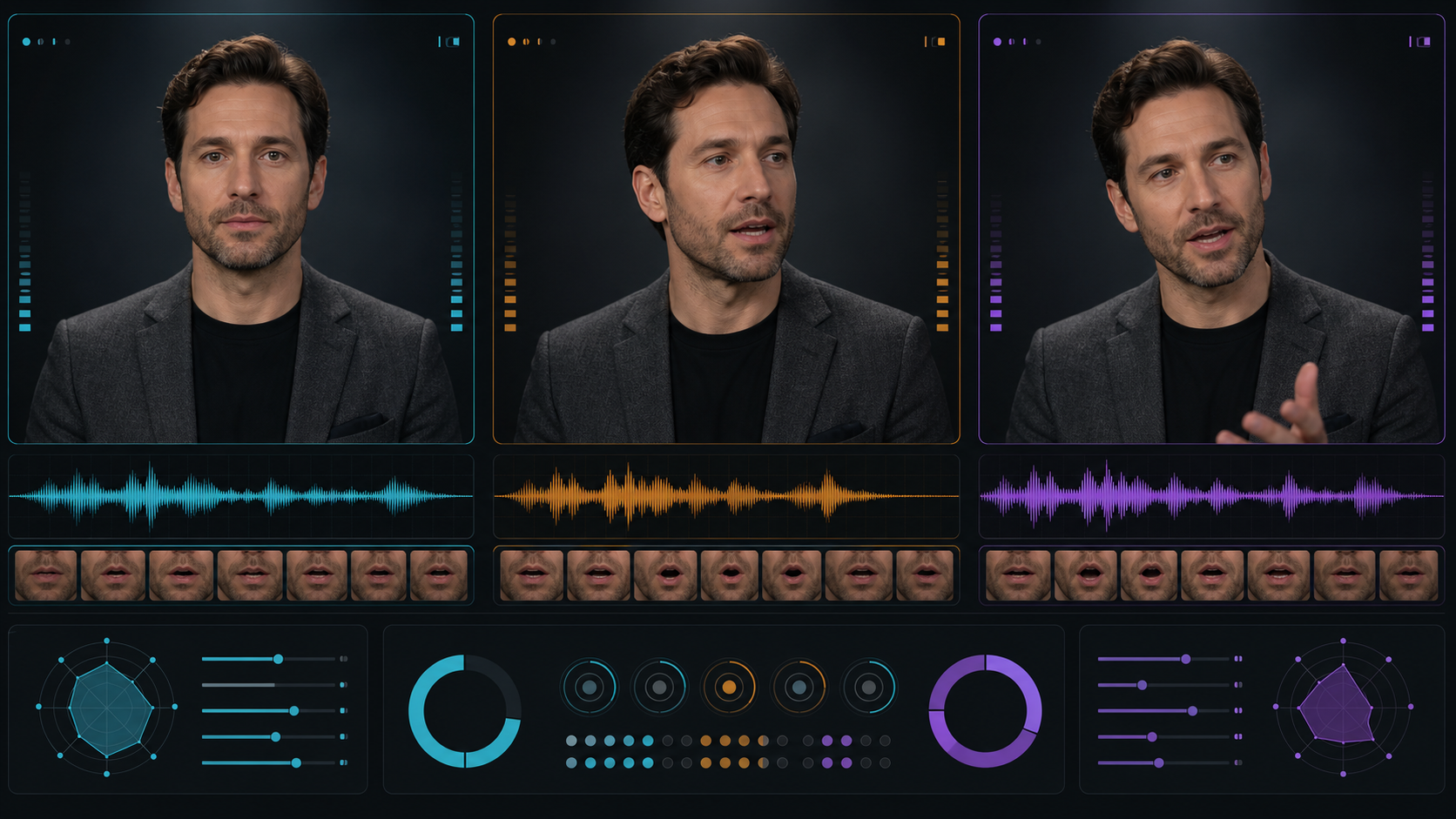
Prepare one authorized adult performer in three short video conditions:
- frontal, neutral light, fixed camera;
- modest three-quarter angle with a slow head turn;
- natural gesture and brief partial mouth occlusion.
Create clean audio samples:
- a 10-second calibration sentence with visible lip closures;
- a sentence with open vowels and rapid consonants;
- a quiet line with pauses and breaths;
- a louder emotional line;
- one sample in every required language.
Use the same uncompressed audio and source clips across tools. Record frame rate, dimensions, codec, sample rate, and exact duration.
Rights and Consent Gate
Before uploading, verify:
- performer is an adult and identity-verified;
- face footage is owned or licensed;
- voice is original, licensed, or authorized;
- consent covers the exact message and context;
- tool training and human-review terms are acceptable;
- deletion and retention requirements are known;
- planned distribution and disclosure are permitted.
If any item is unclear, do not proceed. Technical accuracy cannot make unauthorized synthetic speech acceptable.
A Lip-Sync Scoring Matrix
Score each output from 0 to 2: 0 unusable, 1 repairable, 2 production-ready.
| Criterion | What to observe |
|---|---|
| Closure timing | Lips close on m, b, and p sounds |
| Shape accuracy | Rounded and open vowels are visibly distinct |
| Coarticulation | Mouth transitions smoothly between sounds |
| Facial performance | Jaw, cheeks, eyes, brows, breath, and head support speech |
| Identity fidelity | Adult age, face, hair, teeth, and skin remain stable |
| Angle tolerance | Sync survives three-quarter and moving views |
| Occlusion recovery | Mouth returns without geometry jumps |
| Language fit | Rhythm and articulation suit each tested language |
| Temporal stability | Teeth, tongue, lips, and facial texture do not flicker |
| Export integrity | Duration, frame rate, audio sync, and resolution match the request |
Include human reviewers who understand the spoken language. Automated scores cannot fully judge natural articulation or meaning.
Measure Sync Offset
Use a calibration line with obvious closures and inspect waveform peaks against video frames. Note whether the mouth leads or lags audio and whether the offset remains constant.
- A constant offset may be fixed in the editor.
- A growing offset suggests duration or sample-rate mismatch.
- Random local errors suggest model timing problems.
- A correct mouth with wrong head or eyes is a performance problem.
Convert variable-frame-rate footage to a constant rate before blaming the model. Verify the final exported file, not only the preview.
Test Identity Under Stress
Review:
- apparent adult age and facial proportions;
- eye color and direction;
- hairline, brows, facial hair, and skin marks;
- teeth and tongue across frames;
- mouth corners during strong expressions;
- face shape at three-quarter angles;
- recovery after a hand, microphone, or hair crosses the mouth.
Reject results that materially change the person or make age ambiguous. Do not use stronger facial transformation just to improve timing.
Compare Workflow and Cost
Record:
- accepted input formats and maximum duration;
- queue and processing time;
- credit cost per attempt;
- whether failed renders consume credits;
- maximum export resolution and frame rate;
- audio preservation or replacement behavior;
- watermark and commercial restrictions;
- ability to retry a segment rather than the entire clip;
- deletion and download controls.
If a service advertises 1080p or fast output, inspect the file and measure the time. A label is not evidence.
Using General Video Routes Carefully
VideoAny’s general image-to-video and video-to-video routes may support permitted facial-motion workflows. This article does not claim a dedicated unrestricted lip-sync tool. Check current models, identity rules, audio support, and upload terms before testing.
When appearance is already defined by an authorized source, direction should preserve it:
Same approved adult face, age, hair, clothing, light, camera, and background; natural performance synchronized to licensed audio; accurate closures, stable teeth, subtle blinks and brow response, limited head motion, no identity change, text, logos, or new objects.
Multilingual Evaluation
Do not judge a language only by whether the mouth moves. Review stress, rhythm, syllable timing, visible articulation, and emotional delivery with native speakers. Test proper names, numbers, and borrowed words separately.
For dubbing, confirm that translation length fits the shot. A literal translation can be much longer than the original. Rewrite for meaning and timing, then create captions from the final approved audio.
Privacy and Data Handling
The source claims private libraries, no prompt sharing, no real-name requirement, full ownership, and crypto payment. Verify retention, deletion, training use, gallery defaults, human review, subprocessors, and commercial rights in current policies.
Face and voice are sensitive identity data. Upload only the required range, remove bystanders, keep consent records, and delete material according to agreement. Payment method does not automatically eliminate account or network logs.
Publishing Checks
- Face and voice belong to authorized adults.
- Message and mature context are covered by consent.
- Lip timing, performance, identity, language, and export pass human review.
- Dialogue is accurate and has not changed meaning.
- Audio loudness, captions, and accessibility are complete.
- Synthetic or altered speech is disclosed where required.
- Age gating and destination-platform policy are satisfied.
FAQs
What is the best first lip-sync test?
Use a short frontal line with clear lip closures, open vowels, natural pauses, and clean audio.
Can a constant sync error be fixed in editing?
Often yes. A changing or random offset is harder and may require regeneration or frame-rate correction.
Should I compare tools using their default demos?
No. Use the same authorized face footage, audio, duration, and output settings for every tool.
Does this article claim VideoAny is uncensored or a dedicated lip-sync service?
No. It separates source-platform marketing from general VideoAny routes governed by current policies.
Conclusion
A credible lip-sync evaluation combines timing measurement, language review, identity fidelity, workflow evidence, and consent. Test controlled face angles and audio, inspect the exported file, and score what the tool actually does. The best result is not merely synchronized; it is authorized, stable, and publishable.