Introduction
The reference article positions an adult pinup-video generator around a short describe-generate-refine-download workflow and prompts that specify subject, wardrobe, environment, lighting, camera, and motion. It also repeats vendor claims about few content filters, HD output, anonymous use, private libraries, crypto checkout, and user ownership.
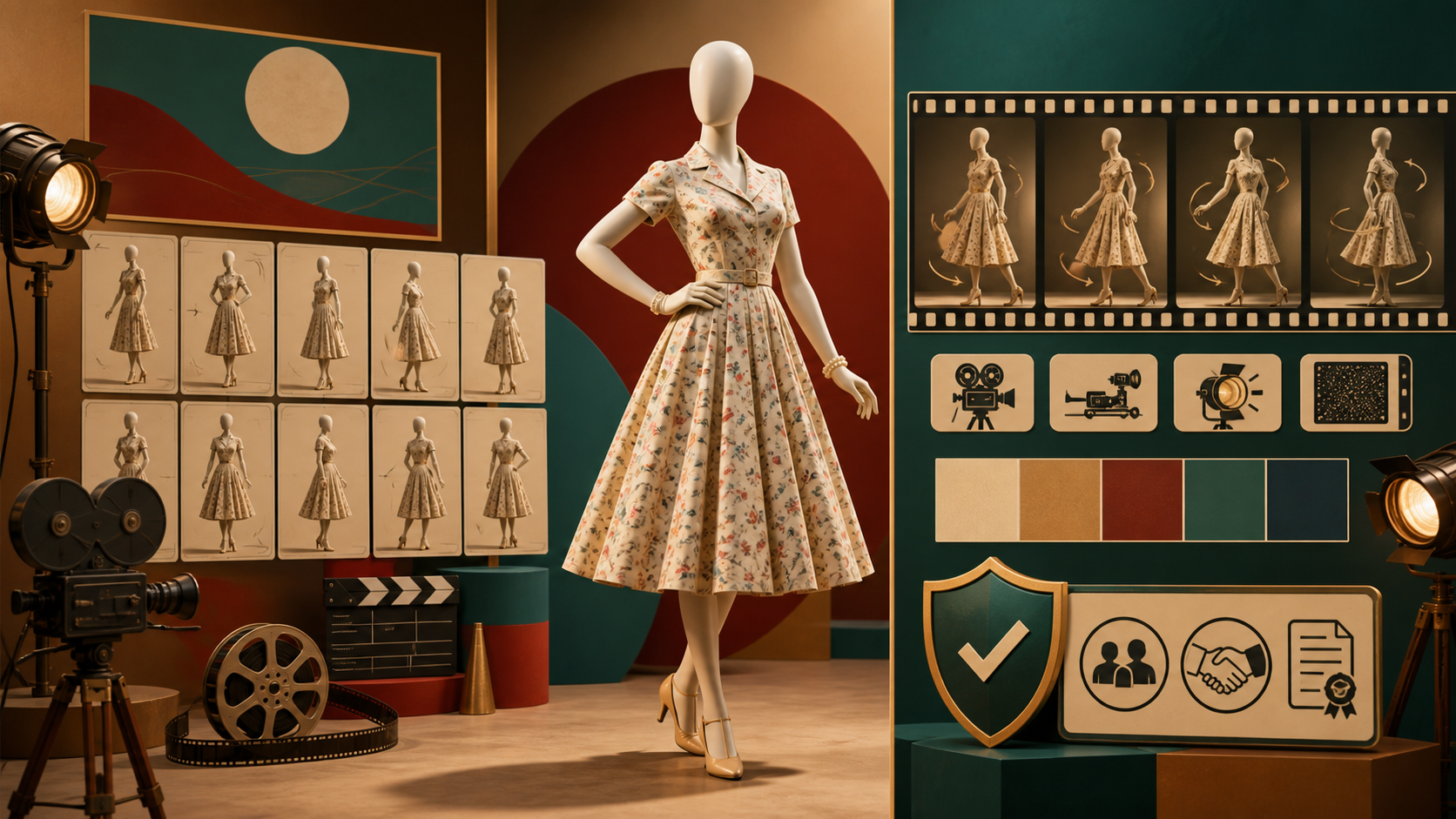
Pinup-inspired video adds a visual-history challenge: the result should feel period-aware without copying a specific poster, photographer, living artist, trademark, or recognizable person. Pose transitions, costume construction, painted backdrops, studio lighting, color separation, and film texture must remain coherent. This guide keeps the source’s prompt anatomy and workflow while adding original art direction, rights review, and adult consent. The source platform’s unrestricted-content, anonymity, timing, resolution, billing, privacy, and ownership claims are not VideoAny claims.
Adult-only boundary: use a fictional adult model or a real adult who explicitly consented to the exact wardrobe, posing, camera coverage, edits, audience, and distribution. Never create sexualized media involving minors or non-consenting real people.
Define an Original Retro Direction
Use broad historical design language rather than requesting a copy of one artwork:
- Era cues: Choose a decade range, then research silhouettes, set shapes, makeup conventions, and camera technology.
- Palette: Limit the production to a small set of cream, red, teal, gold, or other period-inspired colors.
- Backdrop: Painted geometry, simple studio flats, drapery, or an original illustrated environment.
- Wardrobe: Document dress shape, hem, neckline, fabric, buttons, belt, footwear, and accessories.
- Hair and makeup: Use original fictional styling and keep it stable between shots.
- Texture: Decide whether the final looks like clean studio film, aged print, halftone, or hand-painted poster art.
Do not insert a copyrighted poster, brand logo, celebrity, or private person as a shortcut to “authenticity.”
Plan Pose Transitions
A still pinup composition can look strong while an animated transition fails. Create a short pose sheet:
- Start pose: Weight placement, hands, gaze, and body angle.
- Transition: One step, turn, arm change, or prop interaction.
- End pose: A stable silhouette that reads at thumbnail size.
- Expression: Keep a consistent fictional identity and approved emotional range.
- Wardrobe state: Track skirt, belt, buttons, accessories, and hair.
- Camera: Lock the first test; add a slow pan or push only after the body motion is stable.
Use confident, non-coercive posing. Any real adult model’s approved boundaries should control both the starting pose and every generated intermediate frame.
Prompt Structure for a Pinup-Inspired Shot
Keep the source’s elements and add original-style constraints:
- Adult subject: Stable fictional identity or authorized adult reference, expression, and approved pose.
- Wardrobe: Exact retro garment construction, coverage, fabric, footwear, and accessories.
- Environment: Original studio backdrop, props, floor, and spatial landmarks.
- Lighting: Key, fill, rim, shadow softness, color temperature, and print-like contrast.
- Camera: Full-look wide, medium portrait, detail, low or high angle, and one move.
- Motion: One pose transition with a clear start, pace, and end state.
Add constraints for unchanged identity and garment, coherent hands and feet, no logo, no copied poster, stable background, and no camera framing outside the consent plan.
A Retro Fashion-Video Workflow
The source’s quick loop becomes:
- Approve adult consent, wardrobe, and pose boundaries. Record audience, channels, and disclosure.
- Create a reference board from rights-cleared material. Use broad period cues, original sketches, colors, and textures.
- Build a character and costume bible. Lock identity, dress construction, accessories, and hair.
- Generate a static hero frame. Validate silhouette, background, light, and originality before motion.
- Animate one pose transition. Start with a locked camera and a short duration.
- Inspect continuity frame by frame. Check hands, hem, buttons, hair, props, shadows, and backdrop geometry.
- Create compatible coverage. Wide, medium, and detail shots should match the same fictional production.
- Apply film texture at finishing. Add grain, color, print texture, and titles in an editor for consistency and readable text.
- Review rights and consent. Confirm that neither the look nor the motion exceeds the source material or model agreement.
VideoAny offers general text-to-image, image-to-video, and video-to-video routes that can support authorized retro concepts. Check current models and content rules; this article does not claim an unrestricted NSFW pinup generator.
Common Failure Modes
Review for a changing face, extra fingers, drifting hemline, disappearing buttons, inconsistent shoes, duplicated jewelry, impossible balance, sliding feet, warped props, modern objects that break the period, background flicker, and film grain that changes between shots. Also check that the final image does not unintentionally reproduce a recognizable artwork.
Why Mainstream Tools May Refuse Pinup Prompts
General-purpose AI providers may restrict sexual content or mature references through model and product policies. Specialized services may accept a wider range of consensual adult fashion and fiction, but responsible safeguards should still prohibit minors, non-consensual intimate imagery, identity abuse, coercion, trafficking, and unlawful content.
“Uncensored” does not make a reference image authorized or a derivative style original.
Privacy and Ownership Questions
The source platform advertises anonymous use, private libraries, crypto checkout, no prompt sharing, and user ownership. Verify:
- whether model photos, art references, prompts, outputs, and moderation records train models;
- retention periods for originals, previews, derivatives, and backups;
- who can access sensitive projects;
- whether share links are public or indexable;
- whether deletion includes thumbnails and failed variants;
- which licenses cover the output, model likeness, artwork, wardrobe, music, and source media.
Output ownership cannot grant rights to a person, photograph, poster, illustration, costume, song, or trademark the creator did not control.
Final Publishing Checklist
Before release, verify adult status and consent, original art direction, reference and costume rights, approved posing and coverage, identity and garment continuity, period consistency, music rights, disclosure, destination rules, titles, and final exports.
FAQs
How do I get a vintage look without copying an artist?
Combine broad period research, an original palette, your own backdrop geometry, fictional styling, and general film or print characteristics.
Should I generate film grain in every shot?
It is often more consistent to finish clean clips and apply a controlled grain treatment during editing.
Can a solo creator use this workflow?
Yes, with a reference board, costume bible, pose sheet, consent record, shot ledger, and rights review.
What matters most before publishing?
Adult consent and original rights-cleared art direction come first, followed by pose continuity, disclosure, and channel rules.
Conclusion
The source article’s prompt dimensions and iterative loop are useful foundations. A convincing pinup-inspired video comes from original retro art direction, stable costume and pose design, short controlled motion, consistent finishing, and explicit adult consent. Verify every privacy and ownership promise before uploading sensitive references.