Introduction
The reference article promotes an adult bikini-video generator through a short describe-generate-refine-download workflow. It recommends prompts that specify subject, wardrobe, environment, lighting, camera, and motion, then adds vendor claims about few content filters, 1080p output, anonymous use, private libraries, crypto checkout, and user ownership.
Swimwear footage brings its own continuity problems: straps, ties, prints, wet fabric, skin or mannequin boundaries, bright sun, moving water, reflections, wind, sand, and changing exposure. This guide preserves the source’s prompt structure and iterative workflow while prioritizing approved coverage, garment stability, identity rights, and adult consent. The source platform’s unrestricted-content, anonymity, timing, resolution, billing, privacy, and ownership claims are not VideoAny claims.
Adult-only boundary: use a fictional adult model or a real adult who explicitly consented to the exact swimwear, coverage, posing, camera angles, wet or dry styling, editing, and distribution. Never create sexualized media involving minors or non-consenting real people.
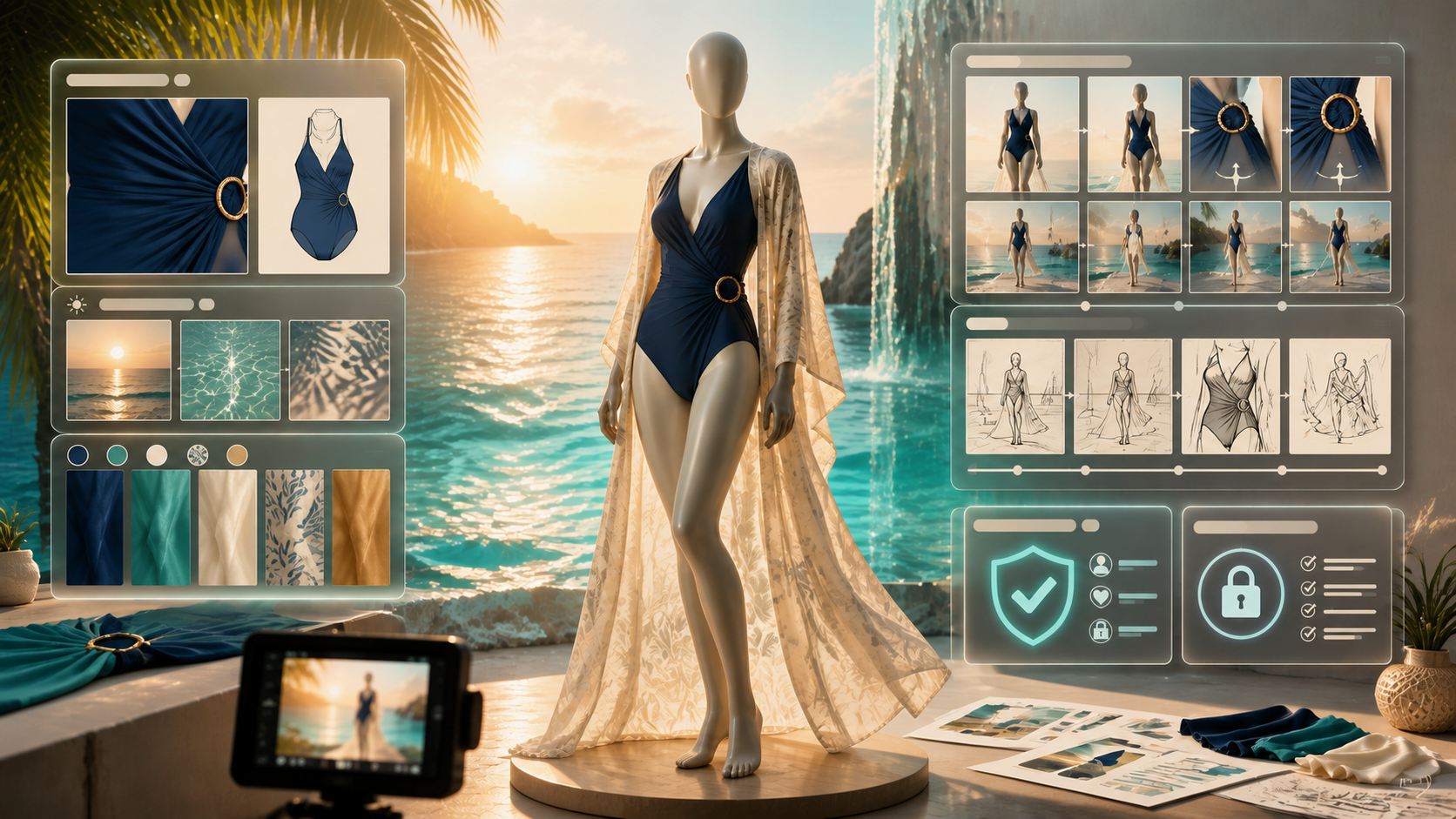
Build a Swimwear Look Bible
Document the approved design before motion:
- Silhouette: Two-piece, one-piece, high-waisted, athletic, resort, or editorial layering.
- Coverage and fit: Exact cut, strap placement, rise, support, and authorized body-safe framing.
- Material: Matte, ribbed, glossy, quick-dry, textured, or patterned fabric.
- Hardware: Rings, clasps, sliders, ties, and decorative elements need stable shapes and positions.
- Color and print: Save a precise palette and repeat pattern reference.
- Wet-state behavior: If authorized, define whether the garment stays dry, becomes wet, darkens, clings, or must remain fully opaque.
- Accessories: Wrap, robe, hat, eyewear, sandals, or jewelry should remain consistent.
Use fictional designs or garments you have rights to depict. Avoid unauthorized logos or close copies of a recognizable brand design.
Plan Sun, Water, and Camera Together
Outdoor swimwear scenes can change between generated shots. Fix:
- Time and sun direction: Sunrise, noon, golden hour, or overcast.
- Water source: Pool, sea, fountain, or studio projection.
- Reflection pattern: Choose calm shimmer, strong caustics, or minimal reflected light.
- Wind level: Hair, wrap, and fabric should respond consistently.
- Camera exposure: Bright sky and shaded subject must remain readable.
- Approved framing: Wide, medium, profile, detail, and movement angles should match consent.
Create a simple lighting reference so skin or mannequin tone, fabric color, and water reflections do not change unpredictably.
Prompt Structure for a Swimwear Shot
Keep the source’s six elements and make them production-specific:
- Adult subject: Stable fictional identity or authorized adult reference, pose, expression, and permitted framing.
- Wardrobe: Exact swimwear bible, coverage, opacity, accessories, and dry or wet state.
- Environment: Beach, pool, terrace, or studio; define horizon, surfaces, water, and props.
- Lighting: Sun direction, time, fill, reflected aqua light, contrast, and exposure.
- Camera: Full-look wide, walking medium, product detail, or gentle tracking shot; one move per clip.
- Motion: Walk, turn, pose change, wrap movement, or water interaction with clear start and end states.
Add constraints for unchanged straps and print, stable identity, no unintended transparency, no wardrobe malfunction, coherent reflections, and no angle outside the approved boundary.
A Swimwear-Video Workflow
The source’s fast loop becomes:
- Approve adult consent and styling boundaries. Record coverage, wet-state rules, posing, camera, audience, and distribution.
- Create the model and swimwear bible. Keep real identity records separate from visual references.
- Generate a dry static keyframe. Validate garment construction, opacity, body proportions, and sunlight.
- Test water and reflection separately. Confirm caustics, horizon, ripples, and exposure without complex motion.
- Animate one controlled action. Start with a walk, turn, or pose transition and a stable camera.
- Inspect garment behavior frame by frame. Check straps, ties, print, wetness, coverage, and body intersections.
- Create alternate coverage within approved angles. Match sun, wind, water, and garment state.
- Edit and finish. Add authorized music, captions, color, and disclosure outside the generator.
- Review against consent. Reject any variation that changes coverage, wet-state, pose, or framing beyond the agreement.
VideoAny offers general text-to-video, image-to-video, and video-to-video routes that can support authorized swimwear concepts. Check current models and content rules; this article does not claim an unrestricted NSFW bikini generator.
Common Failure Modes
Review for changing strap count, untied or moving closures, print drift, disappearing accessories, unintended transparency, water reflections on the wrong side, shifting horizons, warped hands and feet, skin or fabric flicker, changing shadows, and camera crops that exceed the planned coverage. If one problem appears, simplify the motion and change a single variable.
Why Mainstream Tools May Refuse Bikini Prompts
General-purpose AI providers may restrict sexual content or mature references through model and product policies. Specialized services may accept a wider range of consensual adult swimwear and fiction, but responsible safeguards should still prohibit minors, non-consensual intimate imagery, identity abuse, coercion, trafficking, and unlawful content.
“Uncensored” does not prove that every source image is authorized or every output can be distributed.
Privacy and Ownership Questions
The source platform advertises anonymous use, private libraries, crypto checkout, no prompt sharing, and user ownership. Verify:
- whether model photos, body references, location images, prompts, outputs, and moderation records train models;
- retention periods for originals, previews, derivatives, and backups;
- who can access sensitive projects;
- whether share links are public or indexable;
- whether deletion covers thumbnails and failed variants;
- which licenses cover the output, model likeness, garment design, music, location, and source media.
Output ownership cannot grant rights to a person, photograph, design, performance, soundtrack, resort, or trademark the creator did not control.
Final Publishing Checklist
Before release, verify adult status and consent, swimwear and design rights, approved coverage and wet-state, identity consistency, garment continuity, sun and water behavior, camera boundaries, music rights, disclosure, destination rules, thumbnails, and final exports.
FAQs
Should I generate a beach or studio scene first?
A controlled studio or simple pool test is easier for locking the garment and character before adding complex waves, reflections, and wind.
How do I prevent accidental transparency?
Define opaque material and wet-state constraints, use short motions, and inspect every frame against the consented coverage.
Can a solo creator use this workflow?
Yes, with a swimwear bible, consent record, lighting reference, shot ledger, and structured quality review.
What matters most before publishing?
Adult consent and approved coverage come first, followed by garment stability, identity rights, water continuity, disclosure, and channel rules.
Conclusion
The source article’s prompt dimensions and quick generation loop are useful foundations. A coherent bikini or swimwear video depends on an approved look bible, stable sun and water behavior, controlled motion, camera boundaries, frame-by-frame garment review, and explicit adult consent. Verify every privacy and ownership claim before uploading sensitive references.