Treat Cosplay as Design, Not Face Replacement
AI can help explore costume silhouettes, fabrics, armor shapes, wigs, lighting, and shoot concepts. It should not be used to place an unconsenting real person into intimate imagery or to copy a performer’s identity. The strongest workflow begins with an original adult character and a practical costume brief.
The reference page presents an adult-only, unrestricted generator with text, image, and video modes; optional references; 1080p output; multiple aspect ratios; quick results; private storage; ownership; anonymous use; and crypto payment. These are claims from the source platform, not VideoAny guarantees. Verify the current service, policies, export files, pricing, privacy, and commercial license yourself.
All mature concepts must involve unmistakably adult, consenting people. Never sexualize minors, never use a real cosplayer or celebrity without explicit authorization, and never assume that a public convention photo permits AI editing.
Decide: Original Character or Licensed Property
An original character offers the cleanest path for commercial work. Define the character’s world, occupation, silhouette, palette, materials, and signature prop without naming a franchise.
If you are working with a licensed property, confirm permissions for character design, logos, costumes, marketing, and merchandise. Fan activity may be tolerated in some communities, but tolerance is not a commercial license. Avoid prompts that request the exact face of an actor or the exact style of a living artist.
Build a Costume Specification
Silhouette
Choose a recognizable overall shape before adding detail. A long coat, asymmetrical shoulder piece, structured waist, or oversized tool bag can identify the character from a distance.
Material hierarchy
Use one dominant fabric, one structural material, and one accent. Describe thickness, reflectivity, wear, and stitching. AI frequently turns every surface into the same plastic if materials are not differentiated.
Construction logic
Ask how the costume opens, bends, attaches, and supports weight. Armor needs articulated joints; belts need anchors; capes need attachment points; wigs need believable hairlines.
Adult age clarity
State an adult age range and use adult proportions, styling, and occupation. Reject images with ambiguous age presentation, regardless of prompt intent.
Character turnaround
Create front, three-quarter, side, and back views on a neutral background. Mark left-right asymmetry, prop placement, and repeatable colors in a separate human-readable design sheet.
A Source-Inspired Workflow
The source page’s process is: choose a mode, describe a scene, optionally upload a reference, select output settings, then download or remix. Adapt it for cosplay development.
- Explore original silhouettes. Use VideoAny’s general text-to-image route for supported original concepts. Generate thumbnails before polished portraits.
- Select one adult identity. Confirm that the face is original, clearly adult, and consistent with the character brief.
- Refine garments, not the person. Use image-to-image on authorized material to test fabric, trim, armor, or color one variable at a time.
- Create a workshop view. Render the costume on a dress form or original fictional model so construction problems are visible.
- Plan the photo. Define lens, pose, background, key light, rim light, and safe negative space.
- Animate only after approval. For supported concepts, test image-to-video with a small turn or fabric movement and inspect identity and garment continuity.
These are general VideoAny routes governed by current policies. The source’s claims about unrestricted adult output, privacy, ownership, speed, and resolution do not transfer to them.
Prompt Anatomy for an Original Cosplay Image
The source recommends subject, wardrobe, environment, lighting, camera, and motion. For a still, add construction details and originality:
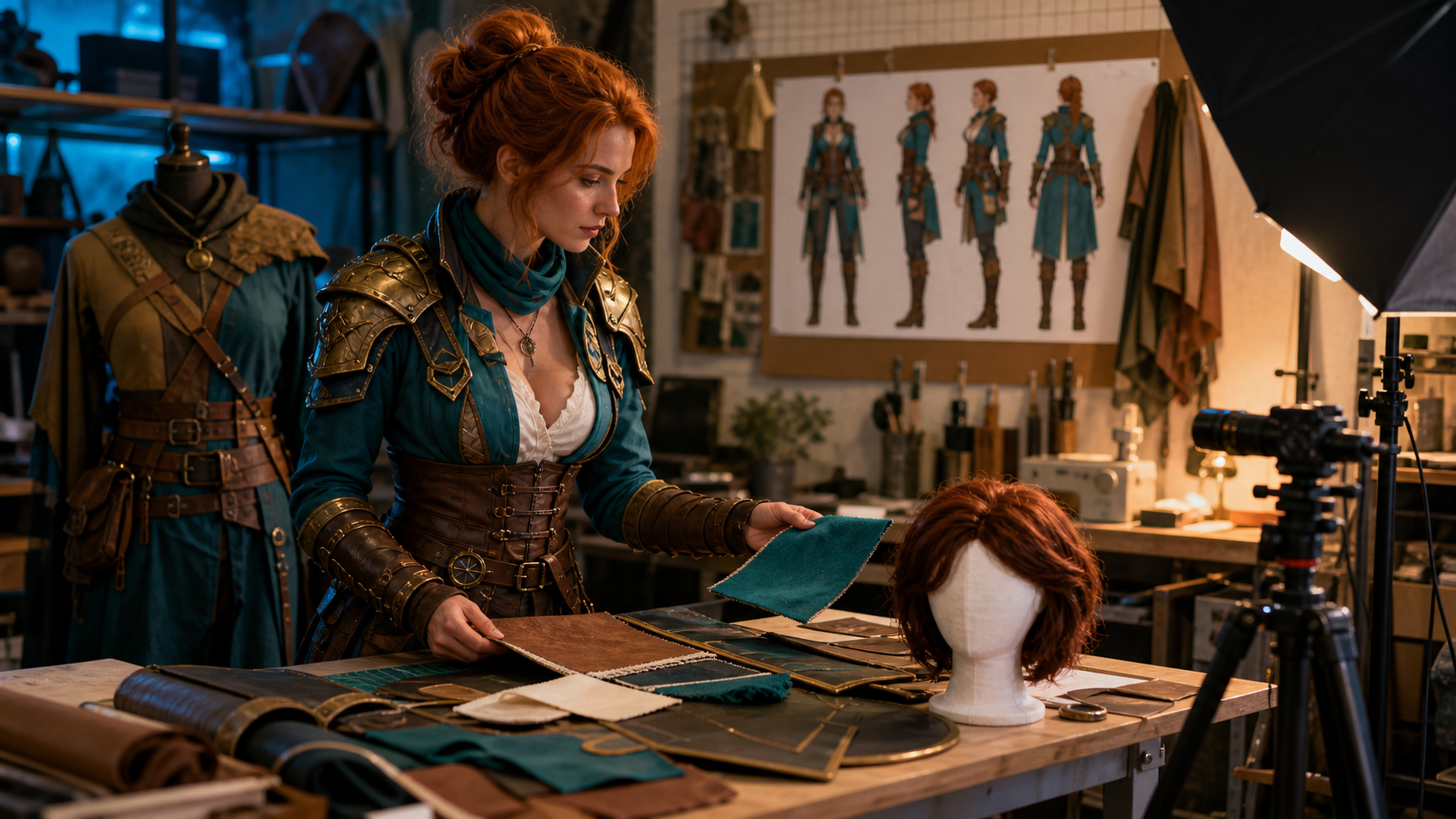
Original fictional adult explorer-cosplayer, red hair in a practical updo, teal canvas traveling coat with articulated brass shoulder guards, brown leather utility harness and hand-sewn cream underlayer, professional costume workshop with fabric swatches and foam pattern pieces, three-quarter standing portrait, warm softbox key and cool workshop rim, realistic garment texture and adult anatomy, no franchise symbols, no readable text, no logos.
Avoid requesting “exactly like” a protected costume. Describe function, silhouette, material, and color instead.
Using a Real Cosplayer’s Photo
Only upload a real person’s image when you have explicit permission covering:
- AI processing and storage;
- costume and body edits;
- mature or intimate context, if any;
- commercial use and distribution;
- model training or review, where applicable;
- retention and deletion expectations.
Use the minimum necessary image, remove unrelated bystanders, and avoid exposing private metadata. Consent can be limited or withdrawn according to the agreement; keep records.
Common Cosplay Generation Failures
The costume melts into the body
Separate garment layers, name material thickness, and use a neutral standing pose before dynamic action.
Armor blocks movement
Define articulated joints and test the pose range. A beautiful still can conceal an impossible shoulder or hip assembly.
The character resembles a celebrity
Reject the image and change face, hair, styling, and prompt references. Originality should be intentional, not accidental.
Details swap sides
Record asymmetric features and review for mirroring. Keep the shoulder emblem, pouch, and prop on fixed sides.
The final image looks like a catalog photo
Give the character an objective and choose a story environment. Lighting and pose should reveal role, not merely display clothing.
Verifying the Source’s Product Claims
If a service advertises 1080p or multiple aspect ratios, inspect downloaded dimensions and whether crops preserve the costume. Record credit cost and failure handling. For privacy, review upload retention, deletion, training use, gallery defaults, human review, and subprocessors.
The source also claims full ownership, anonymity, and crypto payment. Payment method alone does not eliminate logs, and output ownership cannot grant rights in a copied character, costume, logo, face, or photograph.
Final Checklist
- Every mature person is clearly adult and has consented to AI use.
- The character and costume are original or properly licensed.
- Silhouette, materials, closures, and joints are physically coherent.
- Face, hair, body proportions, and costume details remain stable.
- Real-person references contain no bystanders and have documented permission.
- Logos, props, fonts, photography, and music are licensed.
- Downloaded dimensions and color match the intended format.
- Disclosure, age gating, and destination-platform rules are satisfied.
FAQs
Can I upload a convention photo found online?
Not without the relevant photographer, subject, and character-use permissions. Public availability is not consent.
How do I avoid copying a franchise?
Build from occupation, function, silhouette, material, culture, and palette. Remove names, logos, signature props, and recognizable costume shapes.
Should I start with a dramatic pose?
Start neutral. A clear standing view exposes garment construction and identity problems before action hides them.
Does this article claim VideoAny is uncensored?
No. It identifies the source platform’s claims separately and links only to general VideoAny routes subject to current policies.
Conclusion
AI cosplay imagery is strongest when it supports real design thinking. Create an original adult character, specify how the costume is built, secure every likeness right, and refine one garment variable at a time. A coherent workshop-ready concept is more valuable than a polished image that cannot be made, licensed, or ethically used.