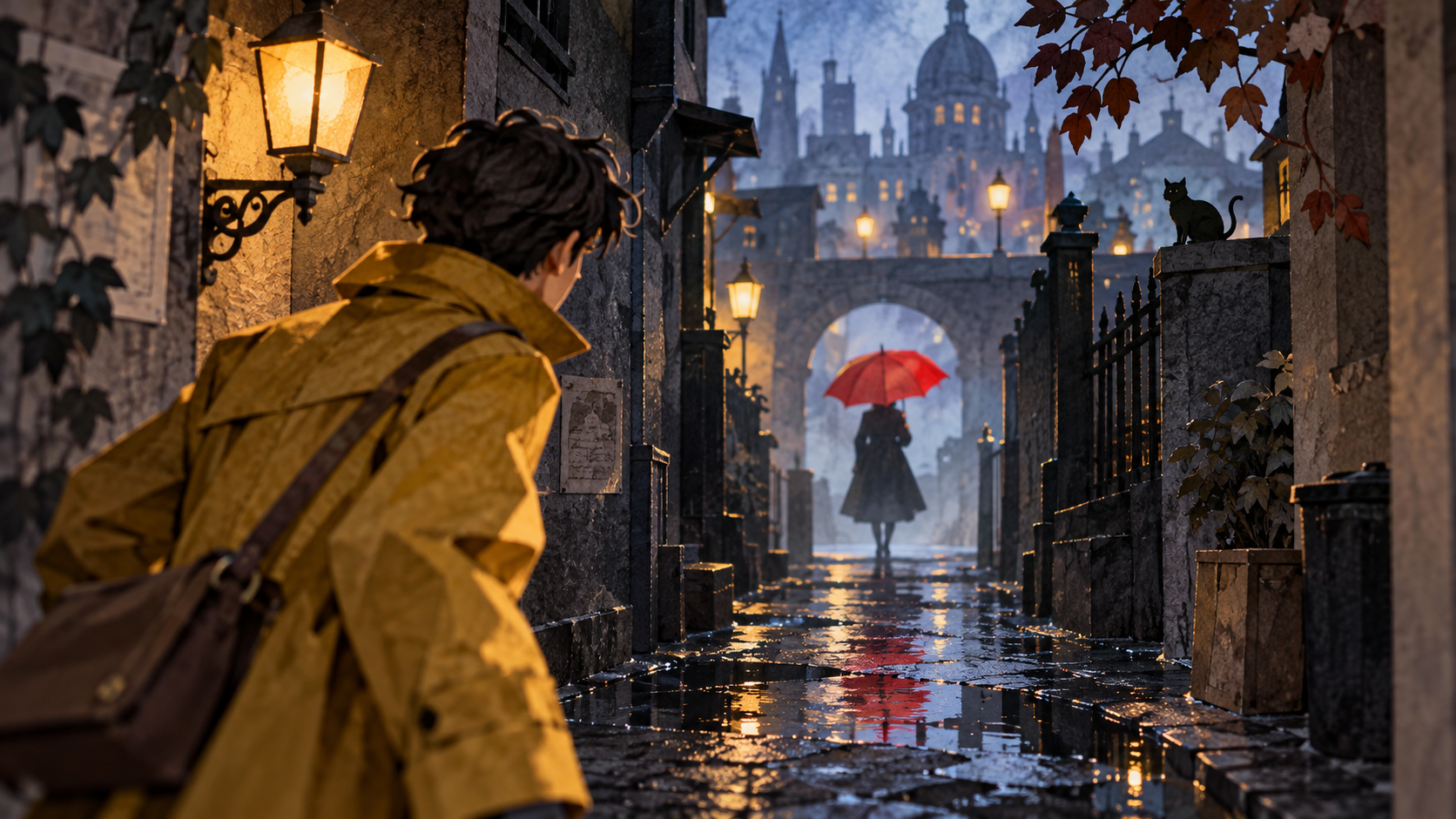
Creating a motion-comic pilot requires a blend of storytelling, visual design, and careful production planning. The goal is to translate a core idea into a short, engaging visual narrative that establishes characters, setting, and a compelling hook for future episodes. This guide outlines a practical workflow for developing such a pilot, using a fictional case study to illustrate each step.
Crafting Your Narrative Engine
Every successful series begins with a strong premise that can generate multiple stories. For our fictional motion-comic, "After the Last Wash," the premise is: estranged siblings Noor and Eli inherit a laundromat. Each unclaimed garment they find supplies a neighborhood story, forcing them to cooperate while they disagree over selling the shop. This core conflict and the "unclaimed garment" mechanism form the repeatable story engine.
The pilot episode needs to introduce this engine and establish a clear hook. In "After the Last Wash," a coat found in the laundromat contains a theater ticket dated for the next day, addressed to their late father's stage name. This discovery forces Noor to postpone a scheduled sale appointment for the laundromat, setting up both immediate intrigue and a larger, unresolved mystery. This choice demonstrates the serial potential without fully resolving the overarching conflict.
Before beginning any visual work, ensure all story elements, art, music, and voices are authorized for use. If recognizable real people are depicted, their explicit consent is essential.
Visualizing the World and Characters
For 'After the Last Wash,' we aim for a distinctive visual style with thick outlines, a restricted color palette, and clear, readable garment and character silhouettes. These elements serve as targets during the review process. While we strive for consistency across panels and episodes, ensuring characters and key objects are recognizable, generated outputs will be carefully checked against these stylistic goals rather than guaranteed to always match perfectly.
Establishing canonical designs for characters like Noor and Eli is crucial. This includes their general appearance, clothing, and expressions. Similarly, the laundromat itself needs a consistent visual identity, perhaps with a clear map or layout that can be referenced for panel composition. The specific coat containing the ticket also requires a stable design, even as its state changes (on a rack, in hand, ticket removed). Deciding on the delivery aspect ratio early (e.g., 16:9, 9:16) will inform all subsequent panel compositions and visual framing.
Storyboarding the Pilot Episode
Once the narrative engine and visual style are established, the next step is to storyboard the pilot. This involves breaking down the story into individual beats and planning how each will be visually represented. For "After the Last Wash," we're aiming for an original 45-second pilot. The following table illustrates arbitrary editorial planning targets for duration, not generated results or model limits:
| Scene Description | Illustrative Duration Target |
|---|---|
| Empty washers hum, establishing setting | 5 seconds |
| Siblings Noor and Eli at the unclaimed garment rack | 7 seconds |
| Ticket reveal from the coat | 6 seconds |
| Noor recognizes father's stage name | 7 seconds |
| Noor turns the "For Sale" sign face-down | 8 seconds |
| Siblings at the theater, looking for answers | 12 seconds |
Each panel should be composed with attention to caption negative space, ensuring dialogue or narrative text doesn't obscure crucial visual information. For the ticket reveal, the wording "Two seats. Tomorrow. Ask for Vale." would be added as typography in an editor, rather than relying on generated text, to ensure readability. Similarly, the sale cancellation could be conveyed with a simple caption or a clear visual cue like the sign being flipped.
Directing Motion and Visual Flow
Motion comics use selective movement to enhance the narrative without requiring full animation. Common motion choices include static panel cuts, editorial crops to focus on details, or optional separated-layer parallax effects in an editor to add depth. A subtle generated glance or a character lifting an object can effectively punctuate a beat. The key is to use motion purposefully, avoiding a zoom on every panel, which can quickly become repetitive.
Testing key visual moments early in the production process is vital. For "After the Last Wash," the ticket reveal and any paired-character views (Noor and Eli together) should be prioritized. If a generated image struggles with complex actions like a hand extracting a ticket, a practical fix might involve depicting a clear coat-lining/ticket insert followed by a separate panel showing the character's reaction. This approach ensures the narrative clarity remains intact. Reviewing continuity across panels, especially for character positions and object states, helps maintain a cohesive visual story.
Integrating Audio and Dialogue
Sound design is critical for bringing a motion comic to life, adding atmosphere and emotional depth. For "After the Last Wash," the audio elements would include the low hum of the washing machines to establish the setting, the distinct sounds of sibling conflict in their dialogue, a deliberate pause to emphasize the reading of the ticket, and subtle background music to underscore voices and mood.
All voices should be authorized, ensuring they align with the characters' personalities without attempting to imitate specific actors. Captions and dialogue balloons must be carefully placed so they do not cover crucial visual clues or character expressions. It's important to test the audio mix and visual presentation at the intended delivery size to ensure everything is clear and impactful. Different issues might arise, such as unreadable wording (requiring an editor's touch), a missing motive in the script (prompting a rewrite), a dull rhythm in the cut (needing pacing adjustments), or an identity mismatch in reference panels (requiring visual corrections).
Iteration and Refinement
The creation process is iterative, involving small passes of generation and review rather than attempting to complete the entire video in one go. After generating initial visual elements or short sequences, review them for continuity, pacing, visual clarity, and the presence of sufficient negative space for captions. Also, assess sound needs and ensure the output is suitable for the target platform's format.
If the ticket wording is unreadable, it's an editor's task to correct it. If a character's motive isn't clear, the script needs revision. A dull rhythm in the cut calls for re-timing or re-sequencing. Any identity mismatch in reference panels means returning to the design phase. Saving all prompts, source assets, and export settings is a best practice; it makes reproducing variations or making corrections much more efficient. For visual generation and variation needs, consider exploring tools that convert images into video. This iterative approach helps refine the pilot until it effectively communicates the intended story.
Building for Series Continuity
A successful pilot not only tells a compelling story but also lays the groundwork for future episodes. For "After the Last Wash," the handoff to Episode 2 would clearly record the state of the coat and ticket, the fact that the sale has been delayed, all approved character and location designs, and the unresolved question of their father's stage name and the theater.
To maintain character and setting consistency, use approved pilot reference versions and the recorded states from the end of episode one as inputs for episode two. Review all new panels against these established references. Any visual or narrative mismatches must be revised. This systematic approach supports consistency across episodes, helping build a cohesive and engaging series, though it cannot guarantee perfectly identical outputs. Focus on direct repairs to uphold the narrative and visual integrity.
FAQs
Is a complete script necessary before starting?
No, a detailed outline or a focused pilot scene is often sufficient to test the core concept. You should, however, have a clear understanding of the protagonist's goal, the central world rule, and the pilot's intended ending.
How does a motion comic differ from full animation?
Motion comics typically use a series of illustrated panels, often with limited, selective movement (like parallax or subtle character gestures), timed cuts, and sound design to tell a story. Full animation involves continuous movement of characters and objects within a scene, requiring a significantly different production pipeline and resource commitment.
How can I ensure my motion comic is easy to follow?
Focus on clear visual storytelling, readable panel compositions, and well-paced cuts. Ensure captions and dialogue are legible and don't obscure important visual information. Test the pilot with fresh eyes to confirm that the story's premise and key events are understandable without additional explanation.