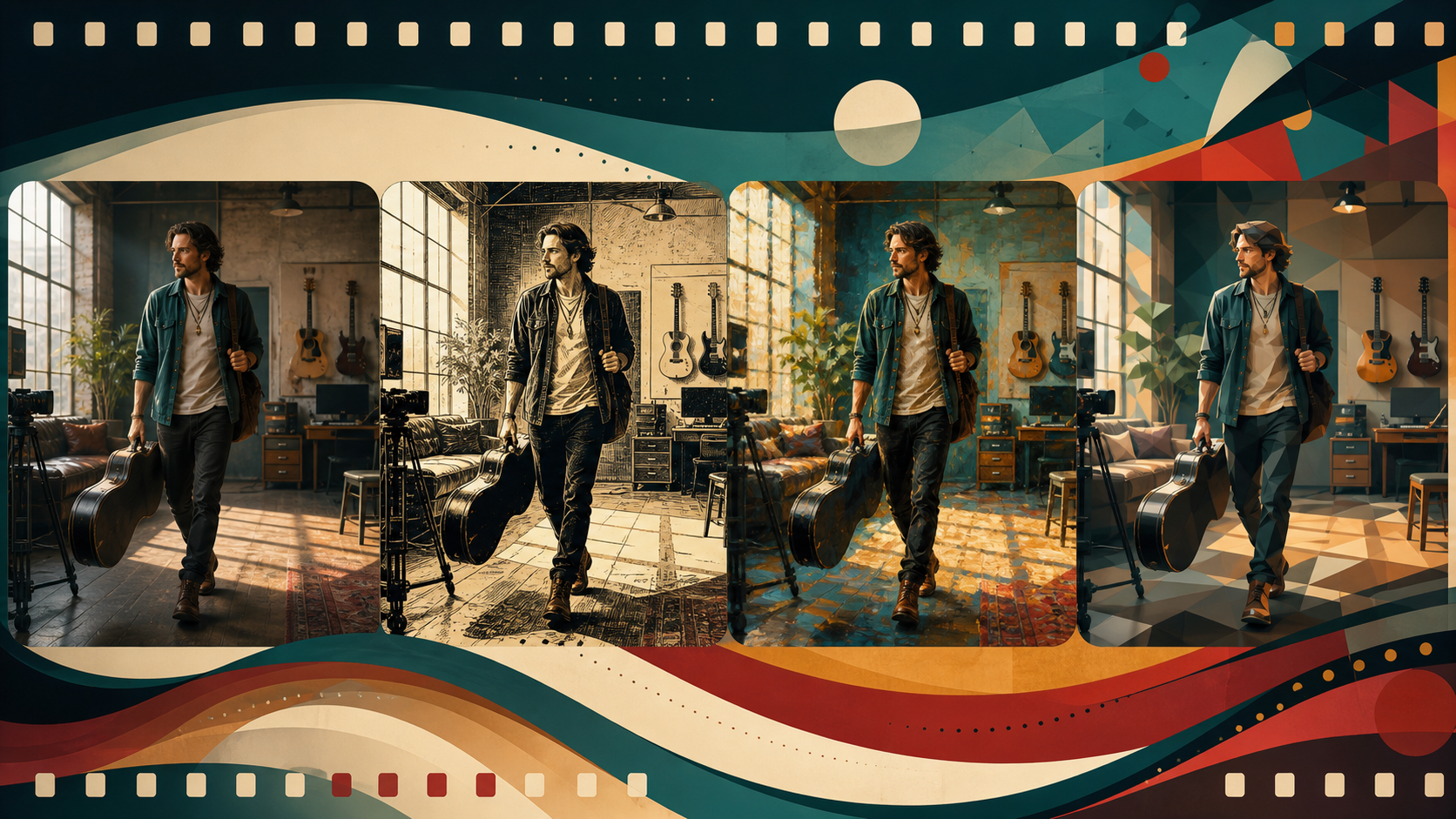
Style Transfer Has Two Jobs
A successful video style transfer applies a new visual language while preserving the source shot’s content. The character should remain the same consenting adult, the action should happen in the same order, the camera should follow the same path, and the environment should keep its geometry.
The reference page markets an adult-only, unrestricted platform with text, image, and video modes; reference uploads; 1080p output; multiple aspect ratios; rapid results; private storage; ownership; anonymous use; and crypto payment. These are source-platform claims, not VideoAny guarantees. Verify current transformation controls, exported files, prices, privacy, acceptable-use rules, and commercial terms directly.
For mature footage, every depicted person must be clearly adult and have consented to AI transformation and distribution. The source video and style references must be owned or licensed. Never transform minors or non-consenting real people into intimate contexts.
Define Style Without Copying a Person
Do not rely on the name of a living artist. Describe observable choices:
- medium: ink, gouache, pastel, low-poly 3D, cel shading, collage;
- line: heavy contour, variable ink, no outline, geometric edge;
- shape: angular, rounded, simplified, faceted;
- palette: limited warm neutrals, complementary teal and orange, muted earth;
- value: high contrast, compressed shadows, soft tonal range;
- texture: paper grain, dry brush, smooth vector, plaster;
- light: flat graphic, sculpted cinematic, luminous rim;
- motion treatment: held frames, smear shapes, painterly trails, clean interpolation.
Build an original style recipe from these components and use style references that you created or licensed.
Establish a Content Lock
Before transformation, list what must not change:
- adult identity and apparent age;
- face, hair, body proportions, and hands;
- costume silhouette, color relationships, and accessories;
- prop design and contact;
- shot size, camera height, focal length feel, and path;
- action timing and endpoint;
- environment layout and reflections;
- duration, frame rate, and edit points.
Style may simplify detail, but it should not rewrite story facts.
Prepare the Source Video
Use the cleanest authorized source. Correct severe exposure, stabilization, frame cadence, and compression before style transfer. Remove text and logos that should not be transformed; reapply licensed graphics afterward.
Divide the source by shot. Cuts, flashes, and scene changes confuse temporal processing. Handles at the beginning and end help the editor repair transitions.
A Source-Inspired Workflow
The source page describes selecting a mode, describing the scene, adding an optional reference, choosing output controls, then downloading or remixing. Apply that loop to style transfer.
- Clear rights and consent. Confirm adult identities, source-video rights, style-reference license, and planned distribution.
- Create a representative still. Select a frame containing face, hands, costume, prop, background lines, and light.
- Test low strength. Apply the style to the still and verify content lock before video.
- Process a short motion range. Use a few seconds with moderate action and camera movement.
- Review temporal stability. Inspect face, edges, texture, palette, and background frame by frame.
- Tune by shot. Close-ups, wide shots, low light, and fast motion may need different strength.
- Finish in post. Match color between shots, restore licensed graphics, add controlled grain, and verify audio sync.
VideoAny’s general video-to-video route may support transformation of permitted footage. A general image-to-image test can help define a still look, and image-to-video may animate an approved styled keyframe. These links do not imply unrestricted adult style transfer; check current models and rules.
Prompt Structure for Style Transfer
The source recommends subject, wardrobe, environment, lighting, camera, and motion. Preserve them, then describe the new style:
Preserve the same original fictional adult musician, face, age, dark hair, teal overshirt, black trousers, instrument case, walking action, camera path, studio furniture, window light, and shot timing from the authorized source; transform only the rendering into original graphic ink with variable black contours, ivory paper texture, restrained teal and amber wash, simplified shadow shapes, stable line weight and palette across frames; no new objects, identity changes, text, logos, or copied artist style.
“Transform only the rendering” is a useful goal, but the output still requires review; models can rewrite content even when instructed not to.
Temporal Style Problems
- ink lines crawl or change thickness;
- brush texture sticks to the screen instead of the object;
- colors pulse between frames;
- facial detail switches abstraction level;
- background objects appear and disappear;
- hands become stylized differently from the face;
- highlights move independently of light sources;
- style resets after occlusion or a fast turn.
Lower transformation strength, shorten shots, simplify the recipe, or use tracked post-production layers when the model cannot maintain the look.
Preserve Identity in Stylization
Stylization can change a real adult enough to become misleading or change age presentation. Review facial proportions, hairline, skin marks, body shape, costume, and distinctive accessories. Consent should cover the degree of abstraction and intended mature context.
For a fictional character, keep the approved character bible. For a real performer, do not “improve” or alter identity traits beyond agreed boundaries.
Match Style Across an Edit
Create a style bible with palette swatches, line examples, texture scale, edge treatment, contrast, and allowed variation. Apply one grade after selecting transformed shots. Use reference stills from earlier approved scenes, but return to the clean source rather than repeatedly transforming a transformed output.
Check cuts at full speed. Two individually attractive shots can clash when their abstraction level or palette differs.
Privacy, Ownership, and Style Rights
The source claims private libraries, no prompt sharing, no real-name requirement, full ownership, and crypto payment. Verify retention, deletion, training use, gallery defaults, human review, subprocessors, and commercial rights in current policies.
Payment method does not guarantee anonymity. Output ownership cannot cure missing rights in source footage, performer identity, franchise characters, logos, or style references. Use descriptive style recipes instead of copying a living artist.
Final Checklist
- Every depicted person is clearly adult and consented to transformation.
- Source video and style references are owned or licensed.
- Style is described through medium, line, shape, palette, texture, light, and motion.
- Content lock covers identity, action, camera, props, geometry, and timing.
- Each shot is tested at low strength and reviewed frame by frame.
- Lines, texture, palette, face, hands, and background remain temporally stable.
- Export frame rate, dimensions, color, audio sync, and duration are verified.
- Disclosure, age gating, and destination-platform rules are satisfied.
FAQs
Can I request the style of a famous living artist?
Build an original recipe from observable visual attributes instead of naming or imitating a living artist.
Why does style flicker in video?
The model may reinterpret texture and edges independently in each frame. Lower strength, shorten the shot, and simplify the style.
Should I process the whole film at once?
No. Process by shot and match results with a style bible and final grade.
Does this article claim VideoAny is uncensored?
No. It separates the source platform’s marketing from general VideoAny transformation routes governed by current policies.
Conclusion
Video style transfer is successful when viewers notice a coherent look without losing the shot underneath. Define an original style recipe, lock adult identity and content, transform conservatively by shot, and inspect temporal behavior. Style should reinterpret surfaces, not rewrite consent, character, or story.