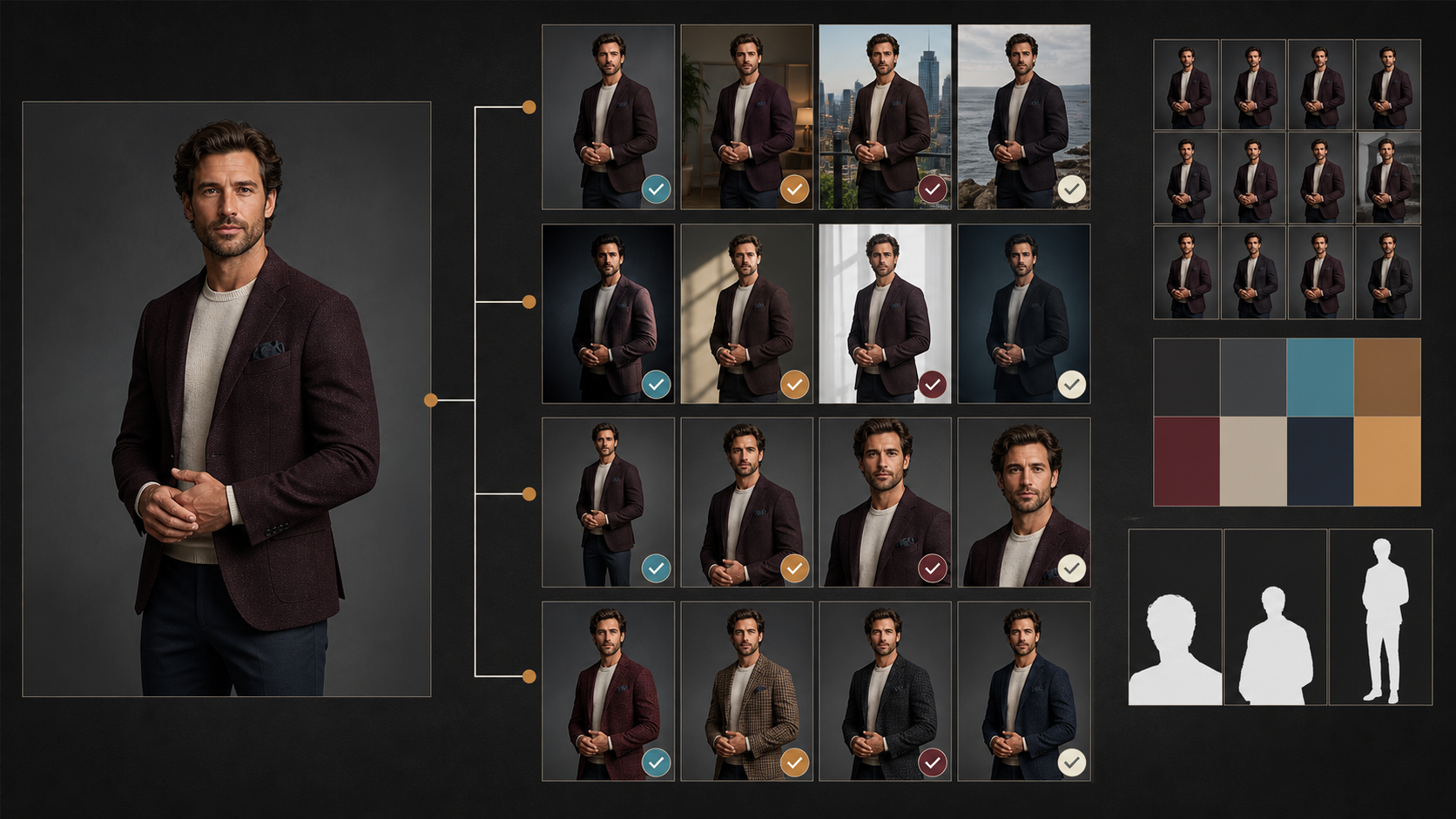
The Output Is an Asset, Not Just an Image
Production image-to-image work must be repeatable, reviewable, and traceable. A polished result is not ready until the team knows which authorized source created it, what changed, which model and settings were used, who approved it, and where it may be published.
The reference page markets an adult-only, unrestricted platform with text, image, and video modes; optional references; 1080p output; multiple aspect ratios; fast results; private storage; ownership; anonymous use; and crypto payment. These are source-platform claims, not VideoAny guarantees. Verify current image controls, file output, costs, privacy, acceptable-use rules, and commercial terms directly.
Every person in mature imagery must be clearly adult and must have consented to the specific edits and distribution. Source photos, illustrations, identities, costumes, logos, and backgrounds must be owned or licensed. Never edit minors or non-consenting real people into intimate contexts.
Create a Master Asset Record
Before editing, store:
- asset ID and project;
- source filename and checksum;
- creator, photographer, or owner;
- clearly adult subject and identity verification status;
- consent scope, mature-content boundaries, and expiration;
- allowed edits and prohibited edits;
- commercial and distribution rights;
- required credit and disclosure;
- retention and deletion obligations;
- color profile, dimensions, bit depth, and file type.
The master remains read-only. Every generated result is a child version, never an overwrite.
Define an Approved Variant Matrix
List the variants the project actually needs:
- neutral master crop;
- alternate aspect ratios;
- approved environment versions;
- lighting or color versions;
- authorized wardrobe material or color versions;
- clean background or transparent cutout;
- localized graphics and text-safe layouts;
- animation-ready keyframe.
Each row should define what stays, what changes, target dimensions, destination, and approver. This prevents endless random generation.
Use a Version Tree
Branch from the authorized master by edit type:
master
├── environment
│   ├── studio
│   ├── city
│   └── coast
├── lighting
│   ├── neutral
│   ├── warm
│   └── cool
├── wardrobe
│   ├── burgundy wool
│   └── teal wool
└── crop
    ├── 16:9
    ├── 1:1
    └── 9:16
Do not use a heavily altered child as the source of another branch unless that dependency is intentional and documented. Returning to the master reduces identity drift.
A Source-Inspired Production Workflow
The source page describes selecting a mode, describing the scene, adding a reference, choosing output settings, then downloading or remixing. Expand that into an asset pipeline.
- Rights gate. Confirm adult status, consent, source ownership, allowed edit, and destination.
- Technical intake. Verify dimensions, color profile, sharpness, and metadata; remove bystanders and private information.
- Edit contract. Write preserve and change lists and choose one variant row.
- Mask and strength test. Protect identity and compare low, medium, and high transformation strength.
- Generate controlled candidates. Change one variable and label every output.
- Creative review. Select composition, style, and communication quality.
- Identity and rights review. Confirm adult age, face, body, hands, consent, logos, and source compliance.
- Technical finish. Retouch permitted defects, color-manage, resize, sharpen for delivery, and export.
- Approval and archive. Save selected file, prompt, mask, settings, model, date, approver, rights, and checksum.
VideoAny’s general image-to-image route may support permitted edits, while text-to-image can develop an original concept without identity media. If an approved still will become motion, image-to-video may support permitted animation. Check current rules; these links do not imply unrestricted adult generation.
Benchmark the Tool Before Production
Use one authorized, fully clothed adult source containing face, hands, fabric, background lines, and neutral lighting. Test four edits separately:
- garment color only;
- background only;
- lighting only;
- crop and outpaint only.
Score identity, apparent adult age, hands, pose, garment construction, mask edges, perspective, light integration, text invention, output dimensions, cost, and deletion controls. A tool that excels at background replacement may still be poor at identity-preserving wardrobe edits.
Approval Gates
Creative gate
Does the asset fulfill the brief, fit the layout, and remain visually coherent?
Identity gate
Does it preserve the consenting adult’s face, age, body, hair, hands, and agreed representation?
Rights gate
Are source, likeness, costume, logos, background, fonts, and destination use authorized?
Technical gate
Are dimensions, crop, color profile, bit depth, compression, transparency, and metadata correct?
Policy gate
Does the asset meet current service, legal, age-gating, disclosure, and destination-platform requirements?
No later gate should override a failure in adult status, consent, or rights.
Naming and Metadata
Use stable names such as:
project_asset-042_environment-city_v003_approved.png
Store prompt and sensitive rights information in the asset system, not in a public filename. Record model and version because future updates may not reproduce the same result.
Embed only metadata appropriate for distribution. Strip private location or device data from public deliverables while preserving necessary provenance in the secure archive.
Common Production Failures
The team cannot reproduce an approved image
Save prompt, source checksum, mask, model, settings, seed where available, and output. Some systems remain nondeterministic, so preserve the approved file itself.
Identity drifts across campaign variants
Branch every variant from the authorized master and use the same protected face and body regions.
Different crops change the person
Create crops from the approved high-resolution asset or outpaint the background only. Do not regenerate the whole adult subject for each ratio.
Rights expire after publication
Connect consent and licenses to asset status. Flag expiration, remove affected versions, and follow contractual deletion requirements.
A beautiful output contains invented logos or text
Reject or remove them, then rebuild authorized graphics in design software. Generated lettering is unstable and can create trademark risk.
Privacy, Ownership, and Source Claims
The source claims private libraries, no prompt sharing, no real-name requirement, full ownership, and crypto payment. Verify retention, deletion, training use, gallery defaults, human review, subprocessors, and commercial rights in current policies.
Production archives include sensitive sources, masks, and rejected outputs. Apply access, retention, and deletion rules to the entire version tree. Payment method does not guarantee anonymity, and output ownership cannot cure missing photo or likeness rights.
Final Asset Checklist
- Every depicted person is clearly adult and consented to the specific edits.
- Master source, license, consent, and allowed destinations are documented.
- Required variant matrix is approved before generation.
- Every child version branches from the authorized master and is labeled.
- Creative, identity, rights, technical, and policy gates pass.
- Prompt, mask, model, settings, date, approver, and checksum are archived.
- Public files contain correct dimensions, color, compression, and safe metadata.
- Disclosure, age gating, expiration, and deletion rules are enforced.
FAQs
Why keep rejected outputs?
Keep them only when policy and consent allow, and only as long as needed for audit or comparison. Sensitive failures may require immediate deletion.
Should every variant be regenerated?
No. Create crops, graphics, and color adjustments from an approved asset when conventional editing is more stable.
Can a prompt and seed guarantee reproduction?
Not always. Models and services change, so preserve the approved output, settings, source, and model version.
Does this article claim VideoAny is uncensored?
No. It separates the source platform’s marketing from general VideoAny image routes governed by current policies.
Conclusion
Production image-to-image work succeeds when every edit belongs to a controlled asset lineage. Protect the authorized adult master, generate only required variants, review identity and rights before polish, and archive the evidence needed to reproduce and govern the result. The workflow—not the number of outputs—creates value.