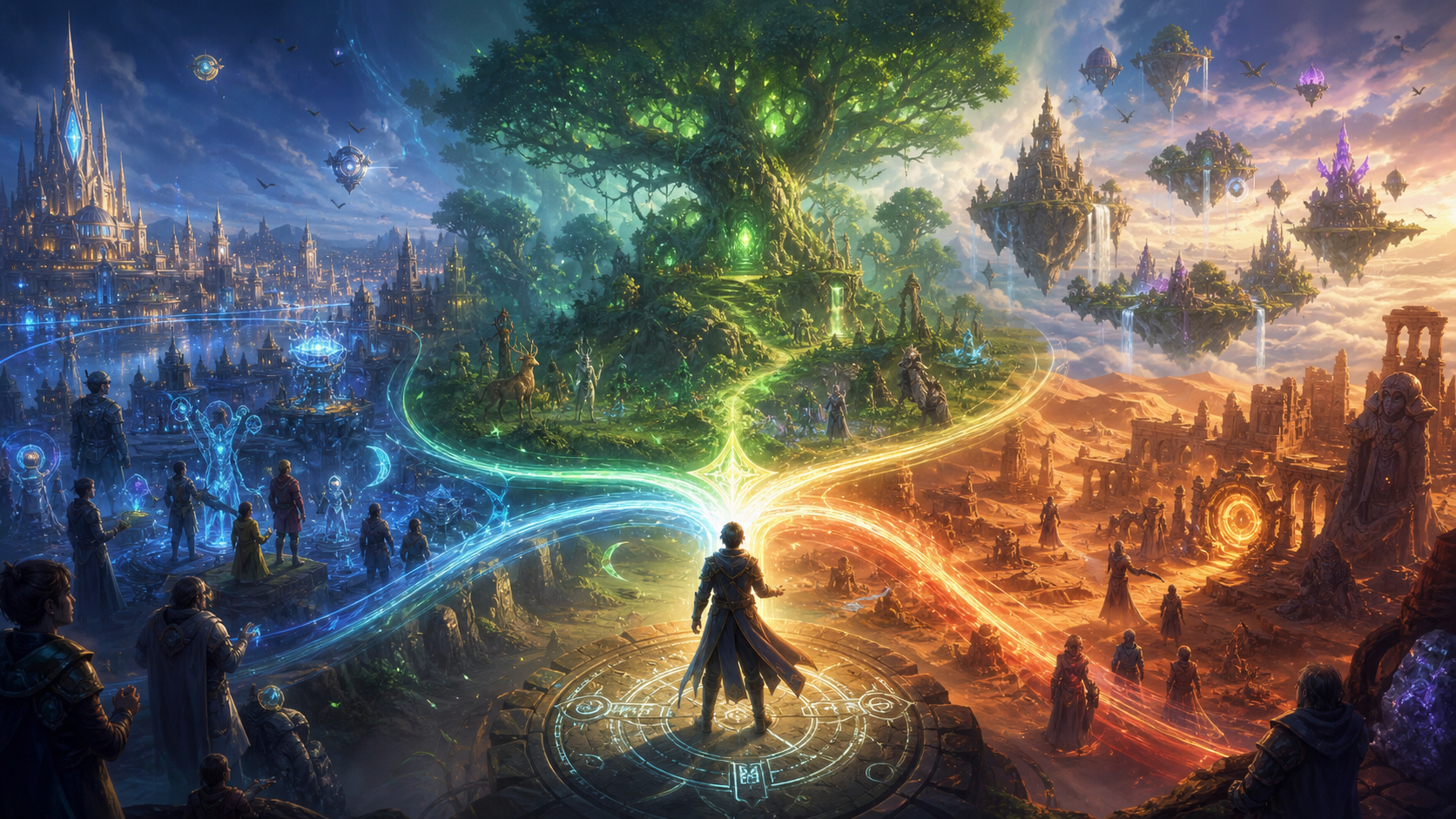
The Next Evolution of Interactive Entertainment
Every major shift in the gaming industry has done more than introduce new technology; it has fundamentally redefined the relationship between players and the virtual worlds they inhabit. As we look toward 2026, we are witnessing the emergence of "AI-native" games—a category that represents a departure from traditional development.
While the term "AI game" is frequently used to describe titles that incorporate machine learning for minor features, true AI-native games treat artificial intelligence as the foundational architecture of the experience. The distinction is simple: in traditional games, AI is an enhancement; in AI-native games, AI is the engine that makes the world possible.
Defining the AI-Native Experience
AI-native gaming is still an emerging field, but several core characteristics are beginning to define the landscape. Traditional games are built upon carefully designed, static environments. In contrast, AI-native titles leverage generative models to create environments and interactions that evolve in real-time.
1. Characters That Understand Players
For decades, non-player characters (NPCs) have relied on rigid, predefined dialogue trees. AI-native games break this mold by enabling characters to understand and respond to natural language. This allows for complex, emergent interactions where a player’s unique history and choices influence how the world reacts to them.
2. Dynamic Storytelling
Traditional games typically follow a fixed narrative structure. Even titles with multiple endings usually rely on paths designed in advance by developers. AI-native games shift this focus toward stories created through interaction, where the narrative adapts to the player’s behavior rather than forcing the player into a pre-written script.
3. Natural Language as an Interface
The reliance on predefined inputs—such as clicking through menu options—is being replaced by natural language. Players can now express complex intent, such as negotiating with a character based on past actions, and the game system interprets that intent to drive the simulation forward.
4. Multimodal Models and World Generation
The next stage of gaming moves beyond generating individual assets like textures or sounds. The focus is shifting toward generating entire environments through multimodal AI models. By integrating visual, audio, and logic-based AI, these systems create consistent, immersive worlds that exist beyond the limitations of manual asset creation.
The Future: From Playing Worlds to Creating Them
The central philosophy of AI-native gaming is that a game should not just be a static product you play, but a living system you can create and evolve. This shift empowers players to become active participants in the world-building process.
As creators look to integrate these concepts into their own projects—whether through text-to-video storytelling or image-to-video asset generation—the focus should remain on building repeatable, high-quality production systems. At VideoAny, we believe in supporting creators as they explore these new frontiers of interactive media, provided that all AI-generated content is created with consent and adheres to ethical standards.
Practical Workflow for Creators
- Define the Outcome: Determine if your project is a story scene, a product demo, or a social post.
- Prepare Inputs: Gather your scripts, character designs, and reference imagery.
- Iterate in Passes: Rather than attempting a single generation, use AI video tools to refine your clips in stages.
- Review and Refine: Check for continuity, pacing, and visual clarity before finalizing your work.
FAQs
Can this workflow work for a solo creator? Yes. By focusing on a repeatable format and keeping your asset list manageable, a solo creator can produce high-quality, AI-enhanced content efficiently.
Should I generate first or plan first? Always write a plan first. A clear outline helps you evaluate whether your AI-generated assets effectively support your final creative vision.
What should I check before publishing? Ensure your content maintains visual continuity, appropriate pacing, and clear communication of your intended message. Always ensure that your use of AI tools respects the rights and consent of others.
How does VideoAny fit into this workflow? Use our suite of tools, including video-to-video and AI effects, to generate and refine your visual assets, then integrate them into your broader production pipeline.