Responsible use: Mature-content workflows must be limited to lawful material involving consenting adults. Never create or share content involving minors, non-consensual imagery, unauthorized likenesses, or material that violates platform terms or applicable law.
Categories: AI Video, AI Image, Creator Guides
Tags: videoany, ai video, ai video generator, ai content creation, creator guide
Introduction to AI Text-to-Video Creation
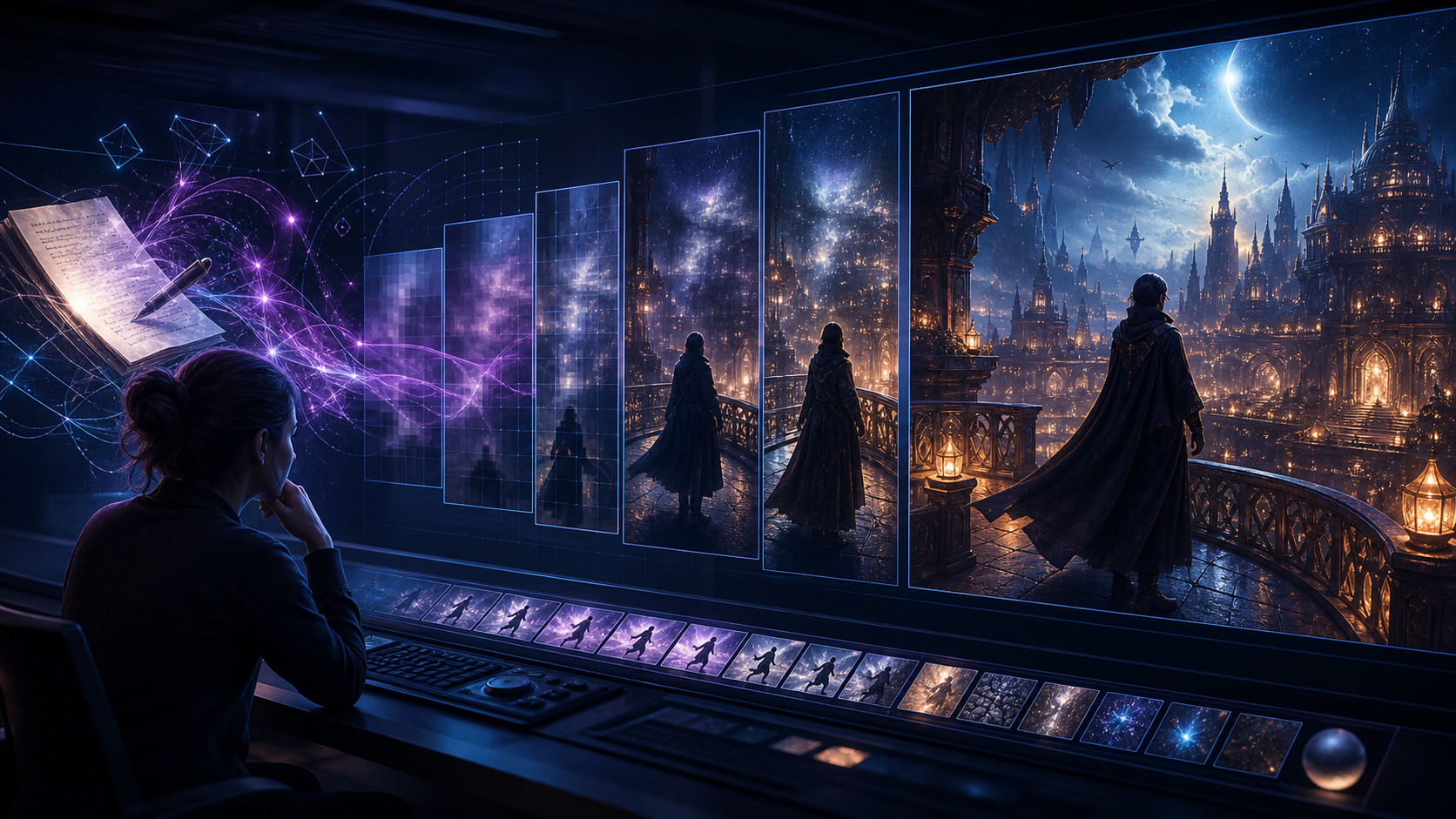
The landscape of digital content creation is continually evolving, with AI tools offering powerful new avenues for visual storytelling. For creators seeking to translate imaginative concepts into dynamic video, AI text-to-video generation provides a compelling solution. This guide explores the core principles and practical applications of AI text-to-video, helping you understand how to leverage these tools effectively within your creative workflows.
VideoAny empowers creators to bring their visions to life with advanced AI video generation tools. Our platform is designed to support a wide range of creative needs, offering robust capabilities for transforming textual prompts into engaging visual narratives. We encourage all users to create responsibly, ensuring content adheres to ethical guidelines, platform terms of service, and applicable laws, particularly when dealing with sensitive subjects. This includes respecting consent, avoiding non-consensual material, and ensuring all content is lawful and appropriate for consenting adults.
Key Features for AI Video Creation
VideoAny offers a comprehensive suite of features designed to provide creators with maximum control and seamless execution for their video projects. Our tools are built to facilitate the production of impactful and high-quality video content, supporting a wide array of creative endeavors.

Creating video content with VideoAny's AI text-to-video capabilities is designed to be a straightforward and empowering process. By following a few simple steps, you can transform your textual prompts into compelling visual narratives.
How it Works on VideoAny: Your Guide to AI Text-to-Video
The effectiveness of AI video generation hinges significantly on the quality and detail of your text prompts. To achieve your desired visual outcomes, focus on crafting descriptive prompts that guide the AI effectively.

When formulating your prompts, consider including specific details about:
- Characters: Describe their appearance, actions, and emotions.
- Settings: Detail the environment, time of day, and atmosphere.
- Actions: Clearly define what is happening in the scene.
- Emotions: Convey the mood or feeling you want the video to evoke.
- Visual Styles: Specify artistic styles, lighting, or camera angles.
The more precise your prompt, the more accurately the AI can interpret and generate your intended video content.
Use Cases for AI Video Generation
The applications for AI text-to-video generation are vast and varied, catering to a diverse range of creators and professionals across many fields. From marketing and education to entertainment and personal expression, AI-powered video offers new possibilities for visual communication.
Creators can leverage AI video for:
- Storytelling: Generating short films, animated sequences, or narrative clips.
- Marketing Content: Producing engaging advertisements, product explainers, or social media videos.
- Educational Materials: Creating instructional videos, simulations, or visual aids.
- Artistic Expression: Experimenting with abstract visuals, conceptual art, or unique animations.
- Personal Projects: Crafting personalized messages, digital art, or creative experiments.
Understanding Credit Systems for AI Video Generation
AI video platforms use different pricing models, and generation cost can vary with duration, resolution, model choice, and the number of iterations. Check the current pricing interface before production, then run a short test clip to estimate the practical cost of the complete sequence.
Navigating AI Video Platforms: Content Policies and Creative Freedom
In the rapidly evolving landscape of AI video generation, creators often encounter varying approaches to content moderation. While many platforms offer powerful capabilities, some may implement stringent content filters that automatically flag or restrict material deemed "inappropriate" or "explicit." This can sometimes pose challenges for creators whose artistic visions push conventional boundaries or explore sensitive themes.
These content restrictions can lead to:
- Creative limitations: Preventing the generation of specific visual elements or narratives.
- Project delays: Requiring rework or alternative approaches to bypass filters.
- Frustration: Hindering the realization of a creator's original intent.
VideoAny is committed to providing a robust and easy-to-use environment where creativity can flourish. We empower creators to explore their artistic visions responsibly, in adherence to our platform's terms of service and all applicable laws. Our goal is to support diverse creative needs while upholding standards of ethical content creation, always emphasizing consent and lawful use.
Frequently Asked Questions About AI Text to Video
What exactly is AI text to video?
AI text to video refers to the process of generating video content directly from written descriptions or prompts using artificial intelligence algorithms. This technology allows creators to describe a scene, character, action, or style, and the AI then synthesizes visual elements and motion to produce a corresponding video clip.
Is VideoAny suitable for diverse creative needs?
VideoAny is designed to support a wide spectrum of creative projects. We provide advanced tools for generating high-quality video content from text prompts. We emphasize responsible and ethical content creation, requiring all users to adhere to our platform's terms of service and applicable laws. This includes ensuring all generated content is lawful, respects consent, and avoids non-consensual or illegal material.
What kind of text prompts can I use to create AI text to video?
You can use highly descriptive text prompts that detail characters, settings, actions, emotions, and visual styles. The more specific and vivid your prompt, the more accurately the AI can interpret your vision and generate the desired video content. Experiment with different levels of detail to see how the AI responds.
How long does it take to generate a video?
Video generation times can vary significantly depending on factors such as the complexity of the prompt, the desired video length, the chosen quality settings, and current platform usage. Shorter, simpler clips may generate quickly, while longer or more intricate videos could take more time.
Can I generate videos in different aspect ratios?
Many AI video generation tools offer options for generating videos in various aspect ratios, such as 16:9 for widescreen, 9:16 for vertical social media content, or 1:1 for square formats. Specific aspect ratio availability depends on the platform's features and model capabilities.
What payment methods do you accept?
Payment methods vary by platform, region, and account type. Confirm the options presented at checkout before committing to a production budget.
Is my generated content private on VideoAny?
Privacy, storage, and retention practices can change. Review VideoAny's current privacy policy and terms before uploading sensitive source media, and keep local copies of the assets and exports you are authorized to retain.
Practical Weekly Workflow
AI-assisted video work is most effective when approached as a repeatable production system. While creative vision remains paramount, a structured workflow ensures efficiency and consistent output.
- Define the content outcome: Start by clearly outlining the purpose of your video—whether it's a short advertisement, a scene for a story, a tutorial clip, a music visual, a product demonstration, or a social media post.
- List required inputs: Identify all necessary assets, such as text prompts, reference images, character designs, storyboard frames, scripts, or audio files.
- Generate in small passes: Instead of attempting to complete the entire video in one go, generate or edit in smaller, manageable segments. This allows for iterative refinement.
- Review and iterate: After each generation, review the clip for continuity, pacing, visual clarity, caption space, sound needs, and platform-specific formatting.
- Save and document: Preserve your prompts, source assets, and export settings. This documentation simplifies future variations and ensures reproducibility.
Conclusion
AI text-to-video tools offer powerful capabilities for creators, enabling the transformation of ideas into compelling visual content. By adopting a structured workflow and focusing on responsible creation, you can effectively leverage these technologies to realize your artistic vision. VideoAny is dedicated to providing an environment where your creativity can thrive, supporting your journey in AI-powered video production.
Next Step
Explore VideoAny and begin your creative journey: https://videoany.io
FAQs
1) Can this workflow work for a solo creator? Yes. Start with one repeatable format, keep the asset list small, and improve the workflow after each published clip.
2) Should I generate first or write the edit plan first? Write a short plan first. Even a simple outline helps you judge whether the AI output supports the final video.
3) What should I check before publishing an AI video? Check continuity, motion quality, captions, sound, aspect ratio, pacing, and whether the video communicates the intended idea without extra explanation.
4) How does VideoAny fit into this workflow? Use VideoAny where visual generation or variation is needed, then combine the resulting clips with editing, captions, audio, and platform-specific formatting.