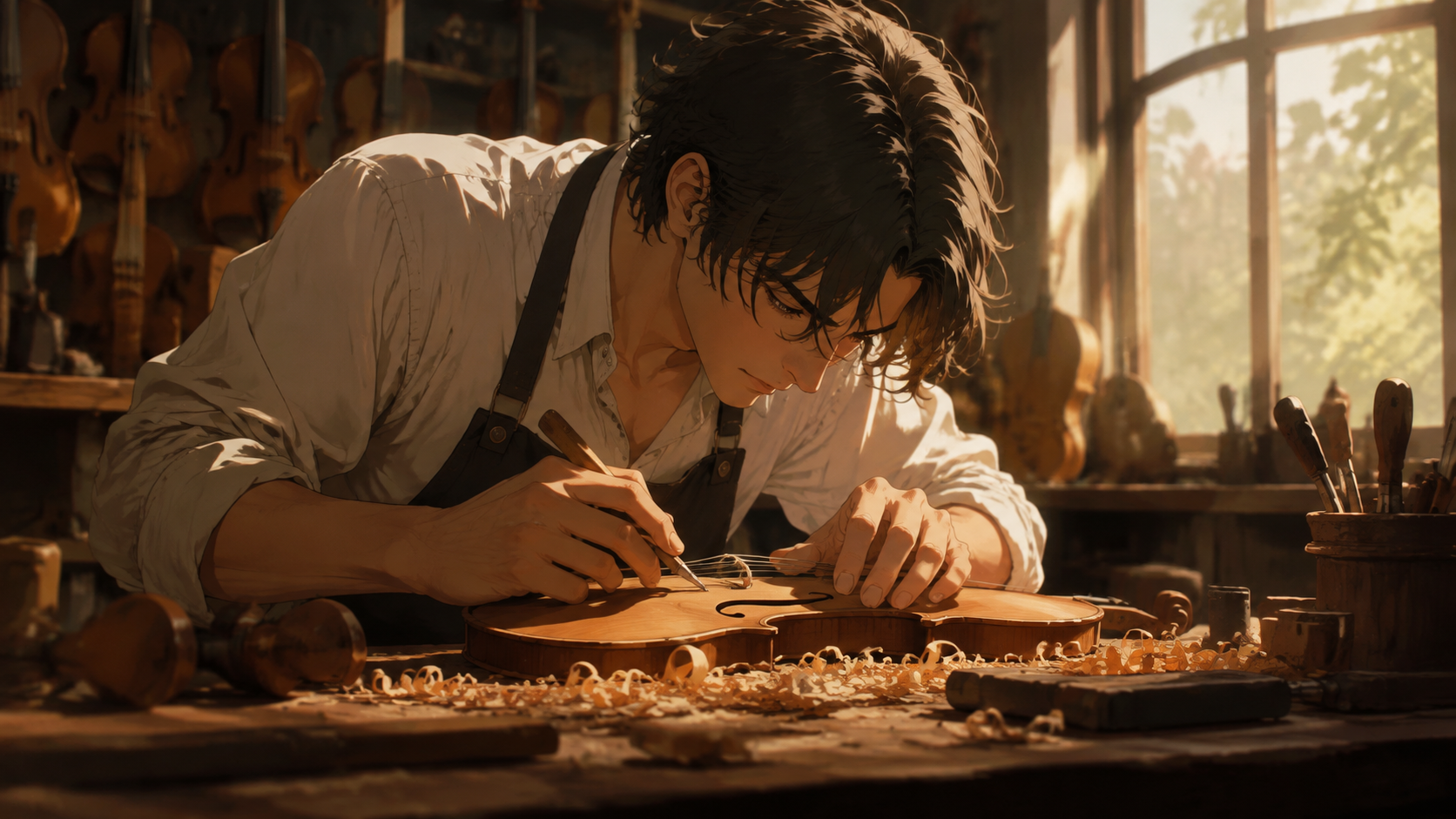
While AI video generation can produce technically impressive and detailed visuals, a common challenge is achieving a truly cinematic quality that transcends a mere "AI-generated" aesthetic. A clean, high-resolution shot, rich in visual information, doesn't automatically translate into compelling storytelling. Without clear dramatic intent, viewers may struggle to find a focal point, leading to a sense of visual noise rather than narrative clarity.
Cinematic direction connects lighting, composition, movement, color, and pacing to a specific purpose. It's about making deliberate choices that guide the viewer's attention and evoke a particular emotion or understanding. A coherent light source, a readable frame, and intentional timing transform a series of images into a meaningful sequence. Simply adding visual effects like haze, film grain, or dynamic camera motion without a narrative reason often fails to resolve an unclear scene; these elements are most effective when they serve a defined purpose within an overarching vision.
To explore these principles, we will develop an original three-shot scene set in a violin workshop. Our fictional craftsperson, Selka, is focused on repairing a violin bridge when the shop's entrance bell rings. She recognizes the visitor, pauses her work, and moves a second chair towards her workbench. This scene is designed to subtly suggest a familiar, comfortable relationship through behavior. This exercise focuses on the decision-making process for cinematic direction, not on reporting generated footage.
The Foundation of Intentional Storytelling
Many AI-generated videos, despite their technical prowess, can feel generic because they often lack a cohesive artistic vision. This frequently stems from relying on broad descriptive keywords rather than a detailed understanding of how visual elements contribute to a story. To move beyond this, every shot should have a clear "job"—a specific piece of information or emotion it needs to convey.
For Selka's scene, we plan three distinct shots, each with a specific dramatic purpose:
Hands at the Workbench: This shot establishes Selka's concentration and the delicate nature of her craft. Its job is to convey meticulous work and set the stage for an interruption.
- Shot Decision: Focus on the precise interaction between her hands, the tools, and the instrument.
- Rejection Condition: Reject if the interaction with the instrument is unreadable, or if the tools appear unstable or generic.
Selka's Reaction: This shot's job is to capture her subtle response to the bell, conveying recognition and a shift in focus.
- Shot Decision: Emphasize a small pause or a subtle change in expression, suggesting familiar recognition rather than surprise or fear.
- Rejection Condition: Reject if the reaction implies fear or confusion, or if her gaze is directed inconsistently with the established entrance.
Moving the Second Chair: This shot communicates an invitation and the expectation of a guest. Its job is to show a welcoming gesture through physical action.
- Shot Decision: Clearly depict the action of moving the chair, ensuring it belongs to the established space and not appearing out of nowhere.
- Rejection Condition: Reject if the chair appears to materialize or move unnaturally, or if the action doesn't clearly convey an invitation.
These specific rejection conditions are crucial. They create a direct link between visual quality and narrative meaning, providing concrete criteria for evaluating generated footage. They also empower you to accept quieter, less visually flashy shots if they effectively fulfill their dramatic purpose.
Guiding the Viewer's Eye: Light and Composition
Cinematic lighting is never arbitrary; it serves to highlight key elements, establish mood, and direct the viewer's gaze. Instead of simply asking for "dramatic lighting," consider the practical light sources within your scene and their narrative function.
For Selka's workshop, we establish two primary light sources:
- A large window: Positioned to Selka's left, providing ambient, directional light for the general workshop space. This establishes the overall mood and time of day.
- A small task lamp: Directly above her workbench, providing focused illumination on her hands and the violin. This explains why her work area receives specific attention.
This approach creates a logical and motivated lighting scheme. The window establishes the room's general light direction, while the task lamp justifies the specific brightness on the workbench. A simple continuity worksheet helps maintain consistency across shots:
| Planned View | Light Relationship | Main Visual Emphasis | Background Role |
|---|---|---|---|
| Hands at workbench | Task light illuminates work surface; window light provides ambient fill. | Tool contact, instrument details, delicate hand movements. | Suggests workshop environment without distracting details. |
| Selka's reaction | Window light remains consistent from her left; task light subtly illuminates her face. | Selka's eyes, subtle facial expression, and the pause in her activity. | Keeps the direction of the unseen entrance clear and consistent. |
| Moving second chair | Same room light from the window, wider context. | The chair's movement, Selka's body language as she prepares. | Confirms the chair belongs to the established workshop space. |
This worksheet serves as an artistic proposal. While AI models are increasingly sophisticated, they may not automatically preserve complex lighting arrangements across different shots without explicit guidance.
Effective composition uses depth and negative space to organize attention. Every element in the frame should contribute to the scene's meaning, or at least not detract from it. For Selka's workshop:
- Layered Composition: A softly suggested instrument rack or tools in the background can provide context. However, if these elements become too prominent, blocking the main action or drawing more attention than Selka, simplify the composition. The background should support, not compete with, the foreground.
- Negative Space: The empty space in a frame is as important as the filled space. In Selka's reaction shot, leaving the side of the frame open where the entrance is located helps the viewer understand the direction of her attention. This "empty" space is an active part of the scene's communication.
Always check your composition at the final viewing size. A delicate hand movement readable in a large preview might disappear in a small card or vertical crop. Be prepared to adapt your framing or create alternative compositions for different output formats.
Dynamic Storytelling: Camera Movement and Pacing
Just as lighting should be motivated, so too should camera movement. An energetic camera can be exciting, but if it doesn't serve the story, it can become a distraction. A useful test for any proposed camera move is to complete the sentence: "The camera movement reveals ." If the blank is filled only with "a more cinematic look," reconsider the necessity of the movement.
In our Selka scene:
- Shot 1 (Hands): A fixed, steady shot of Selka's hands is sufficient to convey her concentration.
- Shot 2 (Reaction): A cut to a closer view of Selka's face after the bell rings effectively shifts focus to her internal state and answers: "Who does she think has arrived?" This camera change is driven by the scene's information flow, not an arbitrary desire for motion.
This principle doesn't prohibit dynamic or impossible camera movements, but it asks whether the movement is integral to the narrative. An expressive, sweeping camera might suit a dream sequence, but a grounded scene like Selka's workshop benefits from a more restrained, observational viewpoint. It's also crucial to separate subject action from camera movement in your prompts. If Selka rises and the camera simultaneously circles her, diagnosing issues becomes challenging. Focus first on the essential relationships.
Cinematic pacing involves controlling the rhythm and duration of shots to build tension, convey emotion, or allow information to register. In AI video, the temptation can be to fill every second with movement or a new visual. However, often, the most powerful moments are those given space to breathe.
Consider a hypothetical first cut of Selka's scene where the video jumps instantly from the bell sound to the chair moving. This abrupt transition might feel jarring because it skips the crucial moment of Selka's recognition. Adding a flashy transition or more visual effects won't supply that missing dramatic beat. Instead, try a rough edit that allows Selka's reaction shot enough time to register. Watch it without music or sound effects first, focusing solely on the visual flow. Then, add the planned bell sound and room ambience. Does the sound trigger the visible action at a believable point? If a shot needs more time, consider solutions like holding a still frame within the edit, generating a slightly longer take, or revising the sequence.
Only after the scene's narrative and pacing feel right should you consider adding surface textures or stylistic elements. A restrained texture choice can enhance the visual style, but it's crucial to distinguish between intentional artistic choices and generative defects. Duplicated fingers, unstable tools, or changing instrument shapes are errors that require correction, not "authenticity" to be reclassified because the overall picture feels atmospheric.
Crafting the Comprehensive Prompt
To guide AI video generation effectively, prompts must articulate the scene's intent, specific visual elements, and desired cinematic qualities. This goes beyond simple descriptive keywords.
Here is an original, adaptable example for Selka's three-shot sequence, designed to guide an image-to-video generation process:
**Scene: Selka's Violin Workshop - Interruption and Invitation**

**Overall Mood:** Quiet concentration, subtle warmth, familiar anticipation.
**Visual Style:** Realistic, naturalistic, with a slightly soft, warm color palette. Avoid overly saturated colors or harsh contrasts. Inspired by Dutch Golden Age painting for light, but contemporary setting.

**Shot 1: Hands at Workbench (0-3 seconds)**
*   **Subject:** Close-up on Selka's hands, meticulously working on a violin bridge. Her fingers are delicate but firm, holding a small, precise tool. The violin is partially disassembled, resting on a soft cloth.
*   **Lighting:** A focused, warm task lamp illuminates the immediate work area, creating soft highlights on the wood of the violin and her hands. Ambient, cooler light from a window (off-screen left) provides subtle fill, suggesting a larger room.
*   **Composition:** Shallow depth of field, blurring the background slightly to emphasize the hands and instrument. The composition is tight, framing the interaction of tools and wood.
*   **Camera Movement:** Static, stable shot. No camera movement.
*   **Action:** Selka's hands are engaged in precise, small movements, carefully adjusting the bridge. Her focus is absolute.

**Shot 2: Selka's Reaction (3-6 seconds)**
*   **Subject:** Medium close-up of Selka, looking up from her work. Her eyes shift towards an unseen doorway (off-screen right). Her expression is one of subtle recognition, a slight softening of her features, not surprise or fear. The repair tool rests gently on the cloth beside the violin.
*   **Lighting:** The window light (established as coming from her left) illuminates her face, creating soft shadows that define her features. The task lamp provides a subtle rim light from above.
*   **Composition:** Her face is slightly off-center, with negative space to the right, indicating the direction of her attention. The top of the violin and a corner of the workbench are visible in the foreground, maintaining continuity.
*   **Camera Movement:** A very slow, almost imperceptible push-in or a static shot. No rapid movement.
*   **Action:** Selka slowly lifts her head, her gaze drifting towards the entrance. She pauses, holding the moment of recognition before any further action.

**Shot 3: Moving the Second Chair (6-9 seconds)**
*   **Subject:** Wider shot, showing Selka standing up from her workbench and gently pulling a simple wooden chair from a nearby wall towards the bench. The chair is well-worn, matching the workshop aesthetic.
*   **Lighting:** The ambient window light (from left) is dominant, showing more of the workshop space. The task lamp is still visible, casting a focused pool of light on the now-empty workbench.
*   **Composition:** Selka is positioned centrally as she moves the chair, with the workbench and other workshop elements (e.g., a softly blurred instrument rack in the background) providing context. The chair's path is clear and unhindered.
*   **Camera Movement:** A smooth, slow track or pan to follow Selka as she moves the chair, ending with the chair positioned near the bench.
*   **Action:** Selka rises gracefully, reaches for the chair, and pulls it smoothly towards her workbench, indicating an invitation.

**Continuity Notes:**
*   Maintain consistent lighting direction and intensity across all shots.
*   Ensure the violin and tools remain in their established positions on the workbench when not being actively handled.
*   Workshop background elements should be consistent but not distracting.
*   The overall pacing should be deliberate, allowing each action and reaction to register.
This detailed prompt provides specific instructions for each shot, covering lighting, composition, camera movement, and action, all tied to the scene's emotional intent. To bring this vision to life, you might start by generating an initial image for each key moment and then use a tool like VideoAny's image-to-video page to animate the motion, assessing the actual result against your shot plan.
Iteration and Evaluation for Coherence
The true measure of cinematic direction lies in how individual shots coalesce into a coherent sequence. To ensure consistency, maintain a "scene reference packet" containing your room sketch, character images, lighting notes, approved sound design (even if conceptual), and accepted shots. This packet serves as a benchmark for comparing revisions across the sequence, preventing the evaluation of each clip as an isolated artwork.
A powerful evaluation method involves showing your rough cut to someone unfamiliar with your prompt or planning materials. Ask them simple questions: What interrupted Selka? How did she feel about it? Why did she move the chair? Their interpretation will reveal whether your choices in light, camera, performance, and editing successfully conveyed the intended event.
If their answers are unclear or deviate from your intent, identify the specific decision responsible for the confusion. Cinematic coherence is built through these precise corrections, not by accumulating more adjectives in the next generation request. It's an iterative process of planning, generating, evaluating, and refining, ensuring that every visual choice serves the story.