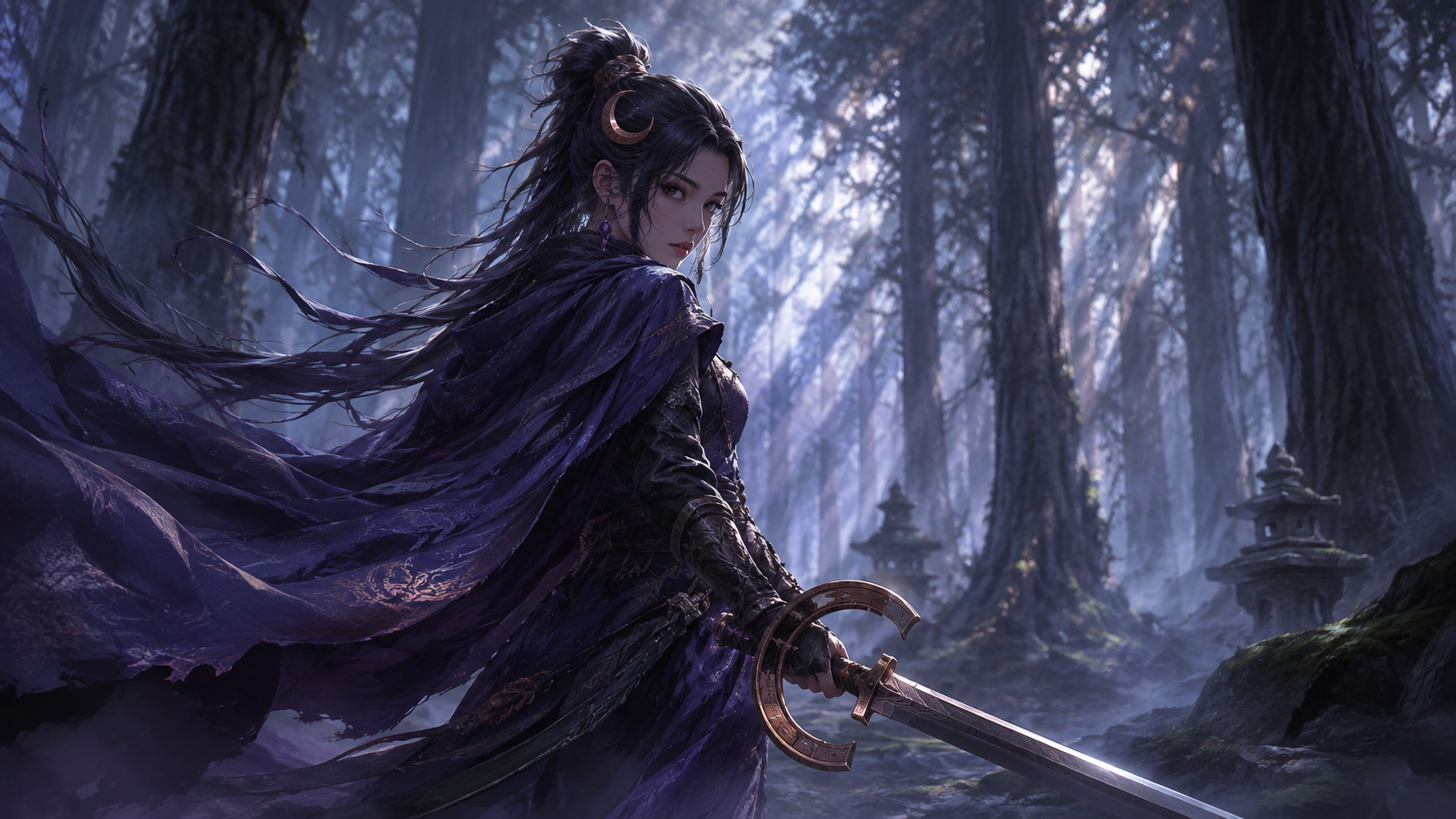
The journey to create an original character (OC) often begins with a spark of inspiration, perhaps from a beloved series like Demon Slayer. The creative question isn't just about designing a new face for a familiar world, but about crafting a distinctive personality, a unique visual identity, and a compelling narrative problem that drives new stories. This process involves more than just aesthetics; it's about building a character with depth, purpose, and the potential for growth.
This guide outlines a comprehensive workflow for developing an OC, moving from initial concept to a detailed reference sheet, a short comic, a basic animation, and ultimately, a foundational story bible. Our worked example features Sayo, an adult lantern repairer whose story unfolds in a world inspired by, but distinct from, established franchises. Sayo is an original creation, not an official character within any existing universe, emphasizing the importance of clear creative boundaries.
Defining Your Character's Relationship to Existing Fandom
Before diving into design, it's crucial to establish whether your OC is intended as fan art, a fan fiction character, or an entirely independent creation. This decision profoundly impacts your choices regarding names, symbols, organizations, and visual references. If you plan to publish or share a fan project, always present it as unofficial and carefully review the permissions and usage guidelines associated with the original material. Respecting intellectual property is paramount.
When drawing inspiration, focus on capturing a mood, theme, or aesthetic rather than directly copying specific character designs, signature garments, emblems, weapon styles, or promotional artwork. For instance, you might draw inspiration from the atmospheric tension of a supernatural adventure, the intricate details of handmade equipment, or the theme of courage in adversity, without replicating a specific character's appearance.
For an independent project, strive for a clean creative premise that avoids franchise-specific vocabulary. Consider Sayo's concept: she repairs roadside lanterns in a valley where abandoned promises manifest as drifting lights. Her ability to guide these lights home is contingent on understanding the promise each represents. This establishes a unique rule for her world, distinct from any existing power system, allowing for genuine originality and avoiding potential copyright conflicts.
Building Character Depth Through Contradiction
A compelling character often emerges from internal contradictions or a blend of seemingly opposing traits. These paradoxes create tension and provide fertile ground for storytelling. Sayo, for example, is meticulously patient with broken objects but struggles with impatience when dealing with people. Her dedication to repairing every mountain lantern before winter is undercut by her refusal of help, stemming from a past repair failure under her supervision. This dynamic immediately suggests scenarios where her practical skill and emotional vulnerability will intersect, forcing her to confront her distrust and eventually rely on others.
Equally important is giving your character's abilities a meaningful limitation. Sayo's reed bell can pinpoint the direction of a drifting light, but it cannot identify the underlying promise or compel the light to follow. This limitation ensures that information gathering, empathy, and problem-solving remain central to her challenges, rather than relying on an all-powerful ability.
To further flesh out your character before generating any visuals, consider answering three key questions:
- What does Sayo do when nobody is watching? She quietly tends to neglected lamps, revealing her inherent compassion and dedication.
- What does she misunderstand? She equates accepting help with abandoning responsibility, highlighting her struggle with vulnerability.
- What difficult episode must force her to do? She must learn to trust another person to complete a repair she cannot finish alone, driving her character arc.
These answers provide a rich foundation for narrative development, offering more insight into her potential actions and choices than a mere list of powers or skills.
Crafting an Original Visual Specification
Once your character's core personality and story elements are established, translate them into a clear and original visual specification. This brief will guide your artistic process, whether you're sketching by hand or using AI tools. Sayo's design, for instance, is described as: a short ochre work coat with wide cuffs, dark loose trousers, and simple wrapped shoes. A compact tool roll is secured across her back with two plain straps. Her broad, cropped hair leaves her ears visible, and a small reed bell hangs from her tool roll. The emphasis is on large, distinctive shapes and an original costume, deliberately avoiding any borrowed franchise patterns, emblems, or lettering.
An effective visual brief for AI generation might look like this:
Design an adult lantern repairer for an original supernatural travel story. She wears a short ochre work coat with wide cuffs, charcoal trousers, and simple wrapped shoes. A compact cloth tool roll is strapped across her back, from which hangs one small reed bell. Her hair is broad and cropped, leaving her ears visible, and she has a thoughtful, slightly tired expression. The image should be a full-body neutral pose, rendered with clean cel shading and a restrained earth-tone color palette against a plain background. Ensure the costume and face are entirely original; do not include any existing character designs, franchise emblems, or specific lettering.
You can use a text-to-image workflow to explore various design candidates based on your brief. This can be a powerful way to visualize concepts quickly. However, it's crucial to select one design, then meticulously review and refine it. Correct any ambiguous anatomy or equipment details. Prepare comprehensive front, side, and rear reference views to ensure consistency across all angles. Do not assume that an AI generation service will perfectly maintain identity or details without explicit guidance and human oversight.
Maintain a concise list of invariant design elements: Sayo's hair shape, coat length, tool-roll attachment method, bell location, and overall color palette. These elements should remain consistent, while expressions, environmental dust, or temporary props can change as the story demands.
Developing a First Comic Scene
Instead of attempting to illustrate an entire backstory or an exhaustive character profile, begin with a small, self-contained event for your character's first comic scene. This approach allows you to focus on narrative clarity and visual storytelling. For Sayo, her inaugural scene involves a drifting light that repeatedly escapes from a recently repaired lantern. A young cartographer insists the lamp is facing the wrong direction. Sayo, initially dismissive, checks her repair, only to notice the light consistently turning towards a forgotten path.
Outline the scene in six panels:
- The faulty lamp, with the light escaping.
- Sayo meticulously tightening a fitting on the lamp.
- The cartographer pointing emphatically in a different direction.
- The light escaping again, defying Sayo's repair.
- Sayo, now intrigued, following the direction indicated by the drifting light.
- The lantern now correctly turned towards the old, forgotten road, with Sayo silently handing the cartographer her map, a subtle acknowledgment of his insight.
Before generating finished images, carefully plan your panel compositions. Consider where speech balloons and sound effects will be placed to ensure readability and impact. Maintain consistency in the lamp's appearance and the characters' positions across panels. If a reaction or plot point is unclear in your panel plan, revise the layout or action rather than relying on extensive textual explanations. This iterative process of planning and refining is key to effective sequential art.
Animating a Single Behavior
Before attempting complex action sequences, focus on animating a simple, character-revealing behavior. This allows you to test the consistency of your character's design in motion and understand the capabilities of animation tools. For Sayo, a good first exercise would be her listening intently to the reed bell and slowly turning towards the old road. This action reveals her expression, how her accessories (like the tool roll and bell) move with her body, and a moderate body rotation, all without requiring a complicated fight scene.
You can start from an approved still image of Sayo and use an image-to-video workflow. Clearly specify the desired action in your prompt. After generation, meticulously inspect the animation, paying close attention to Sayo's face, the movement of her coat cuffs, the stability of her tool roll, and the swing of the bell, especially at the widest points of her turn. A successful opening frame does not guarantee that the design will remain stable or consistent throughout the entire clip.
If your character needs to speak, ensure you use a voice you are authorized to use. Record and approve the audio before integrating it into the animation. VideoAny lip-sync tools can take a character image and an audio track to create a talking portrait. For longer conversations or complex scene assembly involving multiple characters, consider these as separate production tasks. Avoid assuming automatic voice cloning or integrated multi-character dialogue management, as these often require specialized tools and careful human oversight. Always ensure you have the necessary rights and consent for any voices or likenesses used in your creations.
Transforming the Comic into a Complete Short
With your comic scene planned and a basic animation test complete, you can now expand the six-panel scene into a complete short animated sequence. The comic's panel list serves as an excellent starting point for your shot list, but be prepared to adjust framing and camera angles to best suit motion. For example, an insert shot of the lamp turning might communicate the action more clearly and efficiently than animating two characters and a drifting light within a single, crowded frame.
When generating individual shots, choose your tools and providers based on the specific requirements of each shot and the controls you can access. Remember that the name of a provider does not guarantee perfect character consistency across all generations. It's essential to review each prepared still and moving shot, making any necessary repairs or adjustments, before assembling them. The final assembly will happen in a video editor, where you'll combine the visual assets with dialogue, sound effects (like the reed bell, road ambience), and music for which you have the appropriate usage rights.
Keep the narrative scope of your first short modest. Sayo doesn't need to reveal a hidden ultimate power or defeat a major antagonist. Her simply sharing the map with the cartographer can be a powerful and satisfying conclusion if the scene has effectively established why she typically works alone and what this small act of trust signifies for her character development.
Cultivating a Story Universe Without Losing Core Decisions
As your character and story evolve, it's vital to maintain a "story bible" or world document outside of any individual AI generation session. This document serves as the central repository for all established facts about your universe. It should include:
- Character References: Detailed descriptions, visual references, and personality traits for all key characters.
- Relationship Changes: A timeline or log of how character relationships evolve.
- Location Maps: Descriptions and visual aids for important settings.
- Prop Designs: Consistent designs for recurring objects and tools.
- Rules for Drifting Lights: A clear explanation of the mechanics and lore of your supernatural elements.
- Record of Unresolved Questions: A section for plot hooks, mysteries, and character arcs that are yet to be explored.
Crucially, separate established events and lore from ideas that are still speculative or have not yet been fully integrated into your canon. This distinction helps maintain consistency and prevents accidental contradictions as your world expands.
For subsequent episodes or stories, reuse your character's established design and core personality, but introduce new choices and challenges that build upon their existing traits. For Sayo, perhaps the next challenge involves a situation where the correct repair of a lantern would erase a memory its owner desperately wishes to keep. Such a dilemma directly develops the world from its central rules and forces the character to make another meaningful decision, deepening their arc.
AI-generated assets can be invaluable tools for visualizing possibilities, exploring variations, and accelerating the production of media. However, your unique authorship comes from the critical process of selecting, revising, and thoughtfully connecting these assets into a cohesive, original character whose actions and motivations remain recognizable and compelling across a comic page, an animated shot, and a larger, evolving story. The blend of human creativity and AI assistance empowers you to bring your imaginative worlds to life with unprecedented efficiency and detail.