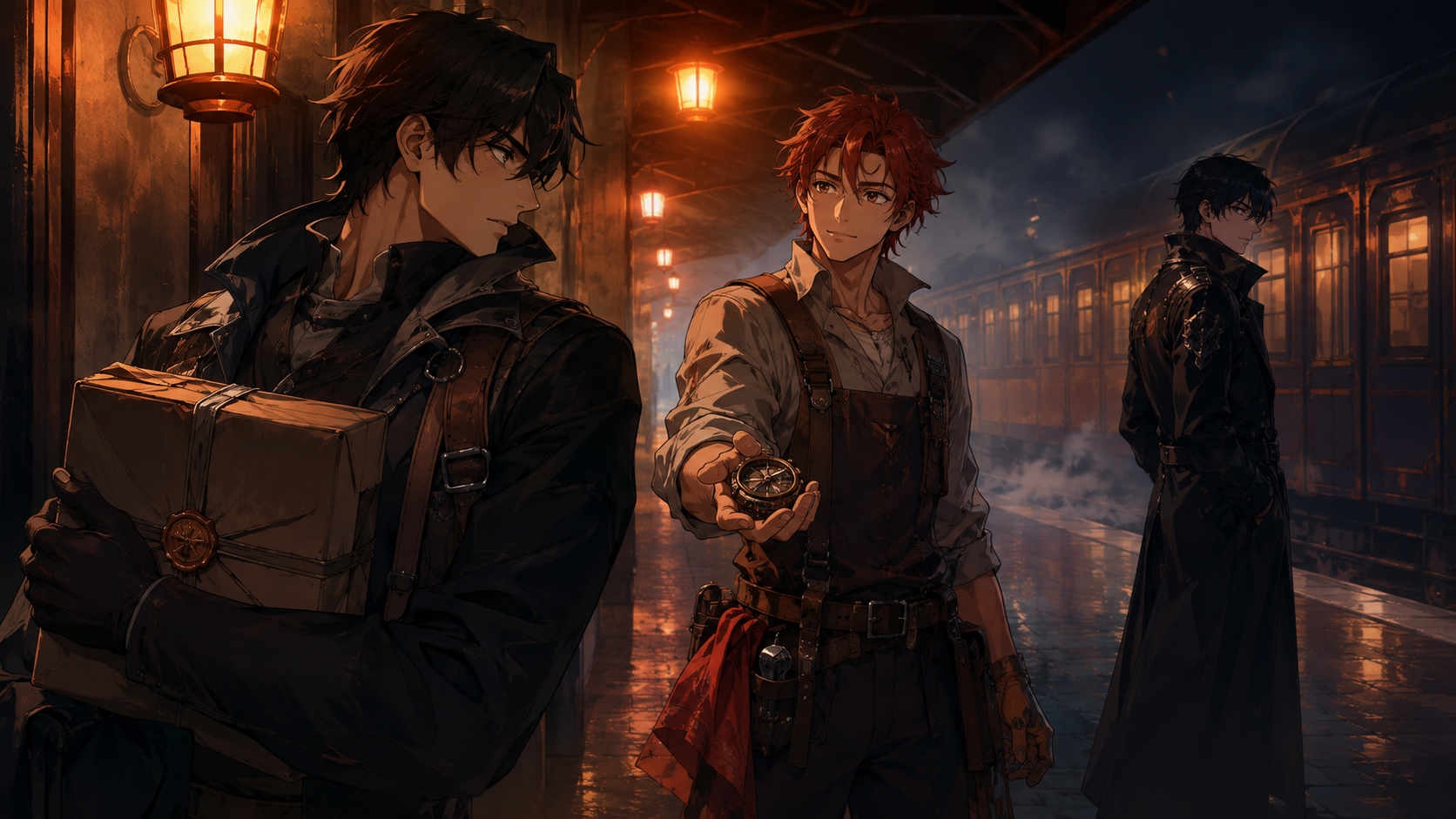
A character relationship generator proves its worth not by simply labeling connections, but by providing concrete insights into how characters interact within a scene. While terms like "rivals who secretly care" offer a general direction, they don't dictate who speaks first, what each character is striving for, or the specific gesture that might cause another to leave. The true utility lies in generating scenarios that translate abstract relationship dynamics into observable actions and dialogue.
Effective character relationships are built upon a foundation of unequal power, conflicting needs, and deeply held fears. These elements create inherent tension and opportunities for change, moving beyond static biographies to dynamic interactions. Instead of merely collecting elaborate backstories, the focus should be on testing these conceptual ideas within specific scenes. The following discussion will explore this approach using an original example: the professional partnership between Asha, a meticulous instrument restorer, and Ben, a celebrated touring violinist.
The Core of Dynamic Relationships: Power, Need, and Fear
To craft compelling character dynamics, move beyond surface-level descriptions and delve into the underlying forces that shape interactions. Every meaningful relationship, whether collaborative or adversarial, is influenced by the distribution of power, the specific needs each individual seeks to fulfill, and the fears that drive their decisions. These three pillars provide a robust framework for generating conflict and growth.
Consider the example of Asha and Ben. Ben is preparing for a concert featuring an instrument Asha is meticulously restoring. He envisions an early announcement to generate buzz and attract a larger audience. Asha, however, insists that the instrument should only be judged after she has personally approved her restoration work. Both characters share the overarching goal of a successful concert, yet this shared objective does not erase their fundamental disagreement on the process.
This scenario immediately highlights the interplay of power, need, and fear:
- Power: Ben wields power over publicity and the concert schedule, controlling the narrative and timeline of the event. Asha, conversely, controls access to the instrument itself and possesses the specialized knowledge required to assess its readiness.
- Need: Ben needs Asha's expert judgment and the instrument's flawless performance to ensure the concert's success and maintain his reputation. Asha needs Ben to acknowledge her contribution and credit her restoration work appropriately, ensuring her professional recognition.
- Fear: Ben fears disappointing his audience or facing a poorly attended event. Asha fears being relegated to an invisible role, her skill and effort overshadowed by Ben's public persona.
Crucially, no villain is required to create this tension. Each character's interpretation of the same event—the concert announcement—is entirely reasonable from their perspective. For Ben, it's an exciting commitment; for Asha, it's an attempt to force her approval. This divergence in perspective is the fertile ground for dialogue, physical blocking within a scene, and meaningful choices that propel the narrative forward.
Translating Dynamics into Actionable Scenes
Once the core dynamics of power, need, and fear are established, the next step is to translate these abstract concepts into concrete, observable actions within a scene. A useful tool for this is a "relationship card"—a concise summary that captures the essence of the dynamic and its potential manifestations.
Using a Relationship Card with Observable Consequences
A relationship card should be brief enough to consult quickly during drafting, serving as a constant reminder of the underlying tensions and potential shifts. For Asha and Ben, such a card might look like this:
| Layer | Decision for the Story | What a Viewer Might Notice |
|---|---|---|
| Public Relationship | Trusted professional collaborators | They use familiar shorthand and anticipate each other's needs during rehearsal. |
| Private Tension | Asha resents being credited only after success | She reads the concert program before greeting Ben, her expression subtly tightening. |
| Trigger | Ben announces unfinished work without asking | Her answers become precise and formal, her body language stiffens. |
| Possible Change | They agree on shared approval and visible credit | Ben introduces her before describing the instrument, making eye contact. |
The "Possible Change" row is a potential narrative direction, not a predetermined outcome. A darker turn might see Ben taking the instrument to another restorer, or Asha refusing to complete the work. The key is that an action, a decision, or a revelation alters the terms of their relationship. The scene's resolution should advance their dynamic, rather than simply reiterating their initial disagreement.
Leveraging AI Writing Models for Scene Exploration
AI writing assistants can be invaluable for exploring alternative scenarios and deepening character interactions, but they require specific, well-structured prompts to avoid generic outputs. Instead of asking for a general "conflict," define the parameters of the interaction.
Here is an adaptable editorial prompt template to guide an AI writing model:
Develop three distinct conflicts between Asha, an instrument restorer, and Ben, a touring violinist. Ben controls publicity; Asha controls the instrument's readiness. Both desire a successful concert. For each version, identify:
- The immediate request or point of contention.
- The private fear driving each character's stance.
- One observable behavior that reveals this fear.
- A decision or action that fundamentally alters their working relationship.
Exclude any secret family connections, sudden romantic developments, or external villains. Ensure each version is playable in a single rehearsal room with two actors and one visible prop (e.g., the instrument, a concert program).
These exclusions are deliberate creative choices for this example. They compel the AI to work within the existing, inherent tensions of the characters, rather than resorting to convenient plot twists or external solutions. If the AI's response still feels interchangeable with any two characters, introduce a specific detail from their shared history. For instance, Asha might have once allowed Ben to use her workshop's name to secure a prestigious venue. This detail provides a concrete reason why a program credit now holds significant weight for her, without requiring lengthy exposition about professional recognition.
Adding Complexity: Nuanced Character Traits and Supporting Roles
Characters become more believable and engaging when they exhibit contradictions or unexpected facets. Ben, for example, might be charming and affable on stage, yet unusually direct and demanding in private. Asha, while insisting on exact procedures, might quietly improvise clever solutions when unobserved. These contradictions should not appear solely as plot devices; give them small, earlier expressions to establish their authenticity.
Supporting characters can also serve to expose blind spots or introduce new pressures without becoming mere exposition devices. Imagine Mika, the stage manager, who maintains a lighthearted demeanor throughout rehearsals but becomes intensely focused and serious when a deadline looms. Her role isn't to explain Asha and Ben's dynamic, but to force them to confront a practical question, such as which version of the concert program should be printed, thereby revealing their underlying tensions.
For a larger cast, vary the type of pressure each relationship applies. A mentor might challenge Asha's methods, a friend might encourage her avoidance of conflict, and a competitor might offer brutally honest feedback. Avoid making every connection a contest over the same insecurity; diversify the emotional and practical stakes.
Crafting Scenes That Reveal Evolving Conditions
To demonstrate the progression of a relationship, write scenes that highlight different stages or conditions. These scenes serve as snapshots of the characters' dynamic, showing how it shifts under varying circumstances.
- Ease: Before a rehearsal, Asha and Ben silently rearrange two chairs to avoid a squeaking floorboard. He instinctively knows which chair she prefers; she anticipates where his instrument case will go. This coordinated, unspoken action establishes a real partnership and a comfortable familiarity without needing to explicitly state they are old friends.
- Pressure: Asha discovers the printed program prematurely announces the restored instrument's debut tonight. Ben dismisses her concern, calling it a sign of his confidence in her work. She retorts, asking if confidence typically arrives from the printer before a conversation. The immediate object of dispute is the program, but the underlying conflict is about control and trust.
- A Changed Boundary: Asha refuses to allow the instrument's premature reveal. Ben now faces a choice: publicly correct the announcement, or proceed without her approval, risking both the instrument's integrity and their professional relationship. Whichever path is chosen, the scene must illustrate its cost. A private apology followed by the same behavior leaves the relationship fundamentally unchanged; true change requires a visible shift in action or consequence.
These scenes can function as standalone manga sequences, short film segments, or preparatory writing exercises. They are not audience-validation experiments unless they are actually shown to viewers to gauge comprehension and emotional impact.
Dialogue and Subtext: Revealing Relationships Through Words and Pauses
Dialogue is a powerful tool for revealing character relationships, but its effectiveness lies in subtext and implication, not overt exposition. Characters rarely recite their biographies or explicitly state their feelings; instead, their words, and the spaces between them, convey deeper meanings.
Consider this concise exchange, designed to highlight conflict without lengthy backstory:
Asha: You printed it already.
Ben: They needed a program.
Asha: They needed the title.
Ben: I thought you would be pleased.
Asha: Then you could have asked me first.
In this brief interaction, the characters are disagreeing about a concrete action—the printing of the program. The audience can infer much about their partnership: Asha's feeling of being overlooked, Ben's assumption of authority, and the underlying tension regarding control.
Now, consider how non-verbal cues can alter the meaning of identical lines. Try a version where Ben answers Asha's final line immediately, perhaps with a dismissive shrug. Then, try another where he first slowly folds the program, avoiding her gaze, before responding. The physical response can dramatically change the emotional weight and meaning of an otherwise identical sentence.
Always read dialogue aloud. This practice helps identify lines that sound unnatural or exist solely to summarize what the visual action already conveys. Intentional interruptions, carefully placed pauses, and deliberate shifts in formality are far more effective than randomly inserted "ums" or "ahs" in making speech sound authentic. Every word, every silence, should contribute to revealing the characters and their evolving relationship.
Visualizing Relationship Dynamics for Manga and Video
The dynamics established through power, need, and fear, and refined through dialogue and subtext, must ultimately translate into visual storytelling. For manga, animation, or live-action video, visual choices can amplify the emotional impact and convey unspoken truths about character relationships.
In the "pressure" scene, for instance, consider the initial staging. Place Ben beside a stack of the newly printed programs, symbolizing his control over publicity. Position Asha near the instrument case, representing her domain of expertise and the object of her meticulous care. These initial positions make their respective sources of control immediately visible to the audience. As the argument unfolds, a small movement—one character crossing towards the other's object, or physically turning away—can carry more meaning than an elaborate camera movement. A subtle shift in posture, a lingering glance, or a clenched fist can speak volumes.
When creating visual content, especially for animated stills or character portraits, each shot should convey a clear, readable behavior. If you are animating approved still images into dynamic sequences, tools like VideoAny image-to-video can bring these visuals to life. For scenes requiring spoken dialogue from a visible character, VideoAny lip-sync can pair an image with authorized audio, ensuring the character's mouth movements align naturally with the speech. Remember that script drafting, maintaining consistent character records, and assembling multiple shots into a cohesive narrative remain distinct, essential parts of the creative workflow. When using any AI tool that generates or modifies human likenesses or voices, always ensure you have the necessary consent and rights from the individuals involved.
After each significant scene, revisit and update the relationship card. Record what each character has learned, which boundaries have shifted, and what conflicts remain unresolved. The next scene should logically flow from this new state, reflecting the accumulated choices and consequences. Memorable characters and compelling narratives are built through this iterative process of evolving relationships, not from a static list of labels or predetermined outcomes. By focusing on the dynamic interplay of power, need, and fear, and translating these into concrete actions and visuals, creators can build truly resonant stories.