Categories: AI Video Workflow, Creator Strategy, Production Process
Tags: videoany, gpt image 2 prompts, anime prompts, manga style, creator toolkit
Introduction
This guide is a style-by-style workflow for GPT Image 2 anime prompting. It focuses on prompts that avoid the common failures of AI anime: plastic faces, inconsistent hands, melted line art, generic backgrounds, and characters that drift between generations. The useful lesson is not simply "name an anime style." The lesson is to describe the visual mechanics of that style.
For VideoAny creators, these prompts are most useful as keyframes. Generate a strong anime still, check the face and hands, then animate the best frame into a short scene.
Style 1: Makoto Shinkai-Inspired Light
This direction is about skies, reflections, emotional color, and cinematic atmosphere. The source examples mention trains, rivers, sunset clouds, rain-streaked glass, and glowing city skylines. The reusable pattern is: ordinary subject, dramatic light, reflective surface, pastel sky, emotional silence.
Prompt pattern:
Anime film still of [subject] at [location] during sunset, luminous clouds, reflections on water or glass, soft lens flare, emotional color palette, delicate line art, cinematic composition.Style 2: Soft Painterly Fantasy
The Ghibli-like direction is softer: muted earth tones, warm interiors, forest creatures, moss, kitchens, steam, bread, wood, sunlight, and gentle shapes. Avoid sharp contrast and glossy digital skin.
Prompt pattern:
Hand-painted anime scene of [character or creature] in a cozy natural environment, warm light, soft textures, whimsical details, watercolor feeling, calm nostalgic mood.Style 3: Shonen Action
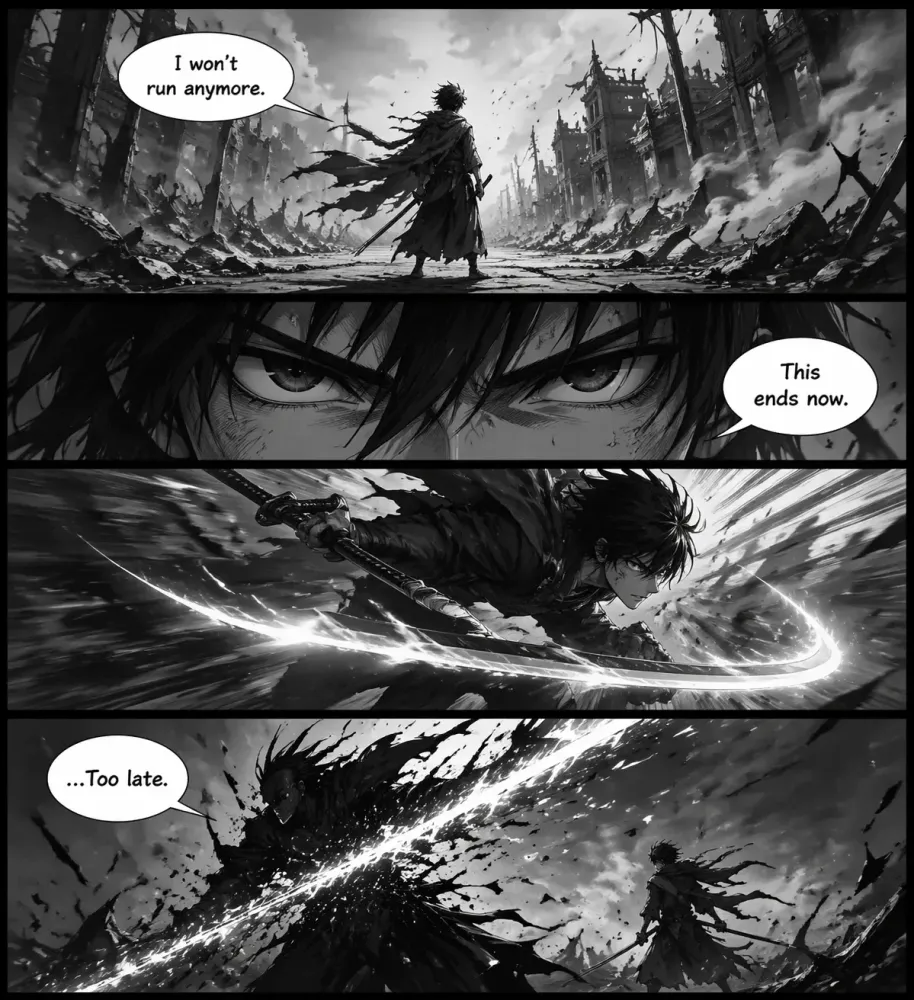
Shonen prompts need motion. The source uses sword swings, lightning aura, floating rocks, speed lines, low angles, and impact frames. The model needs the pose and camera angle; otherwise it may produce a static character with action styling.
Add words like dynamic pose, impact frame, low-angle shot, speed lines, torn clothing, power aura, and thick energetic line art.
Style 4: Seinen Texture
For darker manga, prompt for black-and-white ink, crosshatching, rough screentone, rain, alleys, tired expressions, and heavy shadows. This is a mood-first style. The more mature the scene, the more important texture becomes.
Style 5: Chibi and Kawaii
Chibi prompts work when you simplify. Large head, small body, clean shapes, rounded hands, simple expression, pastel palette, sticker-like pose. Do not overload the scene. Cute designs fail when the background competes with the face.
The No-Plastic-Face Rule
A common failure is some AI anime looks too glossy. Fix it by asking for hand-drawn texture, natural facial planes, subtle skin shading, expressive eyes, and clean line art. If hands matter, mention five fingers, relaxed pose, and visible knuckles.
Full Manga Page Prompt Structure
For a manga page, specify panel count, reading direction, character continuity, line style, speech bubble space, and camera variation. Example:
Create a four-panel manga page about one character discovering a glowing object. Keep the same face, hairstyle, and outfit in every panel. Use clean black ink, varied camera angles, expressive eyes, and blank space for captions.Practical Workflow
- Pick one anime direction before prompting.
- Generate stills and reject weak hands or unstable faces.
- Keep a reference image for recurring characters.
- Use VideoAny to animate the best still with subtle motion.
- Save successful prompt patterns by style category.
Conclusion
Good anime prompts are specific about light, line, texture, pose, and emotion. GPT Image 2 can produce strong anime results, but the prompt has to define the style's visual grammar. Once the still image is stable, VideoAny can turn it into motion without starting the creative process over.
Next Step
Explore VideoAny anime workflows: https://videoany.io
FAQs
1) Which style is easiest for beginners?
Chibi and soft painterly scenes are usually more forgiving than complex shonen action.
2) How do I avoid plastic-looking anime?
Ask for hand-drawn line work, natural shading, subtle texture, and avoid glossy skin.
3) Can I animate these images?
Yes. Use the best generated still as a keyframe source in VideoAny.