
Categories: AI Anime, AI Video Tools, Creator Workflow
Tags: best ai video generator anime, ai anime video tools, kling 3.0, seedance 2.0, veo 3.1, videoany
Introduction
The best AI video generator for anime creators is not simply the tool that makes the prettiest five-second clip. Anime workflows need consistent characters, clean movement, strong cel-shaded style, vertical export, audio support, and enough iteration speed to produce publishable work.
That is why generic AI video rankings can be misleading. A model may be excellent for photorealistic footage and still struggle with anime. Another may deliver beautiful motion but lose the character between shots. This guide ranks the tools by what anime creators actually need in 2026.
What Matters for Anime Video Generation

Use these criteria before choosing a tool:
- Character consistency: Does the protagonist stay recognizable across shots?
- Motion quality: Does action feel fluid or warped?
- Anime style fidelity: Does it understand cel-shading, expressive faces, and bold composition?
- Vertical export: Can it create 9:16 content without awkward cropping?
- Audio: Can it support dialogue, ambience, or sound effects?
- Cost and speed: Can you afford enough iterations to get a good result?
For story-driven anime, character consistency matters most. For fight edits, motion quality may matter more. For TikTok, vertical export and fast iteration become critical.
1. VideoAny - Best Practical Workflow Layer
VideoAny is the best fit when you want a practical workflow rather than a stack of disconnected tools. Anime creators usually move through several stages: concept images, prompt testing, image-to-video animation, revisions, and final export. VideoAny helps connect those stages.
Use it for anime shorts, scene tests, and turning approved frames into motion. A useful path is Text to Image for visual direction, Text to Video for prompt-led scenes, and Image to Video when you already have a strong frame.
Trade-off: if you only need the most advanced action motion from one specialized model, another tool may be stronger for that specific shot.
2. Kling 3.0 - Best Motion Quality
Kling 3.0 stands out for smoother motion. It is a strong choice for action-heavy anime clips, fast camera moves, transformations, and fight scenes. If your content depends on movement more than dialogue or long-form structure, Kling should be on your test list.
Trade-off: creators still need to manage references carefully. Strong motion does not automatically mean perfect character memory.
3. Seedance 2.0 - Best Reference Control
Seedance 2.0 is useful when you already have a strong reference library. Its value is control: characters, style boards, video references, and audio references can help guide the result more precisely.
This makes it useful for creators with organized assets and a clear visual direction. It is less ideal for creators who want the fastest possible one-prompt social clip.
4. Veo 3.1 - Best Audio Integration
Veo 3.1 belongs high in the ranking because audio is becoming a serious differentiator. Anime scenes often need voice, ambience, effects, music cues, or synchronized sound to feel complete.
Use it when audio and video need to be generated together. Trade-off: it is a general-purpose model, so anime style may require stronger prompting and clearer references.
5. Vidu Q3 - Best for Series Experiments
Vidu Q3 is interesting for creators thinking beyond one-off clips. It is positioned around animated series production, with attention to scene continuity and character stability.
Use it for multi-scene experiments or serialized concepts. Trade-off: longer-form workflows require more planning, more review, and usually more budget.
6. Cinemaya - Best Mobile-First Option
Cinemaya is useful for creators who want to make short films, trailers, anime-style reels, and social clips from a phone. Mobile-first workflows matter because many anime creators publish directly to TikTok, Reels, and Shorts.
Trade-off: convenience may come with less fine control. Test character consistency before building a whole format around it.
7. Doratoon - Best for Long-Form Drafts
Doratoon is notable for long-form story generation. It is useful when you want to test a longer narrative from a compact premise.
Trade-off: longer generation does not automatically mean a finished video. Expect pacing edits, continuity review, and scene cleanup.
Good-Enough Tools
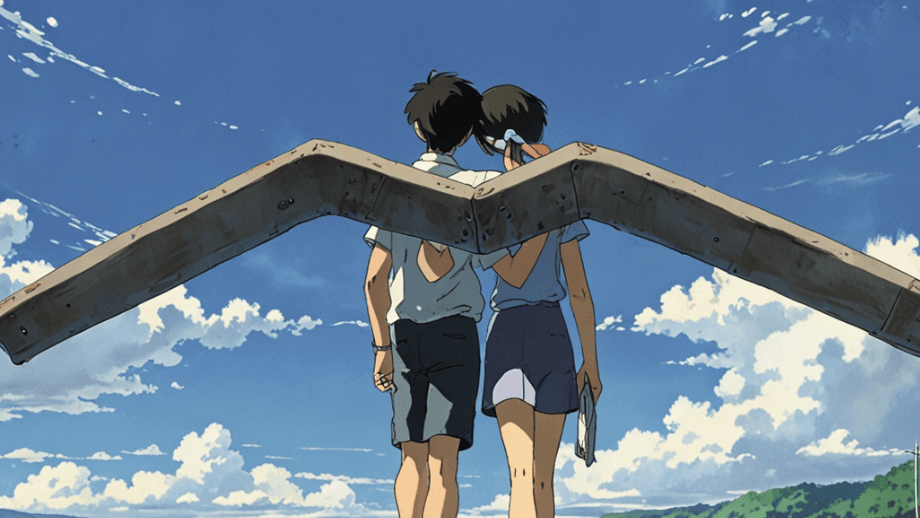
Pika remains useful for quick clips, especially subtle motion and lightweight social content. Runway Gen-4 is strong for photorealistic work but is not primarily anime-focused. Luma Dream Machine can be good for surreal or atmospheric scenes, but consistent anime character animation is harder.
Use these as secondary tools for specific shots, not as the backbone of a full anime workflow.
Which Tool Should You Choose?
Choose by bottleneck:
- For repeatable anime shorts: start with VideoAny.
- For action motion: test Kling 3.0.
- For reference-heavy control: try Seedance 2.0.
- For audio-led scenes: evaluate Veo 3.1.
- For serialized experiments: watch Vidu Q3.
- For mobile-first creation: test Cinemaya.
- For long-form story drafts: explore Doratoon.
No tool wins every category. The smartest workflow uses one primary tool and adds secondary tools only when a specific scene needs them.
Conclusion
The best AI video generator for anime creators in 2026 depends on what you need to finish. TikTok creators need speed and vertical format. Action creators need motion. Story creators need continuity. Cinematic creators may need audio and mood.
Do not chase one magic model. Build a workflow that lets you create, test, revise, and publish consistently.
Next Step
Start your anime video workflow with VideoAny.
FAQs
1) What matters most for AI anime video?
For narrative anime, character consistency is usually the most important factor.
2) Which tool is best for action clips?
Kling 3.0 is one of the stronger options when smooth motion is the priority.
3) Should I use one tool for everything?
Usually no. Pick a primary workflow, then use secondary tools for specific gaps.